News Broadcasting
Ad breaks took a break on the news channels


In the aftermath of Tuesday’s horrific multiple terrorist attacks on America’s institution’s of military and financial might, literally all eyes have been and are on the unfolding story. The US has been hit and the world is shaken to the core. Richard Sambrook, director of BBC News on the US disaster, was probably speaking for the media community at large when he said: “I doubt many of us have ever been confronted with a story of such magnitude.”
On a more banal level, there is a huge opportunity here for the various news channels due to the phenomenal increase in eyeballs that an event like this engenders.
So have the ad sales managers been working overtime to bung in as many ads as possible? Quite the opposite actually. On the day of the attack (Tuesday) all the major news networks beaming in India opted for total and blanket news coverage without any ad breaks.

While CNN went the whole hog (understandable it being an American news channel) and has been operating a single news service feed to all its audiences around the world and is still broadcasting without any ad breaks, the other channels began doing so from yesterday. India comes under CNN’s South Asia service.
Business news channel CNBC India’s CEO Haresh Chawla pointed out that during such times as these the only issue with any news channel was to make sure that as comprehensive coverage as is possible is delivered to audiences. Queried about whether advertisers would want to position their products to cash in on the increased viewership he said the channels would not agree to it in the first place and secondly, even advertisers would be reluctant fearing a negative backlash.
Star India’s executive V-P ad sales, Raj Nayak, ruled out any attempt to cash in as it were on increased traffic. “As a news channel, we will not capitalise on tragedies,” Nayak says. Nayak added that the logs for ad breaks were sent (to Hong Kong) 48 hours in advance, so even if there was pressure to increase ad time it could not be done at such short notice.
Nayak added that all programming on the Star World channel was switched to Fox News once the gravity of what had happened in New York and elsewhere in America became clear.





News Broadcasting
CNN-News18 to host Fury in the Gulf conclave on West Asia crisis
Three-hour summit to unpack geopolitical fallout and impact on India
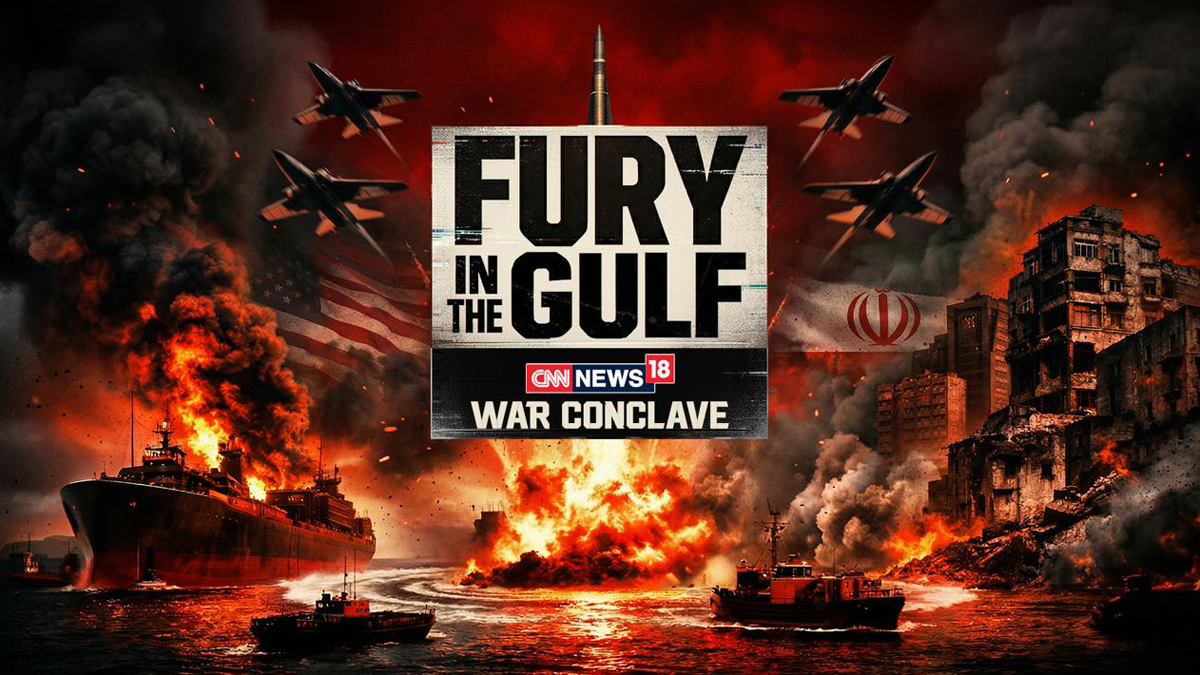
MUMBAI: CNN-News18 is set to host a special three-hour broadcast, Fury in the Gulf – War Conclave, on April 7, aiming to decode the escalating West Asia crisis and its far-reaching implications for India.
Scheduled from 4:00 PM to 7:00 PM, the conclave comes at a time when tensions between Iran and the United States are reshaping global geopolitics and triggering economic uncertainty. With India’s deep energy ties, trade links and large diaspora in the Gulf, the developments carry significant domestic relevance.
Built around the theme ‘Conflict, Consequences, and The Future,’ the programme will feature six curated sessions combining one-on-one interviews and panel discussions. The focus is to cut through the clutter and offer viewers a clearer understanding of the fast-evolving situation.
Key sessions include ‘Diplomacy in Times of War’ featuring Shashi Tharoor, and ‘World After the Iran Conflict’ with voices such as Ram Madhav, Reuven Azar, representatives from the European Union and the Iranian Deputy Envoy. Another session titled ‘Another Dunkirk?’ will bring together K. J. S. Dhillon and Jitin Prasada among others.
CNN-News18 editorial affairs director Rahul Shivshankar said, “In times of war, clarity becomes the most powerful tool. Fury in the Gulf – War Conclave brings together credible voices to address the questions and confusion that arise amid an overwhelming influx of information.”
He added that the initiative is aimed at delivering “facts, perspective, and insight” at a time when misinformation can easily cloud public understanding.
Echoing the sentiment, CNN-News18 CEO– English and business news Smriti Mehra said the conflict marks a defining global moment, with consequences that extend well beyond the region. She noted that the conclave seeks to present the crisis with “depth, nuance and responsibility” so audiences can better grasp its real-world impact.
As geopolitical tensions continue to dominate headlines, the conclave positions itself as an attempt to bring order to the noise, offering viewers a structured, insight-led look at a complex and rapidly shifting global situation.






