Hindi
Actors Chandrashekhar and Manoj Kumar honoured at Jagran Film Festival

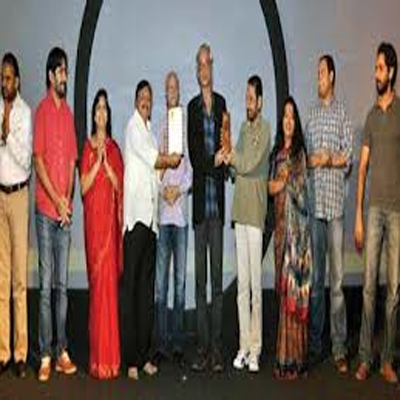
Veteran Chandrashekhar whose film career spans from the black and white era to the early part of this century received the Grand Prize for lifetime contribution to the cinematic arts while thespian Manoj Kumar was honoured for his work as the Icon at the Jagran Film Festival which concluded in Mumbai over the weekend.
The 90-year old Chandrashekhar has acted in 186 films commencing in 1947 with Arsi. Beginning as an actor in Fashion in 1957, Manoj Kumar went on to act in or make a large number of films, many of them with patriotic themes which got him the nickname of Bharat Kumar. The government also honoured him with the Padma Shri.

Versatile thespian Sridevi bagged the best actor (female) award for her comeback film English Vinglish, while the best actor award was shared by Ranbir Kapoor for Barfi! and Farhan Akhtar for Bhaag Milkha Bhaag. Trupti Bhoir got a special mention as actor (female) for the Marathi film Touring Talkies produced by her and directed by Gajendra Ahire.
The best film award went to the film Kai Po Che!; which also bagged the best director award for Abhishek Kapoor and the background score award for Hitesh Sonik.
Among those who gave away the awards were the versatile Kamal Haasan, veteran filmmaker N Chandra, producer-director Sudhir Mishra, Tushaar Kapoor and Divya Dutta. Festival Advisor Manoj Srivastava was also present.
The programme presented by Kunal Kapoor and Huma Quraishi also included performances by the group Mati Baani, a World Music band combining elements of Hindustani Classical with various styles of Folk music and New age sounds
Ship of Theseus received the maximum awards: best debut director award for Anand Gandhi, the Jury award for best actor for Neeraj Kabi, the cinematography award for Pankaj Kumar, and the sound designer award for Gabor ifj. Erdélyi.
The special jury award was presented to Vishwaroopam for raising the bar of mainstream Indian cinema to an international level. The film also received the best editor award for Mahesh Narayanan.
Aditi Singh Sharma received the best female singer award for the title song in the film Heroine while actor-singer Ayushman Khurrana received the male singer award for the film Vicky Donor. The best music award was given to Pritam for the film Barfi! for his brilliant compositions.
Vicky Donor also bagged the best screenplay award for Juhi Chaturvedi.
Kaushal Oza won the best short film award for his film After Glow.
A special highlight of the festival was the presence of Max Lefrancq Lumiere, grandson of Louis Lumiere, who screened the first-ever films made by the Lumiere Brothers in 1895 in Paris. Irrfan Khan and Dilip Tahil were among those present.
A total of fifteen cities were covered by the 4th edition of the Jagran Film Festival, which marked one hundred years of Indian cinema.
The Festival commenced in Delhi in July and culminated in Mumbai from 24-29 September. In between it travelled to Kanpur, Lucknow, Allahabad, Varanasi, Gorakhpur, Agra, Meerut, Dehradun, Patna, Ranchi, Jamshedpur, Indore, and Bhopal.
The various sections included the Jagran Classics of Indian films to mark a centenary of cinema, international and national shorts, the country focus on Korea, and World Panorama, and Indian showcase.
The centenary celebration included screening of films like Kundan Shah’s Jaane Bhi Do Yaaro, Satyajit Ray’s Apu Trilogy , Ramesh Sippy’s Sholay , Bimal Roy’s Madhumati and Do Bigha Zameen, Guru Dutt’s Pyaasa, Mani Ratnam’s Nayagan, Hrishikesh Mukherjee’s Anand, Vijay Anand’s Guide, K. Asif’s Mughal-e-Azam among others.
A special feature this year was Cinema for the Sellers – an Indian competition for Advertising Films.
Other sections include World Panorama, Indian Showcase, Indian Premieres, and Jagran Shorts.






Hindi
MIFF 2026 to return to Mumbai; film entries open till April 12
19th edition to host WAVES Doc Bazaar, spotlighting global documentary talent
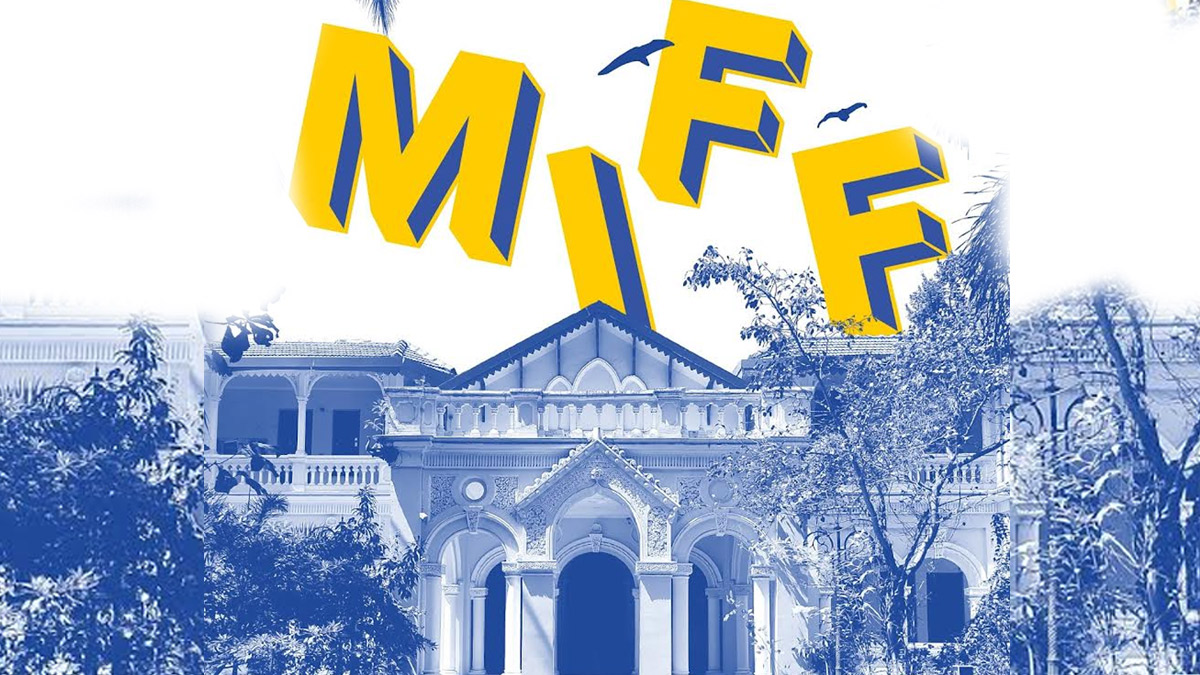
MUMBAI: The 19th edition of the Mumbai International Film Festival 2026 is set to take place from June 15 to 21 at the NFDC Complex, with film submissions currently open and the deadline fast approaching on April 12.
Organised by the National Film Development Corporation under the Ministry of Information and Broadcasting, the biennial festival remains one of South Asia’s most prominent platforms for documentary, short fiction and animation films.
Filmmakers, producers and content creators from across the globe have been invited to submit entries via the Film Freeway platform for the Competition Section. Offline submissions will not be accepted, reinforcing a fully digital entry process.
MIFF 2026 continues to sweeten the deal with a robust awards pool of Rs 55 lakh. The coveted Golden Conch for Best Documentary carries a top prize of Rs 10 lakh, alongside multiple awards across categories, making it one of the most lucrative non-feature film festivals in the region.
A key highlight this year will be the second edition of the WAVES Doc Bazaar, scheduled from June 16 to 18 alongside the festival. Designed as a hub for collaboration, the Doc Bazaar will feature a co-production market, viewing rooms and a work-in-progress lab, bringing together global buyers, sellers and creators under one roof.
Since its inception in 1990, MIFF has built a reputation as a serious showcase for non-feature cinema, drawing participation from filmmakers worldwide. The previous edition saw over 350 films from more than 30 countries, underlining its growing international footprint.
With submissions closing soon and preparations underway, MIFF 2026 is shaping up to be a vibrant meeting point for storytelling, collaboration and cinematic craft, offering filmmakers both a stage and a springboard.







