iWorld
Achha Chalta Hoon: How Arijit Singh’s quiet goodbye broke the internet

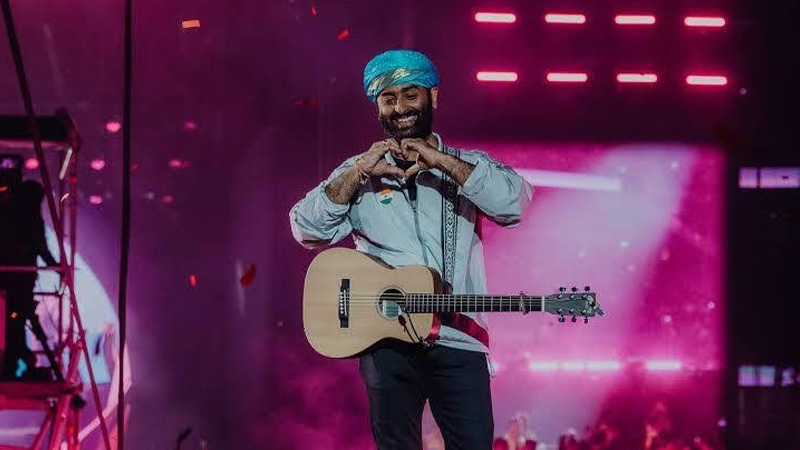
MUMBAI: The news didn’t come via a grand press conference or a glitzy televised special. In true Arijit fashion, low key and deeply personal, the announcement arrived as a quiet series of social media posts on Tuesday, January 27, 2026.
“I am happy to announce that I am not gonna be taking any new assignments as a playback vocalist from now on,” he wrote. “I am calling it off. It was a wonderful journey.”

Just like that, the man who soundtracked every monsoon drive, every first love, and every 2 AM heartbreak for over a decade decided he had sung his last note for the silver screen.
Why now? The search for the small artist
For fans, the timing feels impossible. Arijit is currently at his commercial and critical peak. So, why walk away? The singer was refreshingly candid about his reasons:
• Creative burnout: Arijit admitted that he simply “got bored” with the repetitive nature of playback singing. He confessed to changing song arrangements during live shows just to keep himself interested.
• The small artist dream: He expressed a deep desire to shed the “brand” of being a superstar and return to being a “small little artist.” He wants to go back to his roots, Hindustani Classical Music.
• Courage to change: “Finally, I have gathered the right courage,” he shared. He isn’t quitting music; he’s quitting the industry to rediscover the joy of making music without the pressure of a box office hit.
The Industry in shock: A chorus of tributes
The reaction from legends, peers, and major brands was instantaneous and emotional, reflecting a sense of collective heartbreak across the nation.
MS Dhoni shared a rare, moving tribute, writing: End of an era, but your voice will live forever in our hearts. Thank you for every emotion, every song, every memory. Legend always.
Badshah simply called him “Sadiyon mein ek” (One in centuries).
Amaal Mallik noted that film music would never be the same, comparing the exit to a legend walking into the sunset without asking for a standing ovation.
Shreya Ghoshal supported his move, writing that it was “time to soar higher” and that an artist of his genius cannot be boxed into a set formula.
Even the brands that soundtrack our lives joined the mourning. Saregama posted: When you said “vida karo”, this isn’t what we were expecting. Balaji Wafers added a touch of modern grief, stating: Channa Mereya just got too real, he ate and left no crumbs.
Zepto posted, “Who is cutting onions?”, while JioSaavn noted, “Pal bhar thahre jao just became a little heavier.” YouTube India promised he would “always remain in our playlist.”
Fans have flooded the internet with the lyrics of “Channa Mereya,” the song that has now become the unofficial anthem of his departure.
What’s Next? (The silver lining)
Before you delete your streaming apps in despair, there is a glimmer of hope. Arijit clarified that he isn’t disappearing entirely:
• Pending projects: He will finish his current commitments. Fans can still look forward to his final playback releases throughout 2026, including songs in Vishal Bhardwaj’s O’Romeo and the patriotic track “Maatrubhumi” from Salman Khan’s Battle of Galwan.
• Independent music: He plans to release his own music on his own terms. We are likely moving away from “Arijit the Playback Singer” and toward “Arijit the Independent Composer.”
• Classical exploration: He intends to dedicate his time to learning and performing Indian Classical Music, a lifelong passion that the busy schedule of Bollywood rarely allowed him to pursue.
The bottom line
Arijit Singh’s retirement marks the end of an era. He didn’t just sing songs; he curated the feelings of a billion people. By walking away now, he ensures his legacy remains untarnished, leaving us all wanting more, which is perhaps the greatest gift an artist can give.
He may be leaving the playback booth, but as long as it rains and as long as hearts break, his voice will never truly be gone.







iWorld
Meta warns 200 users after fake Whatsapp spyware attack
Italy-targeted campaign used unofficial app to deploy surveillance spyware.

MUMBAI: It looked like a message, but it behaved like a mole. Meta has warned around 200 users most of them in Italy after uncovering a targeted spyware campaign that weaponised a fake version of WhatsApp to infiltrate devices. The attack, first reported by Agenzia Nazionale Stampa Associata, relied on classic social engineering with a modern twist: persuading users to download an unofficial WhatsApp clone embedded with surveillance software. The malicious application, believed to be developed by Italian firm SIO through its subsidiary ASIGINT, was designed to mimic the real app closely enough to bypass suspicion.
Meta’s security teams identified roughly 200 individuals who may have installed the compromised version, triggering immediate countermeasures. Affected users were logged out of their accounts and issued alerts warning of potential privacy breaches, with the company describing the incident as a “targeted social engineering attempt” aimed at gaining device-level access.
The malicious app was not distributed via official app stores but circulated through third-party channels, where it was presented as a legitimate WhatsApp alternative. Once installed, it reportedly allowed external operators to access sensitive data stored on the device turning a simple download into a potential surveillance gateway.
According to Techcrunch, Meta is now preparing legal action against the spyware developers to curb further misuse. The company, however, has not disclosed details about the specific individuals targeted or the extent of data compromised.
A Whatsapp spokesperson reiterated that user safety remains the top priority, particularly for those misled into installing the fake iOS application. Meanwhile, reports from La Repubblica suggest the spyware may be linked to “Spyrtacus”, a strain previously associated with Android-based attacks that could intercept calls, activate microphones and even access cameras.
The episode underscores a growing reality in the digital age, the threat is no longer just what you download, but where you download it from. As unofficial apps become increasingly convincing, the line between communication tool and covert surveillance is getting harder to spot and far easier to exploit.






