Cable TV
ABU delivers excellent results for Commonwealth Games


MUMBAI: The Asia Pacific Broadcasting Union (ABU) has announced that over a billion people had access to free-to-air coverage of the Melbourne 2006 Commonwealth Games, stretching from Mongolia in Central Asia, down to the Republic of Timor Leste.
ABU’s head of sport in Melbourne John Barton says, “We have built the biggest television platform in Asia and the Pacific for the Melbourne games and we will continue to see it grow over the years, especially with New Delhi hosting the next event in 2010.”
Televising multi sport events such as the Olympics and Commonwealth Games on free-to-air television would have lasting economic benefits for a nation, says Barton.

“We are not just investing in a sporting contest. It is much greater than that. We are showcasing the character of a host nation, its many cultural and commercial assets, and the character and values of the competing nations. That was why it is extremely important for the events to be seen on the free-to-air television markets around the world where their countrymen could share the highs and lows that come with the great sporting occasion.
“Governments and broadcasters have a dual responsibility to make sure that their athletes and teams are given due recognition on television for their years of effort and training. So when they step out onto the international sporting stage they know that their nation is with them, right at that moment, sharing their joy or sadness” he adds.
Governments in Asia are spending hundreds of millions of dollars on sporting infrastructure, facilities, coaches and new training methods. “Asia is thriving as a regional sporting powerhouse with the increasing numbers of Olympic champions. But without television, which has been the engine for growth for many years, that development could be arrested,” he added.




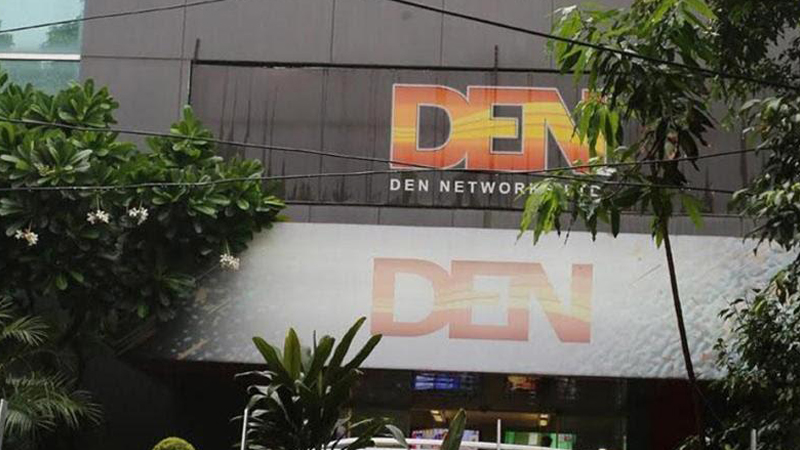
MUMBAI: When margins wobble, liquidity talks and in Q3 FY25-26, cash did most of the talking. Den Networks Limited closed the December quarter with consolidated revenue of Rs.251 crore, marginally higher than the previous quarter but down 4 per cent year-on-year, even as profitability stayed resilient on the back of strong cash reserves and disciplined cost control.
Subscription income softened to Rs.98 crore, slipping 3 per cent sequentially and 14 per cent from last year, while placement and marketing income offered some cheer, rising 15 per cent quarter-on-quarter to Rs.148 crore. Total costs climbed faster than revenue, up 7 per cent QoQ to Rs.238 crore, driven largely by higher content costs and operating expenses. As a result, EBITDA dropped sharply to Rs.13 crore from Rs.19 crore in Q2 and Rs.28 crore a year ago, pulling margins down to 5 per cent.
Yet, the bottom line refused to blink. Profit after tax stood at Rs.40 crore, up 15 per cent sequentially and only marginally lower than last year’s Rs.42 crore. A healthy Rs.57 crore in other income helped cushion operating pressure, keeping profit before tax at Rs.48 crore, broadly stable quarter-on-quarter despite the tougher cost environment.
The real headline-grabber, however, sits on the balance sheet. The company remains debt-free, with cash and cash equivalents swelling to Rs.3,279 crore as of December 31, 2025. Net worth rose to Rs.3,748 crore, while online collections accounted for 97 per cent of total receipts, underscoring strong cash discipline across operations, including subsidiaries.
In short, while Q3 showed signs of operating strain, the financial backbone remains solid. With zero gross debt, steady profits and a formidable cash war chest, the company enters the next quarter with flexibility firmly on its side proving that in uncertain markets, balance sheet strength can be the best growth strategy.






