News Broadcasting
ABC News, Univision to launch first English news channel for Hispanics


MUMBAI: ABC News and Univision News have entered into a multiplatform joint venture to launch an English news network targeted at the Hispanics in that country.
The currently unnamed television channel is expected to launch in 2013. A website, mobile and social media content are expected to debut this summer.
A management team will be announced this summer. The network will have anchors and correspondents in major cities across the U.S.Additionally, ABC News and Univision News will share newsgathering and production resources.

The transaction is subject to the completion of definitive agreements. The landmark agreement.
would capitalise on Univision’s news leadership and expertise in reaching U.S. Hispanics and ABC’s global news leadership to serve over 50 million Hispanics, the youngest and fastest-growing demographic in the U.S.
The new 24/7 network will include America’s first English-language channel for English-dominant and bilingual Hispanics as well as integrated digital and social platforms.
It will deliver news content focused on issues, lifestyle interests and culture of importance to Hispanics and will feature the trusted, award-winning journalists of ABC News and Univision News.
“This exciting joint venture represents the latest example of our long-term strategy to broaden the reach of ABC. Our powerful premier news brand, combined with the world’s leading Hispanic media company, will create the nation’s first news and lifestyle channel targeted to this quickly expanding and important community,” said Disney Media Networks and president, Disney/ABC Television Group.co-chair Anne Sweeney.
Currently, Hispanics represent 16 per cent of the total population in the United States, a number that is projected to double to 30 per cent by 2050. Hispanics are the fastest growing segment of the population, wield considerable spending power of over $1 trillion, and have an increasing impact on social, economic and political trends.
“For more than five decades Univision has been the leader in serving Hispanics in the U.S. and this joint venture is an extension of our vision to deliver the most relevant news and information, regardless of language, to all Hispanics,” Univision Networks president Cesar Conde. “This alliance combines the expertise and brand strength of Univision News with ABC News’ leadership and is another example of Univision’s commitment to serving and empowering Hispanic America while connecting all audiences to Latino issues.”
The new channel will not compete against general news service providers like Fox News. It will target the Hispanics specifically and, besides news, will have lifestyle and wellness content.





News Broadcasting
CNN-News18 to host Fury in the Gulf conclave on West Asia crisis
Three-hour summit to unpack geopolitical fallout and impact on India
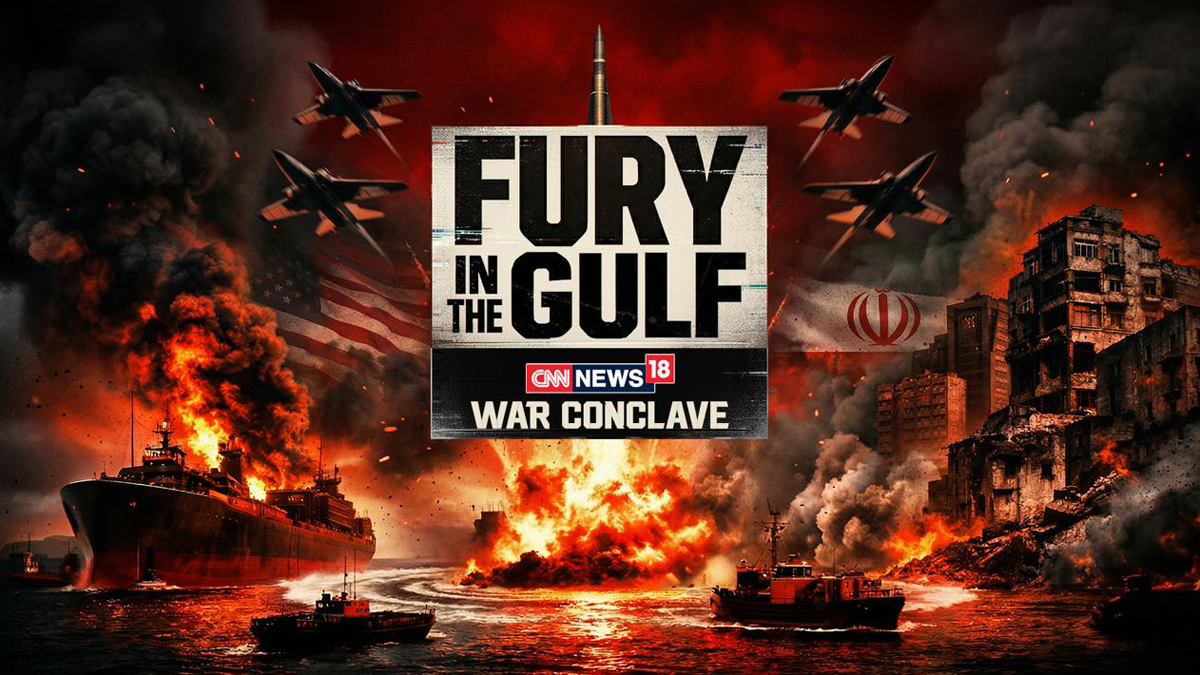
MUMBAI: CNN-News18 is set to host a special three-hour broadcast, Fury in the Gulf – War Conclave, on April 7, aiming to decode the escalating West Asia crisis and its far-reaching implications for India.
Scheduled from 4:00 PM to 7:00 PM, the conclave comes at a time when tensions between Iran and the United States are reshaping global geopolitics and triggering economic uncertainty. With India’s deep energy ties, trade links and large diaspora in the Gulf, the developments carry significant domestic relevance.
Built around the theme ‘Conflict, Consequences, and The Future,’ the programme will feature six curated sessions combining one-on-one interviews and panel discussions. The focus is to cut through the clutter and offer viewers a clearer understanding of the fast-evolving situation.
Key sessions include ‘Diplomacy in Times of War’ featuring Shashi Tharoor, and ‘World After the Iran Conflict’ with voices such as Ram Madhav, Reuven Azar, representatives from the European Union and the Iranian Deputy Envoy. Another session titled ‘Another Dunkirk?’ will bring together K. J. S. Dhillon and Jitin Prasada among others.
CNN-News18 editorial affairs director Rahul Shivshankar said, “In times of war, clarity becomes the most powerful tool. Fury in the Gulf – War Conclave brings together credible voices to address the questions and confusion that arise amid an overwhelming influx of information.”
He added that the initiative is aimed at delivering “facts, perspective, and insight” at a time when misinformation can easily cloud public understanding.
Echoing the sentiment, CNN-News18 CEO– English and business news Smriti Mehra said the conflict marks a defining global moment, with consequences that extend well beyond the region. She noted that the conclave seeks to present the crisis with “depth, nuance and responsibility” so audiences can better grasp its real-world impact.
As geopolitical tensions continue to dominate headlines, the conclave positions itself as an attempt to bring order to the noise, offering viewers a structured, insight-led look at a complex and rapidly shifting global situation.






