News Broadcasting
ABAI: KAVGC 2013 Summit concludes in Bangalore


BENGALURU: The Karnataka Animation, Visual Effects, Gaming and Comics (KAVGC) Summit organised by the Association of Bangalore Animation Industry (ABAI), in collaboration with the government of Karnataka concluded on Thursday 29 August 2013, ending two days of power packed sessions by Indian and international experts from the industry and the Karnataka state government.
The first session on day two: the Business session on Technology was moderated by NVIDIA Country Head Vishal Dhupar and had Arul Moorthy, NVIDIA – GPU in the VFX Workflow Senior Applied Engineer Wil Braithwaite; Autodesk-Mental Ray Lead Animation AE in APAC Prem Moraes; HP – Shared Infrastructure, National Business Development Manager for Cloud Solutions R Balasubramanian and Wipro Technologies CTO of Global Media and Communication Business Jayanta Dey as co-panellists.

This was followed by a session on AVGC in a Globally Connected World moderated by The Children’s Media Foundation, UK Director Greg Childs. The session had representatives from different parts of the world speaking about the facilities that their territories had to offer to the Indian AVGC industry. This included Consuls, Vice-Consuls and Senior Trade Commissioners from Canada, France, UK and Quebec (Canada).
The session on Original Content Development moderated by Liquid Comics Founder Suresh Seetharaman had Walt Disney Television International India ex Director Content and Creative Arnab Chaudhuri; Technicolor Animation and Gaming Art Director Manoj Menon and Novo Juris – “How not to lose it” Sharda Balaji as co-panellists.
One of the most interesting sessions was the Show and Tell Session that had the audience’s undivided attention. Arnab Chaudhuri the director of the Indian animated action film ‘Arjun the Warrior Prince’ (AWP) spoke of the making of the film. Chaudhuri revealed the various real life characters on which every character in his film was based, details about the sets, as well as shared some of the raw footage and sketches that resulted in the final product. One of the best animated products out from India, AWP was produced by UTV motion pictures and Walt Disney Pictures, with Chaudhuri as Director Content and Creative at Walt Disney Television International India.
The summit culminated with a session on Education moderated by Dreamworks Dedicated Unit at Technicolor India Studio Head Adi Shayan. The other panellists were Dr. Ashish Kulkarni (CEO Reliance Animation) in his capacity as Ficci AVGC Forum, Governing Council Member and Ficci-MESC Initiatives for Skill Development; Asian Institute of Gaming and Animation (AIGA) Founder Hanif Mohammed; Native Puppets – Artists Perspective Founder Anand Baid, Karnataka Chitrakala Parishath, College of Fine Arts Director Dr. R Kulkarni; The Painted Sky Art Based Learning Approaches Executive Coach, Founder and Director Anirban Bhatrtacharya.







News Broadcasting
News18 India launches Command Centre war explainer with Arya
New show shifts from debates to decoding global conflicts and impacts
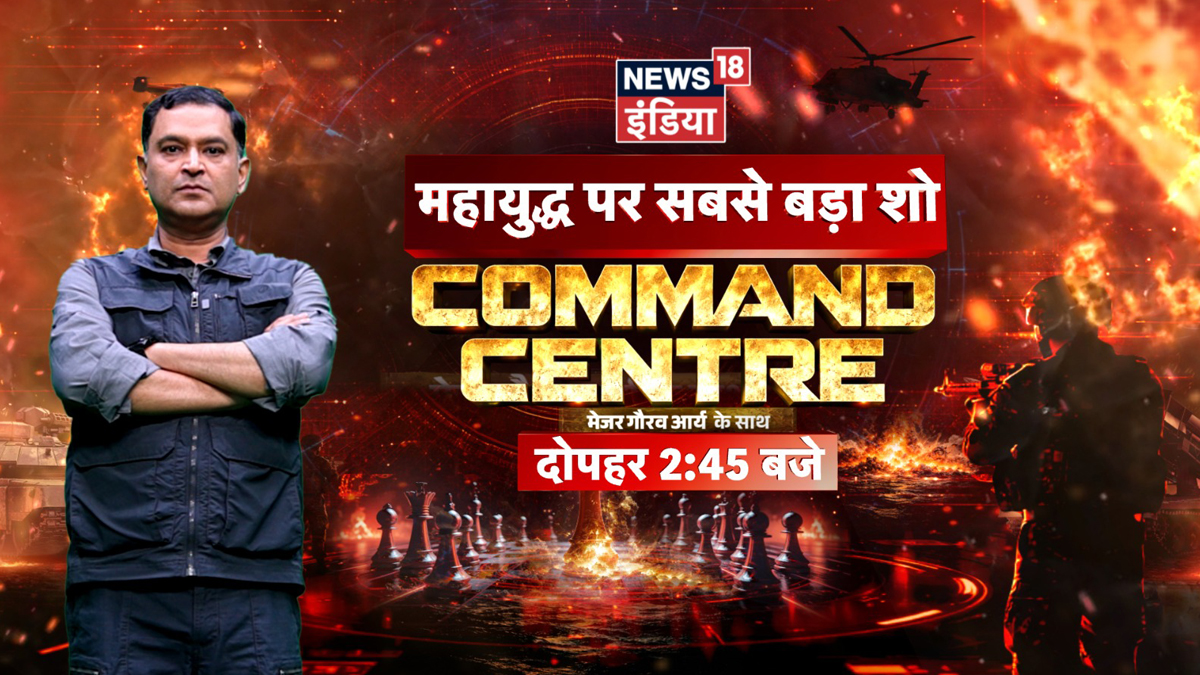
MUMBAI: News18 India has rolled out a new war-focused programme, Command Centre, featuring Gaurav Arya, as it looks to offer viewers a sharper, more grounded take on global conflicts amid rising tensions in West Asia.
Positioned as an “insider war room”, the show moves away from conventional panel debates and instead focuses on explaining military developments, decoding strategy and connecting global events to their everyday impact, from fuel prices to economic shifts.
The format leans heavily on visuals and data. The studio has been designed like a command hub, complete with large LED war maps, real-time graphics and an alert system to track developments as they unfold.
At the centre of it all is Arya, who brings his military background to simplify complex war strategies for viewers. His signature line, “Seedhi baat samjhiye”, anchors the show’s promise of clarity over noise.
News18 India managing editor Jyoti Kamal said, “Command Centre, featuring Major Gaurav Arya is designed to deliver accurate insights and a clear perspective on how evolving conflicts impact everyday life, from household budgets to national security. With expert voices analysing every development in real time, the show goes beyond headlines to decode what’s happening now, what it means, and what could come next.”
Echoing the intent, Gaurav Arya added, “In times of war, confusion is the biggest threat. With News18 India’s Command Centre, we are bringing viewers inside the war room, decoding strategies, tracking every escalation, and explaining, in the simplest terms, what it means for India and for every household. Seedhi baat samjhiye, this is where you understand not just what is happening, but what happens next.”
The weekday show will air in the afternoon slot and will also feature Gaurav Shukla, adding to its editorial depth.
With its mix of analysis, visuals and a clear focus on impact, the show reflects a broader shift in news consumption. Viewers are no longer just watching events unfold, they are looking to understand what those events mean for them.






