News Broadcasting
A winner All the Way

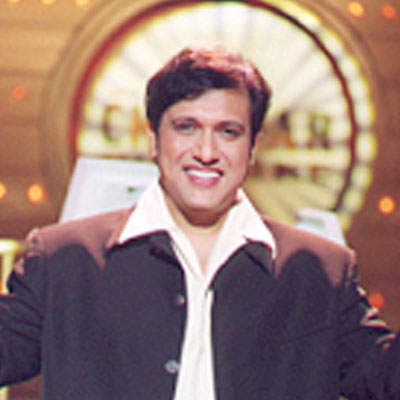
The first episode of Jeeto Chappar Phaad Ke on 26 January 2001 clearly shows what sets Sony Entertainment Television apart from the rest of the programming pack in India – and namely major rival Zee TV. Additionally, it explains why Sony has been racing up the TRP charts.
It had entertainment, it had absorbing quizzing, it had the feeling of family, it had money and consumer durable giveaways and it had interesting twists to the format that has been made popular by Who Wants to be a millionaire? But the two stars of the show were our Virar ka chokra Govinda and the production values. He gyrated, he mimicked, he sang, he chanted poetry and prayers, he quizzed, he goaded participants, he guided them, he stood throughout the show while the participants sat – it was Govinda all the way in his burnt sienna suit.
Jeeto Chappar Phaad Ke – belongs to the genre of quiz game shows – but it did not have the sombre and serious feel that a Kaun Banega Crorepati (KBC) does. KBC, in fact, has begun to drag – despite AB. It is interesting – but it is not fun. Amitabh Bachchan, with no disrespect to him, comes across like the Grim Reaper waiting to grill contestants as compared to Govinda who is there to comfort them and cheer them on.

There was no lock kiya jaye or fix kiya jaye – just a simple placing of a mohur when the contestant answered and finalised her answers. Also she had four friends to guide him/her along: Govinda, Sahi ya Galat (Right or Wrong), Janta Se Maang (Public question), and Chaar se do (Two from four). And the prizes to be won were limitless – not Rs 10 million, not Rs 100 million – but as much as can be won.
On the production front (a pat on Mani Iyer’s Inhouse Productions’ back?), there were none of the wildly moving camera shots that a Sawal Dus Crore Ka had in its first episode. Nor the dark foreboding audiences that the Zee TV show did. The sets were a delight and helped build the show instead of being just appendages. Four overhead circle lights coming on and going crazy before every break. Some observers thought they were gaudy – a tad overdone. And yes the lighting can do with a little less of a yellow cast.
According to Dasgupta, what made the show interesting was the giveaways. “You get evidence that you are physically winning something. When Irvender got a Videocon AC and a Compaq computer, viewers could see that she acutally took home something. And that too at a price of Re 1 only,” he says.
Additionally, the show was choc-a-bloc with advertising. However, the best part was how the time flew – one hardly got to know when the show got over. Actually, one was regrettably annoyed that it had run out of time.
If Govinda and the Sony programming team led by Kunal Dasgupta and Rekha Nigam can keep up the tempo, we could have another piece of programming history being written. Welcome to some heady days ahead!!! Yo!



News Broadcasting
CNN-News18 rolls out Battle for the States ahead of key polls
Multi-format election coverage tracks voter mood across five battleground states
NEW DELHI: CNN-News18 has launched a special election programming initiative titled Battle for the States, as India gears up for high-stakes Assembly elections across West Bengal, Tamil Nadu, Kerala, Assam and Puducherry.
Built around the theme ‘Road to Power’, the multi-format coverage aims to follow the entire electoral journey, from campaigning and polling to results and government formation. The network is leaning into on-ground reportage and data-backed storytelling to decode voter sentiment across regions where local issues often shape the narrative.
The programming line-up includes ‘Vote Tracker’, a three-part series developed in collaboration with survey agency Vote Vibe. The show blends survey insights with expert commentary and field reporting, using augmented reality graphics to present complex electoral data such as vote share, seat projections and leadership preferences in a more accessible format. It will air every Monday evening until April 6.
Adding a cultural lens to political reporting is ‘So Saree!’, a ground-driven segment where women anchors travel across constituencies dressed in traditional handwoven sarees from each state. The format uses attire as a storytelling device, highlighting regional identity while capturing grassroots voices.
Meanwhile, ‘Unfiltered Kaapi’ and ‘Chai-Niti’ bring a more conversational tone, drawing inspiration from everyday political discussions in tea stalls and coffee corners. These segments aim to break down key issues through candid, fast-paced exchanges between anchors and reporters, tailored to regional sensibilities.
For viewers seeking deeper insights, the weekend docuseries ‘Reporters Project’ takes a longer view, with correspondents travelling across constituencies to map voter concerns and political shifts on the ground.
“Elections are about people, their aspirations, identities and the issues that matter to them, and every state tells a different story,” said CNN-News18 editorial affairs director Rahul Shivshankar. He added that the initiative focuses on understanding “the sentiment on the ground and what’s driving voter choices”.
Echoing the emphasis on credibility, Network18 CEO – English and business news Smriti Mehra said the network aims to combine on-ground reporting with data-led insights to deliver clear and timely coverage as the elections unfold.
With a mix of data, culture and grassroots reporting, CNN-News18 is positioning Battle for the States as a comprehensive window into one of India’s most closely watched electoral cycles, where every vote carries a story waiting to be told.