Hindi
‘A Wedding Gift’ is set for May release


NEW DELHI: ‘A Wedding Gift‘ is a film that dares to question Section 498A of the Indian Penal Code to show how it can be misused by anyone to file a false dowry case.
Made under the banner of Aliya Productions, the film is expected to be released next month. The music has been composed by Ray & Brotherhood.
Veteran actor Farida Jalal told indiantelevision.com that she had agreed to act in the film ‘498A – A Wedding Gift’ when its producer-director Suhaib Ilyasi related a brief synopsis, because she felt this was a malaise that should be highlighted.

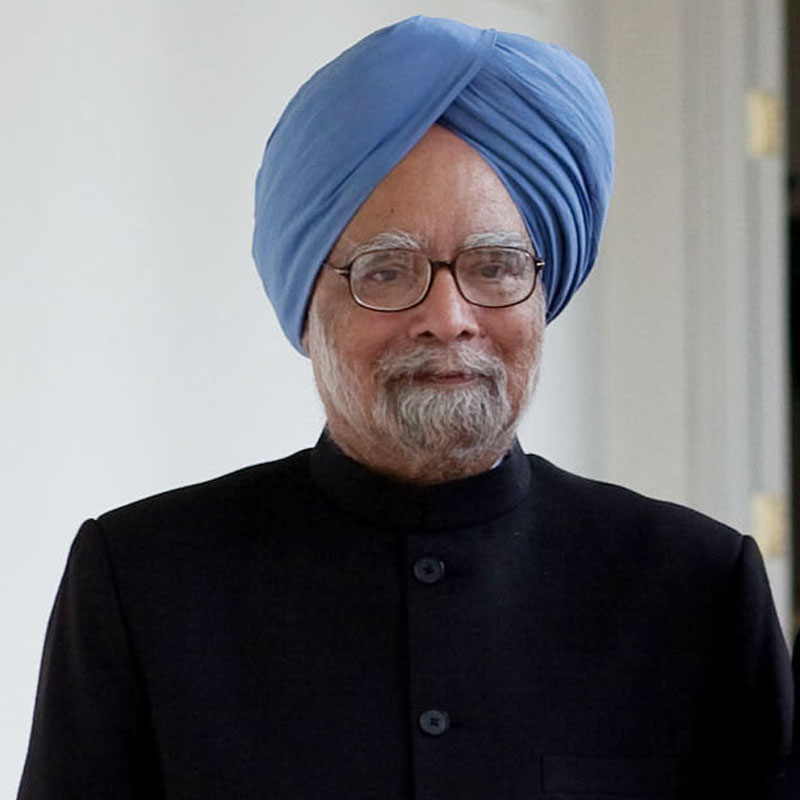
Made on a modest budget of Rs 50 million, the film also stars Alok Nath, Sushma Seth, Reema Lagoo, Colgate Ad boy Harsh Nagar, Supriya Karnik, Deepak Tijori, and the new face from Delhi Shrishti Gautam, apart from a look-alike of Prime Minister Manmohan Singh – Gurmeet Singh, a 65-year-old Jangpura resident who said he is often asked to pose for photos as he looks like Dr Singh.
Veteran ghazal singer Ghulam Ali has rendered a patriotic song and has also acted in the film. “What is so surprising in this? I found the wordings of the song beautiful, music touched me and hence I agreed to sing. This song in any case can be for any country. It’s a song dedicated to one’s own watan. When I was asked to perform on screen, I was initially skeptical but later got into the spirit of it”.
‘And why not,” he asked, adding, “India and Pakistan were one country. There were two brothers till siyasat played its dirty game by separating them and creating a siyasi border in 1947.”
Ilyasi, who had earlier gained fame as the maker of India’s first crime show that exposed real criminals, ‘India’s Most Wanted’ on Doordarshan leading to many arrests, appeared before the Committee of Petitions of the Rajya Sabha go give for his views on Section 498A of the Indian Penal Code.
Ilyasi was asked to give suggestions since his film deals with the freedom that this section gives for any woman or her kin to file false cases against a husband or his family.
The Committee is examining amendments in Section 498A of the Indian Penal Code, 1860. Parliament is considering amending the law after having received numerous complaints from the civil society about misuse of the same.


Hindi
India’s telecom subscribers cross 1.32 billion in February 2026
Broadband base swells past 1.06 billion as Jio and Airtel tighten grip on the market.
MUMBAI: India’s telecom sector is ringing in steady growth once again adding millions of new connections every month while the race for broadband supremacy continues to heat up like a fiercely contested cricket match. According to the latest data released by the Telecom Regulatory Authority of India (TRAI) on 1 April 2026, the total telephone subscriber base in the country reached 1,321.31 million at the end of February 2026. This marked a net addition of 7.31 million subscribers during the month, translating into a monthly growth rate of 0.56 per cent.
Wireless subscribers (including mobile and Fixed Wireless Access) stood at 1,273.31 million, registering a net addition of 6.97 million and a growth rate of 0.55 per cent. Within this, urban wireless connections grew to 730.75 million (growth 0.70 per cent), while rural wireless subscribers reached 542.56 million (growth 0.35 per cent).
Wireline subscribers, though much smaller in scale, showed slightly faster growth. The total wireline base increased to 47.99 million, with a net addition of 0.34 million and a monthly growth rate of 0.70 per cent. Urban areas continued to dominate wireline connections with a share of 89.41 per cent.
Overall tele-density in India improved to 92.66 per cent. Urban tele-density stood at 150.68 per cent, while rural tele-density edged up to 60.02 per cent.
The broadband subscriber base crossed a significant milestone, reaching 1,059.05 million at the end of February 2026. This reflected a healthy net addition of 6.33 million subscribers and a monthly growth rate of 0.60 per cent from January’s figure of 1,052.72 million.
Segment-wise, mobile wireless access continued to drive the majority of growth with 996.52 million subscribers. Fixed Wireless Access (including 5G FWA) added 16.51 million, while wired broadband stood at 46.02 million.
Reliance Jio Infocomm Ltd. maintained its commanding lead with 519.64 million broadband subscribers. Bharti Airtel Ltd. followed with 364.14 million, Vodafone Idea Ltd. with 129.36 million, Bharat Sanchar Nigam Ltd. with 28.70 million, and Atria Convergence Technologies Ltd. with 2.38 million.
Together, these top five players command a massive 98.60 per cent share of the total broadband market.
In the wireless (mobile) segment, private operators continued to dominate with 92.59 per cent market share, leaving public sector undertakings (BSNL and MTNL) with just 7.41 per cent.
Out of the total 1,257.29 million wireless (mobile) subscribers, 1,177.60 million were active on the peak Visitor Location Register (VLR) date, representing an impressive 93.66 per cent activity rate. Bharti Airtel led in this metric with 99.42 per cent of its subscribers active.
Meanwhile, 14.47 million subscribers submitted requests for Mobile Number Portability (MNP) in February, indicating healthy competition and customer churn across zones.
While urban areas still lead in absolute numbers, rural connectivity is slowly catching up. Rural wireless tele-density stood at 59.46 per cent, compared with the much higher urban figure of 142.32 per cent.
Fixed Wireless Access using 5G technology also showed promising traction, growing to 11.93 million subscribers. Reliance Jio and Bharti Airtel are the primary players driving this segment.
The data paints a picture of a maturing yet still rapidly expanding telecom ecosystem. With total telephone subscribers now well past the 1.32 billion mark and broadband users comfortably above 1.06 billion, India continues to solidify its position as one of the world’s largest and most dynamic digital markets.
From bustling city streets to remote villages, more Indians are staying connected than ever before proving that when it comes to telecom, the country’s appetite for growth shows no signs of hanging up anytime soon.






