Budget
A budget like no other; take a bow Ms Sitharaman

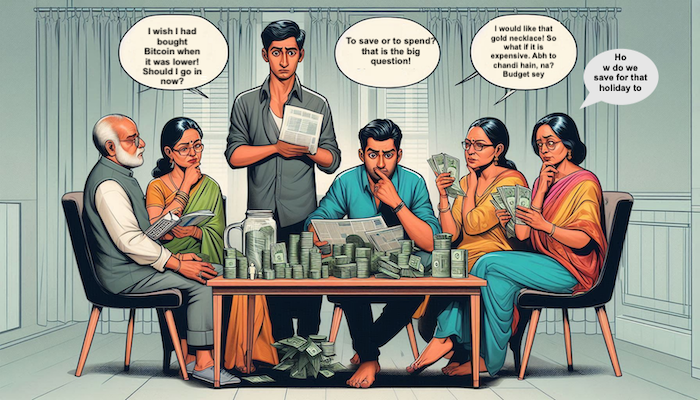
MUMBAI: Imagine opening your paycheck and finding an unexpected bonus—except this time, it’s courtesy of the taxman. Looks like all the meme trolling has finally aided the middle class. FM Nirmala Sitharaman’s Union Budget 2025 under section 115BAC has shaken up India’s tax slabs like a well-mixed cocktail, giving middle-class earners a Rs 1 lakh crore collective boost. If last year’s tax regime was a clunky old scooter, this year’s is a turbocharged sedan with better mileage.
The headline-grabber? The tax-free ceiling now sits at Rs 12 lakh, up from Rs 7 lakh last year, translating into a neat Rs 80,000 annual saving for many households. The 30 per cent tax slab, which kicked in at Rs 15 lakh before, has now been pushed to Rs 24 lakh. That’s a serious upgrade—enough to fund an iPhone 15 Pro Max, a holiday in Bali, or 12 EMIs on a Tata Nexon.
But here’s the real question: will these extra rupees flood shopping malls and stock markets, or will inflation gobble them up before they can do any real good? While finance honchos cheer, economists are cautiously watching if this fiscal facelift is a lasting glow-up or just a one-time Instagram filter.

Tax Slabs
The new tax regime, which now serves as the default for Assessment Year 2025-26, offers a streamlined six-tier structure:
* 0 per cent tax up to Rs 4 lakh (previously Rs 3 lakh)
* 5 per cent on Rs 4–8 lakh
* 10 per cent on Rs 8–12 lakh
* 15 per cent on Rs 12–16 lakh
* 20 per cent on Rs 16–20 lakh
* 25 per cent on Rs 20–24 lakh
* 30 per cent only above Rs 24 lakh (up from Rs 15 lakh earlier)
Under the default new regime for assessment year 2025-26, the 30 per cent tax bracket now kicks in at Rs 15 lakh, up from Rs 10 lakh in the old structure (Part I rates). A taxpayer earning Rs 15 lakh saves Rs 37,500 annually versus the old regime. The slabs now have six tiers (vs four earlier), with a 5 per cent rate for Rs 3-7 lakh and 10 per cent for Rs 7-10 lakh. For seniors, the Rs 5 lakh threshold for octogenarians remains a sweetener.
Sitharaman’s ministry has also played its cards well with surcharge reductions:
* The surcharge on incomes exceeding Rs 2 crore (excluding dividends/capital gains) has been trimmed to 25 per cent from 37 per cent.
* The ultra-rich still face the 37 per cent surcharge, but only on incomes exceeding Rs 5 crore.
* A taxpayer earning Rs 3 crore saves Rs 3.7 lakh in surcharges.
The government’s objective? A calibrated redistribution of wealth that puts more money in middle-class hands while ensuring high earners see incentives to keep investing.
Consumer boom: Will it hold?
A Deloitte study suggests that every Rs 1 saved in taxes results in Rs 0.65 of additional consumer spending. Here’s what that means for the economy:
* Rs 37,500 savings per taxpayer Rs 24,375 extra spending per household
* Eight million taxpayers in this bracket Rs 19,500 crore injected into markets
* Private consumption growth is forecasted to touch 7.8 per cent YoY in H2 2025, up from 6.7 per cent
Says media veteran Yesudas Pillai: ” a proud Indian, I couldn’t have asked for a more comprehensive and forward-looking budget, setting aside all political narratives.It is visionary, inclusive, and growth-driven—a bold economic catalyst that fuels consumption, empowers communities, and accelerates sustainable development. With its progressive, consumption-led, and investment-focused approach, this blueprint lays the foundation for a resilient and thriving future. The budget ensures no sector is left untouched, with a strong emphasis even on center-state collaboration to drive holistic and inclusive growth. This is, without a doubt, the most transformative budget I have ever seen.
The stock market is throwing a post-Budget party, and everyone’s invited! Avenue Supermarts (D-Mart’s parent) is up over 10 per cent, clocking its fifth straight day of gains. FMCG heavyweights HUL and ITC saw a five per cent surge, as investors bet on rising grocery bills. Varun Beverages, PepsiCo’s bottling giant, snapped a two-day losing streak and fizzed up by six per cent. Not to be left out, Sapphire Foods (operator of KFC and Pizza Hut) is dishing out a near 10 per cent jump.
Even food delivery titans Zomato and Swiggy are savoring a six per cent rally, proving that tax savings might just be feeding India’s appetite. Other big gainers? Godfrey Phillips (Up 12 per cent), Blue Star (Up 11 per cent), Phoenix Mills (Up 7.5 per cent), Devyani International (Up seven per cent), and Godrej Consumer (Up 6.5 per cent). Looks like the budget has delivered more than just tax cuts—it’s serving up a full-fledged consumption boom!
Tata Motors ED Girish Wagh said, “Cutting customs duties on battery materials is a power move—literally. It’s a big push for India’s EV ecosystem and a greener future.”
Godrej Consumer Products CFO Aasif Malbari noted, “This budget balances rural growth, manufacturing, and consumer demand—vital cogs for the FMCG sector. More jobs and rural investments mean stronger markets and higher consumption.”
Marketing bonanza: Rs 2.3 trillion up for grabs?
India’s advertising industry is preparing for a Rs 2.3 trillion windfall, assuming 30 per cent of tax savings flow into discretionary spends. Expect:
* E-commerce wars: Flipkart, Amazon, Nykaa, and Myntra gearing up for record discount seasons.
* Luxury labels expanding: Brands like Louis Vuitton and Tesla targeting Tier-2 cities.
* Digital ad spends exploding: Google and Meta looking at all-time high revenues.
When disposable income rises, premiumisation kicks in. Consumers opt for the iPhone over a budget Android, or a luxury sedan over a hatchback. GST collections are also forecasted to rise 12 per cent YoY, reflecting the broader spending wave.
Beyond direct tax cuts, the budget carries a silent game-changer—the reduction of TDS on insurance commissions from 5 per cent to 2 per cent. With insurance premiums collecting Rs 7.3 lakh crore last year, this subtle move could spur a 15 per cent rise in agent-driven policy sales. Expect health and term insurance policies to fly off the shelves, driven by a more incentivised agent network.
Despite all the optimism, a few red flags remain:
* Inflation concerns: At 6.1 per cent in December 2024, inflation could dilute some tax savings.
* Sensex jitters: The stock market’s muted response suggests investor caution over fiscal deficits.
* Savings paradox: If too many households hoard their extra cash instead of spending, GDP growth could take a hit.
The 2025 tax reset has transformed India into a giant Petri dish of economic psychology. Will taxpayers loosen their purse strings and fuel growth, or will inflation rain on this parade? Will digital marketing giants be the biggest winners of this newfound liquidity? And most importantly—does this set the stage for GST rate rationalisation ahead?
One thing is clear: India’s middle class is stepping into 2025 with thicker wallets and bigger spending power. Whether that power






MUMBAI: Anuj Singhal, managing editor at CNBC- AWAAZ and CNBC BAJAR, operates at the sharp end of India’s business news ecosystem. With over two decades in business journalism, he has earned credibility for decoding policy, markets and macro trends for millions of Hindi-speaking investors. Equal parts newsroom leader and market analyst, he shapes editorial direction while anchoring flagship shows that break down the economy, politics and corporate India in real time.
Known for cutting through jargon and hype, Singhal blends data, discipline and clarity — a mix that has made him one of the most trusted voices in Hindi business news.
In this interaction, he discusses the Union Budget, trade deals, newsroom strategy and what truly moves markets and ratings.
• What was the single most market-moving announcement in this Budget, and why?
The most market-moving element was the clear commitment to fiscal consolidation without compromising capex. The glide path on fiscal deficit reassured bond markets and foreign investors, while sustained public investment kept growth expectations intact. That balance removed a big overhang for both equities and debt.
• Do you see this Budget as growth-oriented, fiscally cautious, or politically calibrated?
This Budget is growth-led but fiscally disciplined. It avoids overt populism, stays within macro guardrails, and prioritises medium-term competitiveness over short-term optics. Politically, it is restrained; economically, it is deliberate. The message is clear: stability over spectacle.
• How is CNBC-AWAAZ programming different, especially in decoding trade deal impact?
CNBC-AWAAZ goes beyond headline reaction. We translate policy into portfolio impact — sector by sector, stock by stock.
On trade agreements, our focus is on:
-Earnings visibility
-Export competitiveness
-Currency implications
-Margin sustainability
We don’t treat trade deals as political milestones. We decode them as profit-and-loss events for corporate India and map them to FY earnings trajectories.
• Which sectors look like clear winners and laggards over the next 12–18 months?
The next 12–18 months favour sectors aligned with structural spending and supply-side strengthening.
– Clear beneficiaries:
Capital goods and infrastructure
Manufacturing linked to export chains and PLI ecosystems
Power, defence, and logistics
– Relative laggards:
Consumption segments dependent on immediate demand revival
Businesses facing margin pressure from global volatility or pricing power erosion
This is not a momentum-driven market environment. It is execution-driven. Balance-sheet strength and order visibility will matter more than narrative.
• One headline to sum up this Budget 2026 for India Inc?
“Steady Hands, Long-Term Vision: A Budget That Rewards Discipline Over Drama”.
• What editorial filters do you apply before calling something ‘market-positive’ or ‘negative’?
We apply three structured filters:
– First: Earnings translation — does this materially change earnings visibility or cash flow outlook?
– Second: Time horizon — is the impact immediate, cyclical, or structural?
– Third: Valuation context — good news priced in or not.
If a policy doesn’t move earnings or risk perception, we don’t oversell it.
• How has business news consumption changed around big policy events?**
There has been a clear behavioural shift. They’re less interested in what was said, more in what it means for their money. There’s also a clear shift toward second-screen consumption, with digital platforms complementing live TV. The audience seeks sharper accountability. Viewers no longer accept broad optimism or pessimism — they want frameworks, numbers, and sector mapping.
• CNBC-AWAAZ decisively outperformed on Budget Day. What editorial and distribution choices mattered most?
Three deliberate strategic choices:
– Preparation depth:
We build scenarios months in advance — deficit ranges, sectoral incentives, tax calibrations — so we’re ready with analysis the moment numbers are announced.
– Language of impact:
We translate macro policy into investor-friendly Hindi without diluting complexity. That bridges accessibility and sophistication.
– Integrated distribution:
Television, YouTube, and digital platforms operate as one editorial grid, not parallel silos. This ensures continuity of narrative.We stayed analytical while others stayed reactive.
• How different is your YouTube audience from your TV audience?
The behavioural differences are subtle but important. TV audiences prioritise authority, structured debate, and context. YouTube audiences want speed, clarity, and actionable insights — often sharper, sometimes more opinionated. However, both share one expectation: accuracy. The format evolves; the trust benchmark does not.
• How do you retain viewers after the budget speech ends?
By shifting from announcements to implications.Retention comes from shifting the narrative from announcement to implication. We break down sectoral breakouts, stock-level impact, and what to do next. The speech is just the trigger; analysis is the destination.
• Is Budget Day your biggest traffic day?
It is one of the biggest — but more importantly, it is among the deepest in engagement. Viewers spend longer durations, revisit segments, and seek follow-up programming. That indicates behavioural trust, not just traffic.
• What’s the first thing you personally track on Budget Day — the speech or the markets?
The markets. They’re the fastest truth-teller. The speech explains intent; markets reveal interpretation.
• Your personal Budget-day ritual?
Early morning prep, minimal distractions, and once the speech begins, complete immersion. For me, Budget Day is less about reaction and more about reading between the lines.
• What drove your Budget-day ratings dominance, and how are Budget and trade deals shaping markets now?
Our dominance came from credibility, consistency, and clarity.
As for markets, both the Budget and recent trade deals are reinforcing a narrative of policy stability and global integration, which supports valuations even amid global volatility.
For Singhal, the market is the final judge. Policies can promise and speeches can persuade, but prices reveal what investors truly believe. As India’s investor class grows more informed and more demanding, business journalism is shifting from commentary to calibration. The premium is on clarity, context and credibility. In a landscape flooded with noise, the real edge lies in interpretation. In the end, the markets listen to numbers, not narratives , and Singhal’s craft is helping viewers tell the difference.






