News Broadcasting
9 million broadband connections by year-end


NEW DELHI: The government has set a target of providing nine million broadband connections by this year end and 20 million connections by the end of 2010.
Addressing the Parliamentary Consultative Committee attached to his ministry, Communications and Information Technology Minister Dayanidhi Maran stated that more than a million broadband connections would be added per month before the end of 2007 thanks to the availability of new disruptive wireless broadband technologies such as Wi-MAX.
He stressed the need for wire line and wireless broadband to co-exist and expand together and said new applications such as tele-aid medicines, IPTV, video conferencing, e-governance, e-commerce etc. will be available to citizens with broadband availability. Members complained about the poor mobile connectivity in the rural/remote areas and stressed the need for improving the complaint redressal mechanism in the backward and rural areas.

There will be special emphasis for the North-Eastern States and Jammu & Kashmir, Maran added. He informed the members that the Bharat Sanchar Nigam Limited (BSNL) had declared Year 2007 as “Year of North East and Jammu Kashmir” with the objective of improving teleconnectivity in these states. Dr. Shakeel Ahmad, Minister of State for Communications and Information Technology was also present.
Through a presentation on the initiatives on Broadband, members were shown the targets to be achieved under the broadband initiatives, broad strategy and action plans prepared by the BSNL and Mahanagar Telephone Nigam Limited (MTNL).
It is envisaged under the action plan that broadband coverage of all secondary and higher secondary schools, public health care centers and Village Panchayats would be provided by the year 2008. Broadband connectivity would be provided to 100,000 Community Service Centers (CSC) covering 20000 CSCs by ADSL by September 2007; 1000 blocks by wireless broadband by December 2007 and the remaining 5000 blocks by wireless broadband with USO support by June 2008. BSNL, as part of their action plan, have envisaged adding an average of 500,000 broadband connections per month from January 2008.
Eighty per cent of the exchanges would be broadband by the end of 2007 and roll out of IPTV will begin in major cities. In addition to this, BSNL will aggressively roll out high speed broadband (like Wi-MAX) services and allow integration of multiple access technology like ADSL 2 +, VDSL 2, fibre-home, Wi-Fi, Wi-MAX, 3G, CorDECT etc. The focus will be to provide multi-play instead of triple play.
As a part of the strategy, MTNL has envisaged a target of providing one million broadband connections by the end of this year and addition of an average 100,000 connections per month from January 2008. It has also decided to strengthen its IPTV services which have been recently rolled out fully in Mumbai and in limited areas of Delhi.
Maran informed the members about the recent amendment to the Indian Telegraph Act to provide support from USO fund for mobile and broadband services in remote/rural areas. He said restrictions of providing mobile services within 10 km. of international borders had been relaxed to 500 metres except along the Line of Control and Line of Actual Control in the areas of Akhnoor and Pathankot of J and K. Maran hoped that mobile connectivity to the rural area and border areas will improve significantly with these decisions.



News Broadcasting
CNN-News18 rolls out Battle for the States ahead of key polls
Multi-format election coverage tracks voter mood across five battleground states
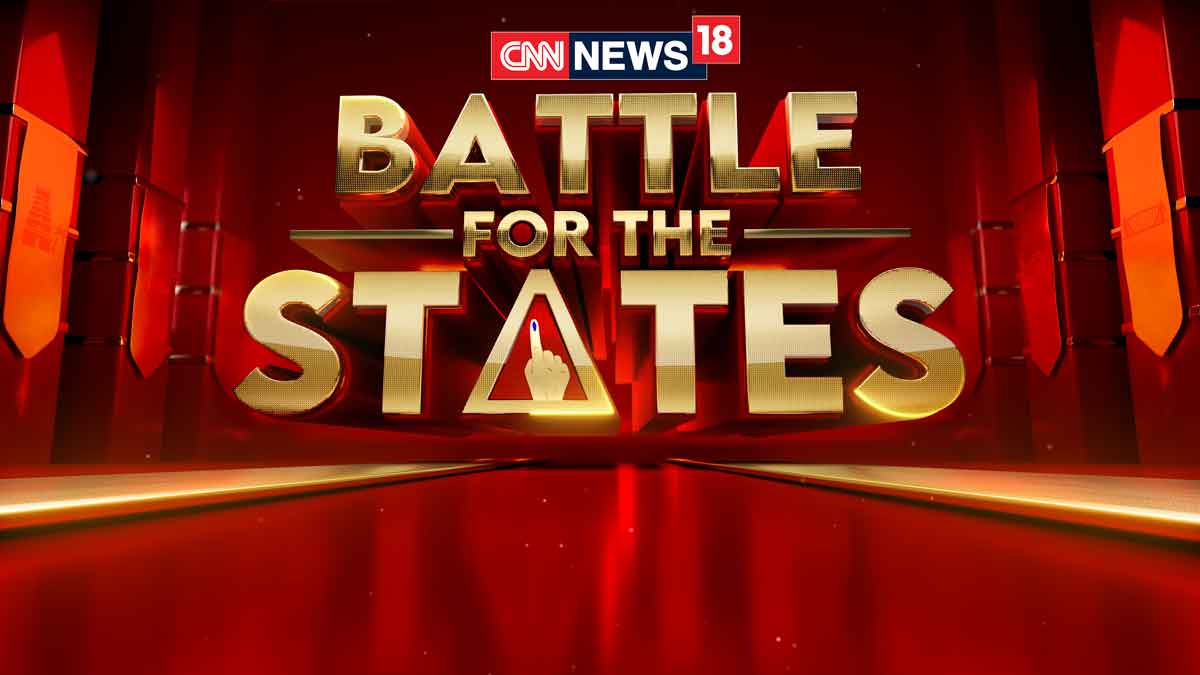
NEW DELHI: CNN-News18 has launched a special election programming initiative titled Battle for the States, as India gears up for high-stakes Assembly elections across West Bengal, Tamil Nadu, Kerala, Assam and Puducherry.
Built around the theme ‘Road to Power’, the multi-format coverage aims to follow the entire electoral journey, from campaigning and polling to results and government formation. The network is leaning into on-ground reportage and data-backed storytelling to decode voter sentiment across regions where local issues often shape the narrative.
The programming line-up includes ‘Vote Tracker’, a three-part series developed in collaboration with survey agency Vote Vibe. The show blends survey insights with expert commentary and field reporting, using augmented reality graphics to present complex electoral data such as vote share, seat projections and leadership preferences in a more accessible format. It will air every Monday evening until April 6.
Adding a cultural lens to political reporting is ‘So Saree!’, a ground-driven segment where women anchors travel across constituencies dressed in traditional handwoven sarees from each state. The format uses attire as a storytelling device, highlighting regional identity while capturing grassroots voices.
Meanwhile, ‘Unfiltered Kaapi’ and ‘Chai-Niti’ bring a more conversational tone, drawing inspiration from everyday political discussions in tea stalls and coffee corners. These segments aim to break down key issues through candid, fast-paced exchanges between anchors and reporters, tailored to regional sensibilities.
For viewers seeking deeper insights, the weekend docuseries ‘Reporters Project’ takes a longer view, with correspondents travelling across constituencies to map voter concerns and political shifts on the ground.
“Elections are about people, their aspirations, identities and the issues that matter to them, and every state tells a different story,” said CNN-News18 editorial affairs director Rahul Shivshankar. He added that the initiative focuses on understanding “the sentiment on the ground and what’s driving voter choices”.
Echoing the emphasis on credibility, Network18 CEO – English and business news Smriti Mehra said the network aims to combine on-ground reporting with data-led insights to deliver clear and timely coverage as the elections unfold.
With a mix of data, culture and grassroots reporting, CNN-News18 is positioning Battle for the States as a comprehensive window into one of India’s most closely watched electoral cycles, where every vote carries a story waiting to be told.