News Headline
‘2006 will bring a dramatic shift in status quo’

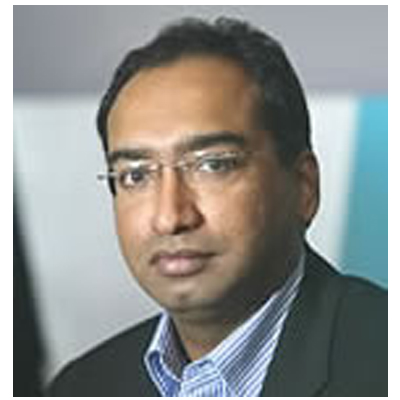
As the curtain falls down on 2005, Star India COO Sameer Nair gives Indiantelevision.com his take on what the year has been and what the industry can expect from 2006. In a free-wheeling conversation, Nair races through an array of subjects ranging from narrative fiction to IPTV. Tune in to one of the best brains in Indian television:
As I look back to the start of the year, the biggest question for us was, “What’s going to happen with our Star One attack / experiment?” As regards Star Plus, of course, all our energies were focussed on bringing back KBC.

And what of Star Plus? There was all this talk doing the rounds that Star Plus was losing prime time share. Yes it was, but not to the competition. What our research showed was that it was news and regional channels that were eating into our audiences. It is news channels that effectively, seem to be competing with general entertainment channels. And that is not too surprising if you really think about it. Some of the stuff you get to see on news channels nowadays is far more bizarre than anything that Hindi soap writers could ever dream up.
Now coming back to channel share. What we are not losing is share of audience. What we are losing and will have to fight for, and that goes for everybody, is share of time. The number of hours spent watching is going down because of alternative sources of activity. This is being masked to an extent due to the growth of the market. The mature side of the spectrum of the TV viewing population is actually consuming less. While it is the new viewers that are making up for the slack.
We launched Star One with the purpose of wooing those audiences who showed this tendency to break away from Star Plus. One is skewed to the guys getting off while Plus caters to the old loyalist and the new entrant.
Speaking about programming strategies, today, clutter cutting programming holds the key. I would say, this is were our competition failed. Their shows may be good but not different enough to make people break away from us. That requires really attractive and compelling content. Going by the theory, “People watch programmes and not channels”, you require really strong magnetic programming to be successful. TV programmes and channels are going to further focus on the differentiation in contrast.
If you look at what is happening abroad, narrative television made a grand comeback this year, thanks to some extremely strong and successful properties such as Desperate Housewives and Lost. The best thing is, it gives a sense of realism as well. I would put this as narrative fiction at its best.
This is a huge shift because in the West, the reality and gameshow genres were given undue importance. After the initial success, they were treated with an over-the-top interest. The quality started degenerating and hence people lost interested in them. The best way to use reality shows and gameshows is in stunts and spikes. They can’t be a permanent property. For example, running a show like Nach Baliye demanded a lot of time and effort. Nach Baliye was almost like an enterprise for us. You can do these kind of properties only once in a year. So, reality shows and gameshows can’t ever be the mainstay of a channel permanently.
Audiences today are in an age of distraction. Unless you have an extra strong and compelling property to keep them glued and engaged, you are at a loss. Nowadays, even an SMS can cause a lot of distraction. There is the threat also coming from Direct to Home (DTH). Digital Video Recorder (DVR) and even multiplex is challenging television entertainment.
So what is the solution? People say content is the king. And then we talk about the lack of good writers. But if that doesn’t happen, what will you do. You tend to find ways around the problem. For example, we have been acquiring Telenovellas and there you have got a ready-made, written work. You just need to translate it. That’s one solution which has delivered for us.
The content should have strong overpowering impact. Serials like Kyunki… and Kahaani… are examples of good works from an Indian perspective. They are extremely complicated individual stories. The issue is, how will you establish a new show in the ranks of such successful properties? Nowadays, the audience is more demanding. In loose terms, creating good content is hard. But, in actual terms, it is very, very hard. In the present circumstances, you will have to acquire share of time, share of mind and that makes the effort very complicated.
In this context, it would be nice to look at the strategy the Times of India followed to fight the recent newspaper boom in Mumbai. They launched Mumbai Mirror and clubbed it with Times of India and that made a huge bunch of news. TOI‘s intention was to block readers from getting into new entrants such as DNA and Hindustan Times. I felt that was a brilliant marketing strategy from TOI to retain share of mind and share of time.
English language television is going to become an addressable DTH story. English channels have no place in cable. Their advertising revenue is low and cannot depend on cable for subscription revenues.
Then we will have to face broadband and IPTV though they are still far away. Streaming live television content on mobile may be very expensive now. But it is going to change. The moment our broadband breaks the bandwidth barrier and gets connected to households, things are going to change. Amidst all these innovations and new platforms, television will still be viewed as family entertainment. But larger and larger sections of people will start accessing other modes. So you need to prepare for that.
2006 will be the setting stage for 2007, 2008 and 2009. The balance has been shifting and in 2006, the balance is going to tilt. It will be a dramatic shift in status quo. Be it DTH or broadband, everything seems to be coalescing into 2006. Programming-wise as well, 2006 could well be how 2000 was. We will have to offer something special, something better. 2006 appears to be the year of DTH. It will be like a forest fire. We will be able to acquire subscribers more aggressively.
As far as the regional space is concerned, Star Utsav it going to play a significant role for us. This is still in the planning stage, but we are actively considering dubbing some popular Hindi shows in Bengali, Gujarati, Telugu, Kannada and Marathi and telecasting them through Star Utsav in that particular region as special feeds. This will give us an idea on which show works in which language.
According to this, we can mix and match and even go for original productions in these particular languages. Then, later, we will think about launching regional versions of Star Utsav in these languages. I feel that is the most cost-effective strategy as far as regional television space is concerned.






NEW DELHI: Hamdard Laboratories gathered a cross-section of India’s achievers in New Delhi on Friday, handing out the Hakeem Abdul Hameed Excellence Awards to figures who have left their mark across healthcare, education, sport, public service and the arts.
The ceremony, attended by minister of state for defence Sanjay Seth and senior officials from the ministry of Ayush, celebrated individuals whose work blends professional success with a sense of public purpose. It was as much a roll call of achievement as it was a reminder that influence is not measured only in profits or podiums, but in people reached and lives improved.
Among the headline awardees was Alakh Pandey, founder and chief executive of PhysicsWallah, recognised for turning affordable digital learning into a mass movement. On the sporting front, Arjuna Awardee and kabaddi player Sakshi Puniya was honoured for her contribution to the game and for pushing women’s participation onto bigger stages.
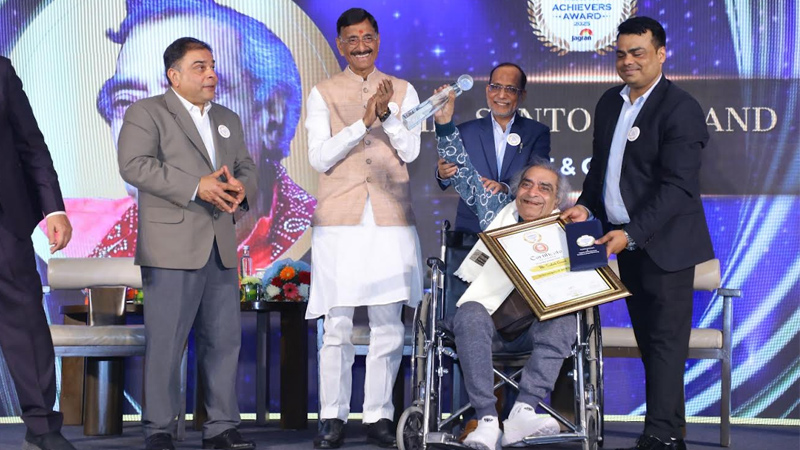
The cultural spotlight fell on veteran lyricist and poet Santosh Anand, whose songs have echoed across generations of Hindi cinema. At 97, Anand accepted the honour with characteristic humility, reflecting on a life shaped by perseverance and hope.
Healthcare honours spanned both modern and traditional systems. Manoj N. Nesari was recognised for strengthening Ayurveda’s place in national and global health frameworks. Padma shri Mohammed Abdul Waheed was honoured for his research-backed work in Unani medicine, while padma shri Mohsin Wali received recognition for his long-standing contribution to patient-centred care.
Education and social development also featured prominently. Padma shri Zahir Ishaq Kazi was honoured for decades of work in education, while former Meghalaya superintendent of Police T. C. Chacko was recognised for public service. Goonj founder Anshu Gupta received an award for his dignity-centred rural development initiatives, and the Hunar Shakti Foundation was honoured for empowering women and young girls through skill development.
The Lifetime Achievement Award went to former IAS officer Shailaja Chandra for her long career in public healthcare and governance, particularly in the traditional systems under Ayush.
Speaking at the event, Hamdard chairman Abdul Majeed said the awards were a tribute to those who combine excellence with empathy. “These awardees reflect Hakeem Sahib’s belief that healthcare, education and public service must ultimately serve humanity,” he said.
Minister Seth struck a forward-looking note, saying India’s young population gives the country a unique opportunity to become a global destination for learning, health and wellness by 2047.
The ceremony also featured the trailer launch of Unani Ki Kahaani, an upcoming documentary starring actor Jim Sarbh, set to premiere on Discovery on 11 February.
Instituted in memory of Unani scholar and educationist Hakeem Abdul Hameed, the awards have grown into a national platform that celebrates those building a more inclusive and resilient India. For one evening at least, the spotlight was not just on success, but on service with substance.






