I&B Ministry
191 MSOs get 10 year licences under DAS for specified areas, 7 allowed to cover more areas

NEW DELHI: Pursuant to the Information and Broadcasting Ministry (I&B) urging the Home Ministry to expedite security clearances if digital addressable system (DAS) deadline for phase III has to be achieved, the past 10 weeks have seen a quantum jump in the number of multi-system operators (MSOs) getting 10 year registration: from 169 as on 10 April to 191 as of 22 June 2015.
While there have been licences given, there are a few who have lost their licences. These include – SR Cable of Bangalore ceasing activity, and the Sun-owned Kal Cables of Chennai and Digicable Network India of Mumbai being refused security clearance.

Some others have had their areas modified. These include one in Maharashtra (JPR Channel of Mumbai to cover pan India), Madhya Pradesh (CAN Digital of Indore to also cover Bhopal and Indore), Barak Communication of Assam (to cover more areas in the state), Delhi Distribution Company (to cover Pan India), Technobile Systems of Haryana (to cover more areas in Uttar Pradesh, Uttaranchal, Haryana and Rajasthan) and Sea TV Network of Agra, and Novabase Digital Entertainment of Delhi that have got revised licences.
Most of these MSOs had been given provisional permission earlier.

I&B Ministry
Doordarshan, ICCR sign MoU to boost global reach of Indian culture
Pact taps TV, radio and digital platforms to take cultural content worldwide
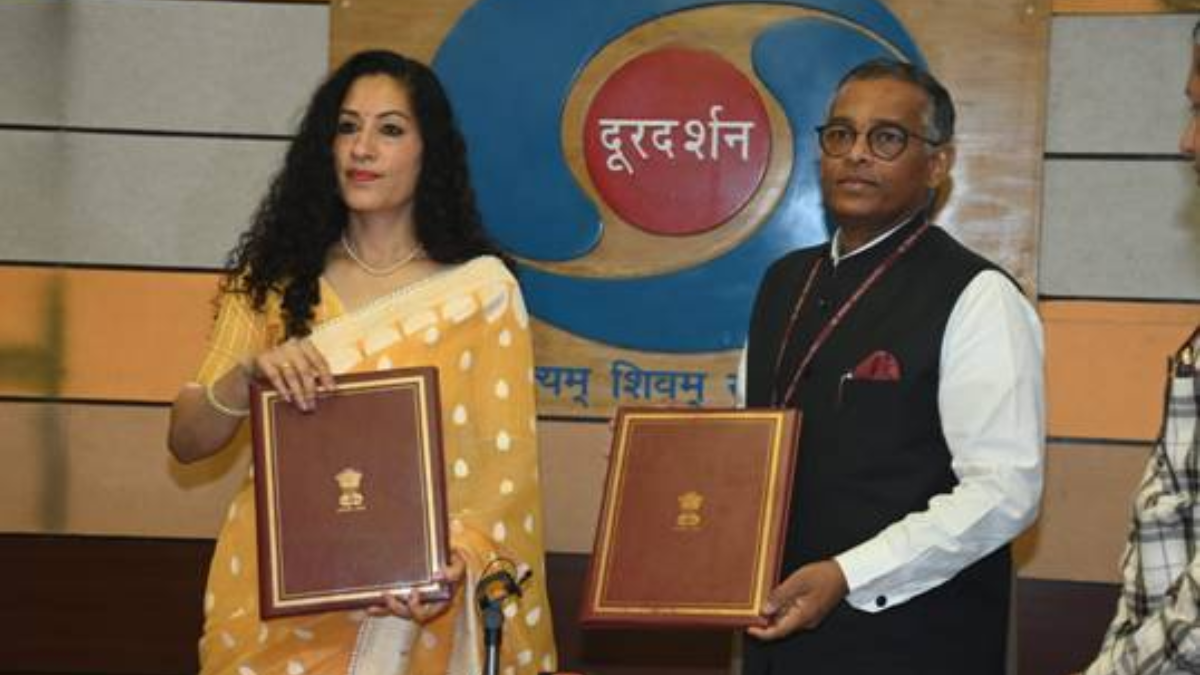
NEW DELHI: In a move aimed at taking India’s cultural story further across borders, Doordarshan under Prasar Bharati has signed a memorandum of understanding with the Indian Council for Cultural Relations to expand the global reach of Indian cultural content.
The agreement, signed on April 7 at Doordarshan Bhawan, brings together the content strength of ICCR and the wide broadcast network of Doordarshan, spanning television, radio and digital platforms.
Under the partnership, ICCR will provide a steady stream of cultural programming, including performances and events organised by Indian missions abroad such as embassies, consulates and cultural centres. Doordarshan will handle production, coverage and distribution, ensuring that these programmes find audiences not just in India but across the world.
The collaboration also opens the door for recorded cultural content from overseas missions to be aired across multiple platforms, including OTT and social media, making Indian art, music and heritage more accessible to global viewers.
A notable feature of the MoU is joint ownership of content rights in perpetuity, including digital rights. This allows both organisations to archive and reuse material over time, building a long-term cultural repository while maximising reach. Doordarshan will also support pre-event promotion and cross-platform visibility to drive engagement.
Speaking at the signing, Doordarshan director general K. Satish Nambudiripad and Indian Council for Cultural Relations director general K. Nandini Singla highlighted the potential of the partnership to strengthen India’s cultural diplomacy through modern media channels.
The agreement, initially valid for three years, also allows Doordarshan to explore monetisation opportunities from the content generated, adding a commercial layer to cultural broadcasting.
As India looks to blend tradition with technology, this partnership signals a clear intent to make its cultural voice not just heard, but seen and streamed across the globe.






