Hindi
YRF-exhibitor spat ends; multiplexes screen Tashan nationwide

MUMBAI: After a week-long standoff, the disagreement over revenue sharing terms between big banner studio Yash Raj Films and the multiplexes over the release of its film Tashan has finally been resolved.
This has resulted in the film releasing in multiplexes nationwide from today.
The agreements that have been thrashed out between Yash Raj and the multiplexes cover all the films that India‘s biggest studio will release this year and include Kunal Kohli‘s Thoda Pyar Thoda Magic on 27 June, Siddharth Anand‘s Bachna Ae Haseeno on 15 August, Jugal Hansraj‘s Roadside Romeo on 24 October, finally culminating with Aditya Chopra‘s Rab Ne Bana Di Jodi on 12 December.
Post the release of Tashan on 25 April, multiplex chains like PVR Cinemas, Adlabs, Shringar Cinemas, Inox Leisure, E-City Ventures‘ Fun Cinemas, and Cinemax had rejected Chopra‘s demand for 50 per cent of ticket sales share in the first and second weeks of release. The multiplexes were not ready to meet Chopra‘s demands as other production houses were charging 48 per cent for the first week and 45 per cent for the second week as revenue share.
The terms that have been agreed upon now are to the mutual satisfaction of all the concerned parties, states an official release from Yash Raj.
According to industry sources, the distribution percentage finally agreed upon between Yash Raj and distributors are 48:52, 38:62 and 30:70 for the first, second and third week respectively for the Mumbai territory. The terms for other cities will be 50:50, 60:40 and 70:30 for weeks one, two and three respectively.
These were the revenue sharing terms under which recent big films like Jodhaa Akbar, Welcome and Taare Zameen Par were released as well.
A point of note here is that for Yash Raj‘s biggest release for 2008 – Rab Ne Bana Di Jodi – a different formula has been agreed upon. The revenue share terms for Rab Ne… are the same as what Shah Rukh Khan negotiated last year for his blockbuster home production Om Shanti Om. The terms being 50:50, 57.5:42.5 and 65:35 for the first, second and third weeks respectively in Mumbai, while for other territories it will be 50:50, 55:45 and 65:35 for the first three weeks.

Hindi
Zee5 and Applause Entertainment team up for whodunnit ‘Everybody Loves Sohrab Handa’
Rajat Kapoor directs star-studded murder mystery streaming from 10 April.
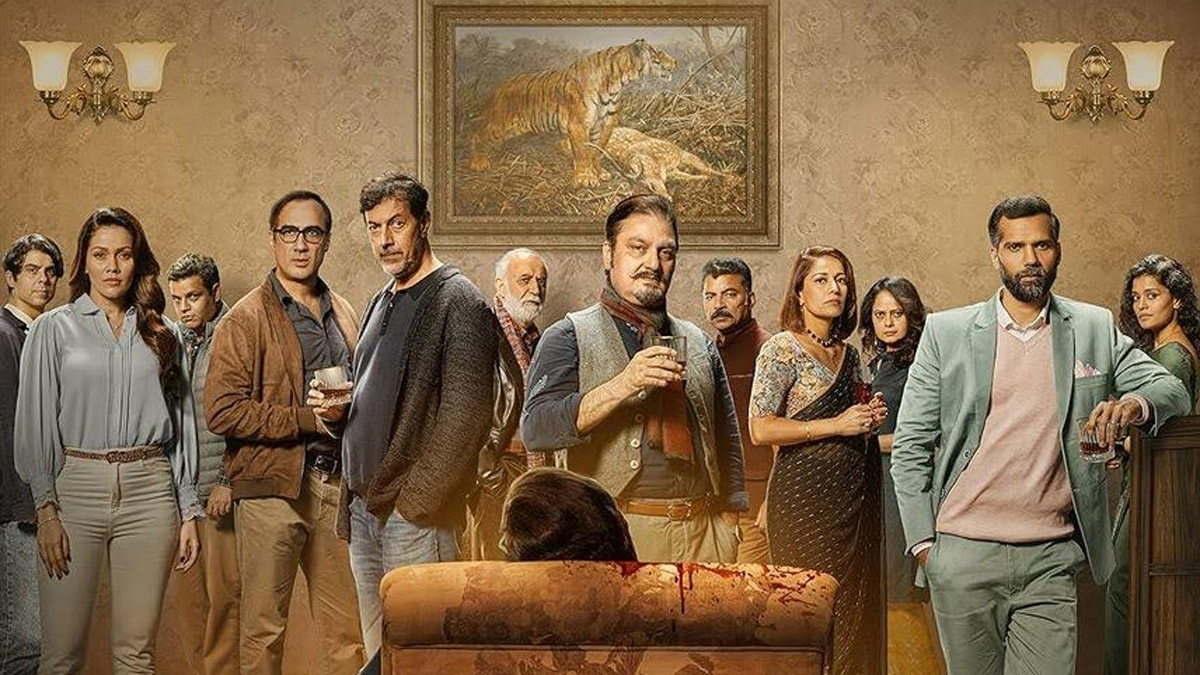
MUMBAI: Zee5 is serving up another killer collaboration and this time, the murder mystery comes with a generous side of dark humour and family dysfunction. The streaming platform has partnered with Applause Entertainment and Mithya Talkies to bring Everybody Loves Sohrab Handa, a fresh, twisted whodunnit written and directed by acclaimed filmmaker and actor Rajat Kapoor. The film will stream exclusively on Hindi Zee5 from 10 April.
The movie reimagines the classic murder mystery genre with a contemporary, darkly comic edge. It revolves around a group of friends and family who smile, drink, and celebrate together until the silence snaps and long-buried secrets spill out. The stellar ensemble cast includes Vinay Pathak, Ranvir Shorey, Waluscha De Sousa, Saurabh Shukla, Chandrachoor Rai, Neil Bhoopalam, Koel Purie, Palomi Ghosh, and Rajat Kapoor himself.
This latest offering continues the successful partnership between Zee5 and Applause Entertainment, which has previously delivered diverse hits such as Mithya, Bloody Brothers, and Jab Khuli Kitaab.

&TV Business Head of hindi Zee5 and chief channel officer Kaveri Das said, “Our collaboration with Applause Entertainment has consistently delivered distinct, high-impact storytelling. Everybody Loves Sohrab Handa is a natural progression, reinforcing our focus on genre-led content with a compelling whodunnit premise and a strong ensemble cast.”
Applause Entertainment business head for movies Sunil Chainani added, “This film adds yet another compelling layer to our slate with Rajat Kapoor’s unmistakable voice.”
Rajat Kapoor shared, “What interested me was not just the mechanics of a whodunnit, but the emotional violence that precedes physical violence. These are people who smile at each other, but there’s so much that is not said.”
The film promises razor-sharp writing, layered performances, and simmering tension, inviting viewers not just to solve the crime but to unravel the complex relationships at its heart.
If you love a good murder mystery served with wit and emotional depth, Everybody Loves Sohrab Handa looks set to be your next addictive watch. Mark your calendars, the whodunnit drops on Hindi Zee5 from 10 April.







