Hindi
Whoever wins the Oscar, Kodak gets laurels

NEW DELHI: Irrespective of which film wins the Oscar this year for Best Picture, it will be an accolade for Kodak Film since all the film nominees have been produced on Kodak film.
This is for the 80th consecutive year – ever since the inception of the Academy Awards – that the Oscar for Best Picture will go to a Kodak movie.
The feature films nominated in 2008 for an Academy Award for Best Picture are Atonement, Juno, Michael Clayton, No Country for Old Men and There Will Be Blood.
The five cinematographers nominated for Oscars this year also chose to use Kodak colour negative films. Contenders in this year‘s Cinematography category are: Roger Deakins (The Assassination of Jesse James By The Coward Robert Ford and No Country for Old Men), Robert Elswit (There Will Be Blood), Janusz Kaminski (The Diving Bell and the Butterfly) and Seamus McGarvey (Atonement).
The Academy of Motion Picture Arts and Sciences will recognise Kodak‘s commitment to innovation this year with an Oscar statuette for the development of photographic emulsion technologies incorporated into the Kodak VISION2 family of colour negative films. This is the ninth Oscar that Kodak has earned for scientific and technical excellence and service to the motion picture industry.
“The VISION2 film platform and our recently-launched VISION3 films are the benchmark in the motion picture industry for image capture efficiency,” said Kodak‘s Film, Photofinishing and Entertainment Group President and Eastman Kodak Company EVP Mary Jane Hellyar.
Kodak‘s connection to the motion picture industry dates back to 1889, during the dawn of the industry, when Thomas Edison asked Kodak founder George Eastman if he could provide film for his experimental motion picture camera and projector. Kodak continues to work with customers worldwide to help them bring their stories to life.
The 80th Annual Academy Awards will be held on 24 February at Kodak Theatre, which is now home to the annual Academy Awards ceremonies.

Hindi
Zee5 and Applause Entertainment team up for whodunnit ‘Everybody Loves Sohrab Handa’
Rajat Kapoor directs star-studded murder mystery streaming from 10 April.
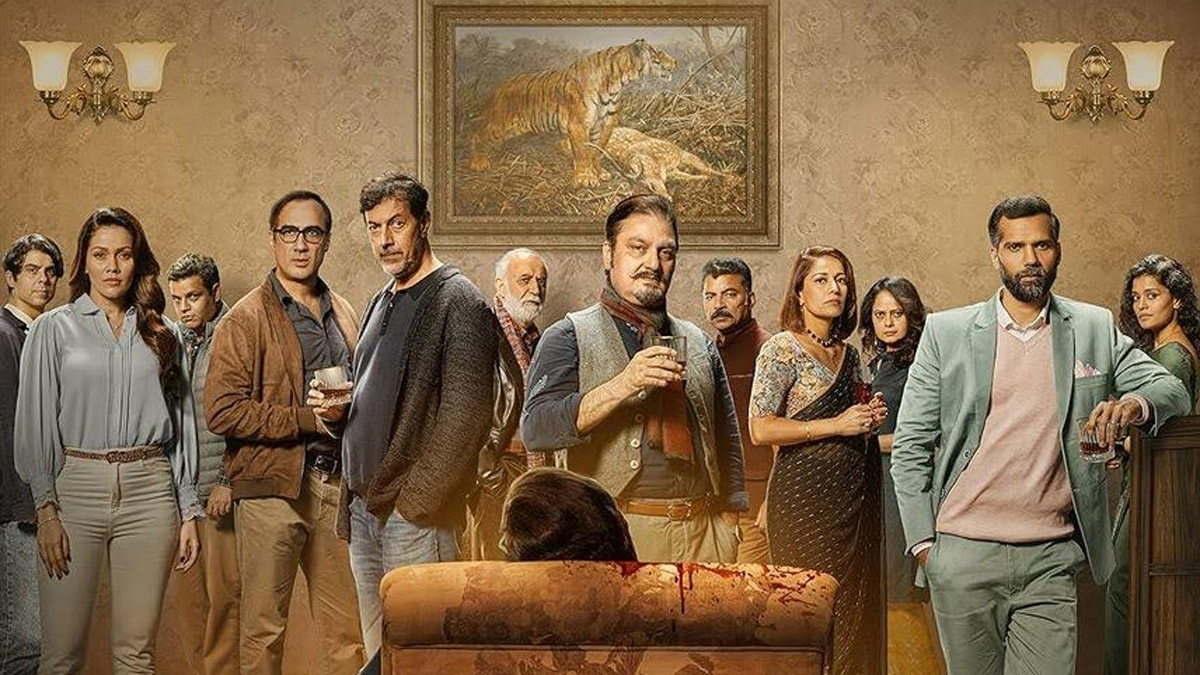
MUMBAI: Zee5 is serving up another killer collaboration and this time, the murder mystery comes with a generous side of dark humour and family dysfunction. The streaming platform has partnered with Applause Entertainment and Mithya Talkies to bring Everybody Loves Sohrab Handa, a fresh, twisted whodunnit written and directed by acclaimed filmmaker and actor Rajat Kapoor. The film will stream exclusively on Hindi Zee5 from 10 April.
The movie reimagines the classic murder mystery genre with a contemporary, darkly comic edge. It revolves around a group of friends and family who smile, drink, and celebrate together until the silence snaps and long-buried secrets spill out. The stellar ensemble cast includes Vinay Pathak, Ranvir Shorey, Waluscha De Sousa, Saurabh Shukla, Chandrachoor Rai, Neil Bhoopalam, Koel Purie, Palomi Ghosh, and Rajat Kapoor himself.
This latest offering continues the successful partnership between Zee5 and Applause Entertainment, which has previously delivered diverse hits such as Mithya, Bloody Brothers, and Jab Khuli Kitaab.

&TV Business Head of hindi Zee5 and chief channel officer Kaveri Das said, “Our collaboration with Applause Entertainment has consistently delivered distinct, high-impact storytelling. Everybody Loves Sohrab Handa is a natural progression, reinforcing our focus on genre-led content with a compelling whodunnit premise and a strong ensemble cast.”
Applause Entertainment business head for movies Sunil Chainani added, “This film adds yet another compelling layer to our slate with Rajat Kapoor’s unmistakable voice.”
Rajat Kapoor shared, “What interested me was not just the mechanics of a whodunnit, but the emotional violence that precedes physical violence. These are people who smile at each other, but there’s so much that is not said.”
The film promises razor-sharp writing, layered performances, and simmering tension, inviting viewers not just to solve the crime but to unravel the complex relationships at its heart.
If you love a good murder mystery served with wit and emotional depth, Everybody Loves Sohrab Handa looks set to be your next addictive watch. Mark your calendars, the whodunnit drops on Hindi Zee5 from 10 April.






