Hindi
UFO Cine Media Network unveils ‘India’s biggest cinema moment ever’
Dhurandhar 2 and Toxic tipped to deliver rare pan-India scale for brands


MUMBAI: UFO Cine Media Network is pitching an upcoming dual-film release weekend as what it calls the largest advertising opportunity cinema has offered in India, banking on an estimated 100 million cumulative footfalls nationwide.
The initiative, branded “India’s Biggest Cinema Moment Ever”, is anchored around the simultaneous release of Dhurandhar 2 – The Revenge and Toxic, two high-profile action films expected to dominate screens across regions and languages. Trade projections, supported by cinema measurement tool Procat, suggest the combined lifetime theatrical run could deliver one of the widest audience concentrations seen in recent years.
Dhurandhar 2 – The Revenge, an India–Pakistan spy thriller, is set to release in five languages, broadening its appeal across northern and southern markets. The franchise has already built a sizable multilingual following through theatrical runs and streaming platforms. Toxic, fronted by pan-India star Yash, is expected to draw heavy footfalls across southern circuits and beyond, buoyed by the actor’s proven box-office pull.

UFO, which operates an in-cinema advertising network spanning more than 4,100 theatres, is positioning the release window as a rare moment of synchronised national attention. Its footprint covers multiplexes and single screens across over 1,500 towns and cities, allowing advertisers to deploy campaigns at scale during a single weekend.
Executives at the company argue that cinema’s value lies not just in reach but in attention. Unlike digital or television, audiences are captive, emotionally engaged and free from distraction, they say, translating into stronger recall and measurable returns for brands. With advertisers increasingly focused on performance-led media planning, UFO is framing the dual release as comparable in scale to India’s largest broadcast and sporting properties.
Industry observers note that as theatrical exhibition expands deeper into Tier 2 and Tier 3 markets, such tentpole weekends are becoming anchor moments for annual media strategies. If Dhurandhar 2 – The Revenge and Toxic deliver as expected, the weekend could set new benchmarks not only for box office numbers, but also for cinema’s evolving role as a high-attention advertising medium.







Hindi
Zee5 and Applause Entertainment team up for whodunnit ‘Everybody Loves Sohrab Handa’
Rajat Kapoor directs star-studded murder mystery streaming from 10 April.
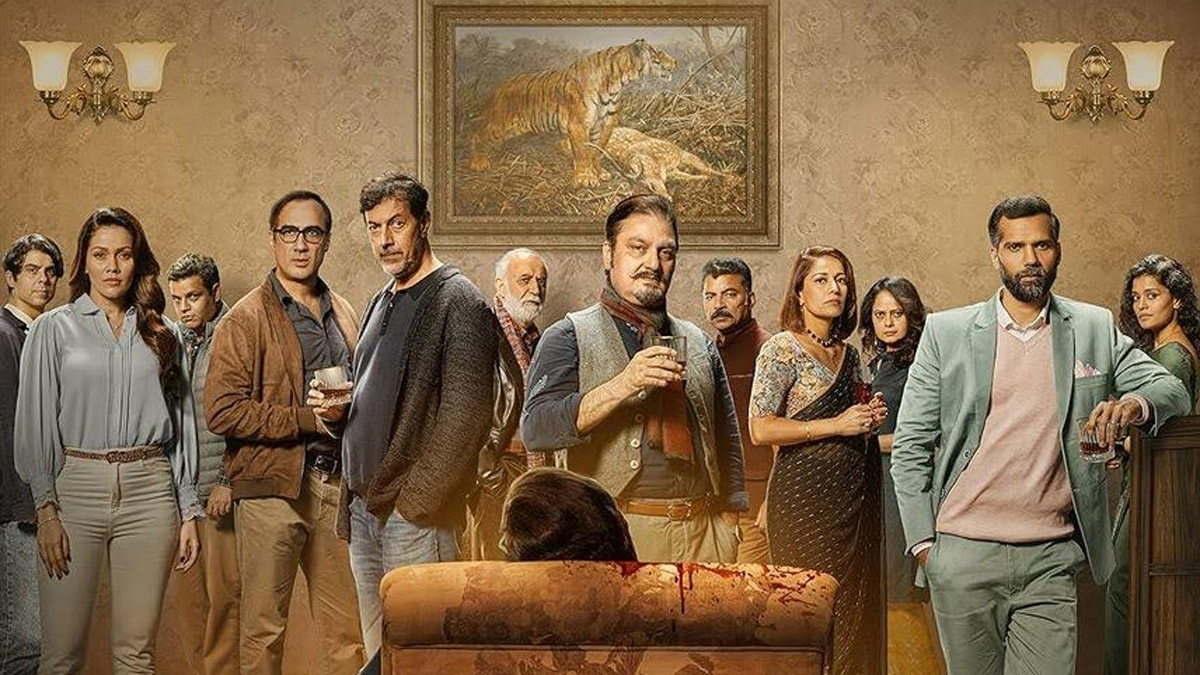
MUMBAI: Zee5 is serving up another killer collaboration and this time, the murder mystery comes with a generous side of dark humour and family dysfunction. The streaming platform has partnered with Applause Entertainment and Mithya Talkies to bring Everybody Loves Sohrab Handa, a fresh, twisted whodunnit written and directed by acclaimed filmmaker and actor Rajat Kapoor. The film will stream exclusively on Hindi Zee5 from 10 April.
The movie reimagines the classic murder mystery genre with a contemporary, darkly comic edge. It revolves around a group of friends and family who smile, drink, and celebrate together until the silence snaps and long-buried secrets spill out. The stellar ensemble cast includes Vinay Pathak, Ranvir Shorey, Waluscha De Sousa, Saurabh Shukla, Chandrachoor Rai, Neil Bhoopalam, Koel Purie, Palomi Ghosh, and Rajat Kapoor himself.
This latest offering continues the successful partnership between Zee5 and Applause Entertainment, which has previously delivered diverse hits such as Mithya, Bloody Brothers, and Jab Khuli Kitaab.
&TV Business Head of hindi Zee5 and chief channel officer Kaveri Das said, “Our collaboration with Applause Entertainment has consistently delivered distinct, high-impact storytelling. Everybody Loves Sohrab Handa is a natural progression, reinforcing our focus on genre-led content with a compelling whodunnit premise and a strong ensemble cast.”
Applause Entertainment business head for movies Sunil Chainani added, “This film adds yet another compelling layer to our slate with Rajat Kapoor’s unmistakable voice.”
Rajat Kapoor shared, “What interested me was not just the mechanics of a whodunnit, but the emotional violence that precedes physical violence. These are people who smile at each other, but there’s so much that is not said.”
The film promises razor-sharp writing, layered performances, and simmering tension, inviting viewers not just to solve the crime but to unravel the complex relationships at its heart.
If you love a good murder mystery served with wit and emotional depth, Everybody Loves Sohrab Handa looks set to be your next addictive watch. Mark your calendars, the whodunnit drops on Hindi Zee5 from 10 April.






