Hindi
Sony Cinealta cameras feature in Hollywood films

MUMBAI: Consumer electronics company Sony has announced that its F23 digital cinematography camera was the production tool of choice for film and television projects in 2008 in the US.
The camera was used to shoot upcoming productions including Tekken, Public Enemies and Final Destination 4 as well as last year‘s releases like Cloverfield and Speed Racer.
On the TV schedule, the camera is behind the scenes of shows like Weeds, Gossip Girl, The Starter Wife and Knight Rider.
Final Destination 4 director of photography (DP) Glen MacPherson says, “The F23 has excellent dynamic range, handling highlights beautifully with a film-like quality. It’s also virtually noiseless in the shadows, and the 2/3-inch image sensor is ideal for shooting 3D. The F23 is my camera of choice for all those reasons.”
The F23 camera uses three 2.2 megabit 2/3-inch type progressive CCD imagers and a 14-bit analog-to-digital converter. The system supports multiple 1080 formats, including 24 and 60 fps in progressive mode.
Sony Electronics’ Content Creation Systems Group senior manager Rick Harding says, “The F23’s feature sets are expanded from our previous 24P cameras. It can shoot true variable frame rate (exposure time matches frame rate) and speed ramping (one to 60 frames per second). These functions are available to the director on the set in real time and can be immediately reviewed. There is no post step required. These features, along with compatibility with ARRI accessories, ultimately mean familiar operations, higher quality images, lower production costs and more footage at the end of the day’s shoot.”
The camera delivers 12.5 stops of latitude – more than any other 2/3-inch chip digital cinema camera. Cinematographers can also work in LOG mode, a camera setting that “allows for an even more film-like shooting experience,” according to Harding.
Stargate Digital founder and CEO Sam Nicholson worked with the F23 on Knight Rider and noted the distinct cost- and time-saving advantages of working with the camera’s dockable recorder, since it requires no reloading in the field and its “perfectly integrated speed ramps that go from zero to 60 fps at the turn of a knob, minimizing the need for on-set adjustments.”
Nicholson is working with the F35 as VFX DP for a new pilot drama called Defying Gravity. This is a fictional space epic about the first manned space mission across the solar system.
He says, “The real attributes of the F23 and F35 are their bullet-proof HDCAM SR workflows. These are the most smoothly integrated cameras on the market.”

Hindi
Remembering Gyan Sahay, the lens behind film, television and advertising
From a puppet rabbit selling poppadums to Hindi cinema, he framed it all.
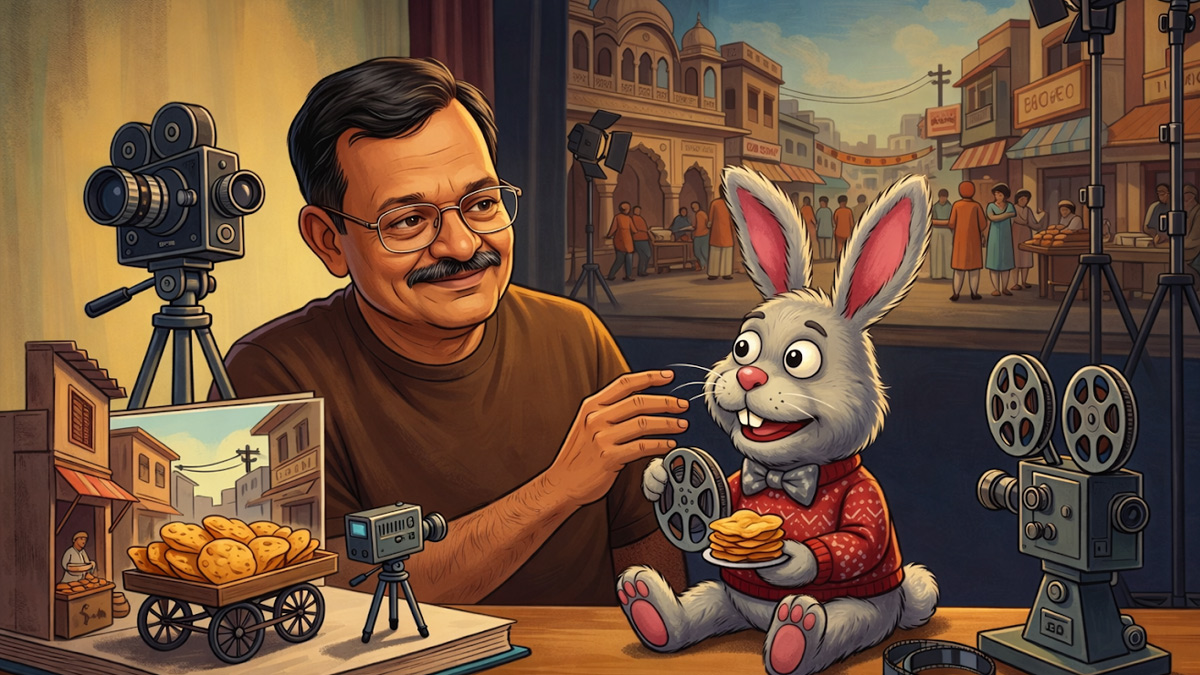
MUMBAI: There are careers, and then there are canvases. Gyan Sahay, the veteran cinematographer, director, and producer who passed away on 10 March 2026 in Mumbai, had one of the latter. Over several decades in the Indian film and television industry, he turned lenses, lights, and the occasional puppet rabbit into something approaching art.
A graduate of the Film and Television Institute of India (FTII) in Pune, Sahay built his reputation as a director of photography across a career that stretched from the early 1970s all the way to the digital age. He was the kind of craftsman who understood that a well-composed shot is not merely a technical achievement but a quiet act of storytelling.
For most Indians of a certain age, however, Sahay will forever be the man behind the rabbit. His direction of the iconic long-running television commercial for Lijjat Papad, featuring its now-legendary puppet bunny, gave the country one of its most cheerfully persistent advertising images. It was the sort of work that sneaks into the national subconscious and takes up permanent residence.

His big-screen credits as cinematographer include Anokhi Pehchan (1972), Pagli (1974), Pas de Deux (1981), and Hum Farishte Nahin (1988). In 1999, he stepped behind a different kind of camera altogether, making his directorial debut with Sar Ankhon Par, a drama that featured Vikas Bhalla and Shruti Ulfat, with a cameo by Shah Rukh Khan for good measure.
On television, Sahay was particularly prized for his command of multi-camera production setups, a skill that made him a go-to technician for large-scale shows and reality programmes. In an industry that has never been especially patient with complexity, he was the calm hand on the rig.
In later life, Sahay turned teacher. He participated regularly in masterclasses and Digi-Talks, often hosted by organisations such as Bharatiya Chitra Sadhna, sharing hard-won wisdom on cinematography, the comedy of timing in a shot, and the sweeping changes brought by the shift from celluloid to digital. He was also said to have been involved in a project concerning a biographical film on Infosys co-founder N.R. Narayana Murthy.
Tributes from the film industry poured in following the news of his passing, with colleagues remembering him as a senior cameraman who served as a rare bridge between two entirely different eras of Indian cinema. That is, perhaps, the finest thing one can say of any craftsman: he kept up, and he brought others along with him.