Hindi
Singham Returns…Half a Singham!


MUMBAI: Sequels are usually a means of using the brand equity of the title of a successful film. Singham Returns is one more such example. Ajay Devgn is still a cop who can fell half a dozen goons with one blow. Well, he has to, since the goons come in droves of fifty or more. But while that remains the same, the rest has changed because most Hindi filmmakers take the audience for granted while making a sequel.
Devgn, a defiant and honest cop, who has been transferred to Mumbai from his Goa post in Singham (while in reality, such cops are transferred out of Mumbai!). Since he is Singham, he remains constant, while all including the villains as well as his wife to be too (!) have changed. Actually, the film has no space for a female lead but that would be a great risk according to Indian films’ unwritten regulations.
Devgn is in comfortable company. His school teacher, Anupam Kher, leads a ruling political party, albeit in keeping with the recent trend of a coalition with another party. Kher’s party has Mahesh Manjrekar as the CM while his coalition partner is Zakir Hussain, whose strings are pulled by a swami, Aloke Gupte. Being Guru Kher’s disciple, Manjrekar and Devgn are both on the right side of the law while Hussain, under the auspice of the swami, is corruption personified and, obviously, possesses a criminal mind-set. It is a formula that has been working for decades; a swami and a seedy politician have always made a great combination for villainy.

As things go, Devgn has the backing of all concerned: his school senior, the CM Manjrekar; their common school guru Kher; the police commissioner, Sharat Saxena; as well as the all of 40,000 odd cops of Mumbai!
 |
Everybody knows that the villains are Gupte and Hussain but the law needs proof. That is what the whole film is about. 142 minutes of finding proof against two not-so-sinister or convincing villains, Hussain and Gupte. So, finally, the film amounts to one-upmanship between the villains and Devgn. It goes on and on as the judiciary needs proof and police being what it is supposed to be, can’t protect its only witness. The villains win all the way until, finally, the law keepers become outlaws to liquidate the villains. They march in their sponsored banians to the villains den in just about the most clap trap scene in the film.
The problem with Singham Returns is that it is an oft repeated story about a swami and a corrupt politician pitted against an honest establishment represented by a cop. What is more, it is poorly scripted. The film starts with the super cop, Devgn and a youth brigade riding fast bikes. That is rather tame. The script is so predictable, it could be any honest cop vs corrupt politician. Rohit Shetty’s direction without his blowing up cars does not amount to much really. The film has four music directors and eight lyricists on it credits but no song worth a mention! Dialogue is okay at times. While the film needs some more trimming, the positive factor is its photography, especially aerial shots of Mumbai.
As for performances, nobody really needs to act in this film. Devgn with his puffed up cheeks does what he does on regular basis: throw punches. Kareena Kapoor has no role really and just pouts her way through. Kher is his usual self. While Gupte overacts as the swami, Hussain is the only one who is convincing. Dayanand Shetty, the Daya of the TV serial CID does what he does in the serial; act as a mighty cop and breaks down doors; he is effective. Rest in the cast are incidental.
On the whole, Singham Returns is a high priced routine film with only salvation being its four day weekend starting with the Independence Day holiday on Friday and ending with the Janmashtami holiday on Monday. Much appreciated earlier version, Singham, had barely managed to make it to 100 crore mark. While this film needs to do twice as much, it will fall much short of that mark.







Hindi
Zee5 and Applause Entertainment team up for whodunnit ‘Everybody Loves Sohrab Handa’
Rajat Kapoor directs star-studded murder mystery streaming from 10 April.
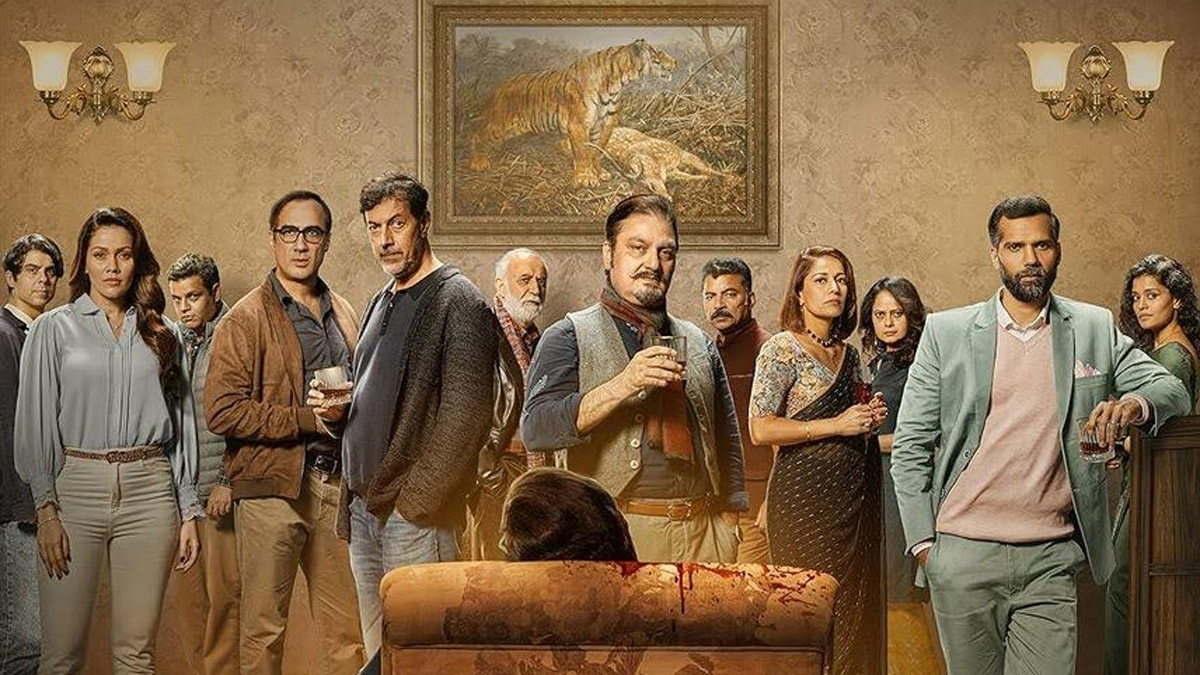
MUMBAI: Zee5 is serving up another killer collaboration and this time, the murder mystery comes with a generous side of dark humour and family dysfunction. The streaming platform has partnered with Applause Entertainment and Mithya Talkies to bring Everybody Loves Sohrab Handa, a fresh, twisted whodunnit written and directed by acclaimed filmmaker and actor Rajat Kapoor. The film will stream exclusively on Hindi Zee5 from 10 April.
The movie reimagines the classic murder mystery genre with a contemporary, darkly comic edge. It revolves around a group of friends and family who smile, drink, and celebrate together until the silence snaps and long-buried secrets spill out. The stellar ensemble cast includes Vinay Pathak, Ranvir Shorey, Waluscha De Sousa, Saurabh Shukla, Chandrachoor Rai, Neil Bhoopalam, Koel Purie, Palomi Ghosh, and Rajat Kapoor himself.
This latest offering continues the successful partnership between Zee5 and Applause Entertainment, which has previously delivered diverse hits such as Mithya, Bloody Brothers, and Jab Khuli Kitaab.
&TV Business Head of hindi Zee5 and chief channel officer Kaveri Das said, “Our collaboration with Applause Entertainment has consistently delivered distinct, high-impact storytelling. Everybody Loves Sohrab Handa is a natural progression, reinforcing our focus on genre-led content with a compelling whodunnit premise and a strong ensemble cast.”
Applause Entertainment business head for movies Sunil Chainani added, “This film adds yet another compelling layer to our slate with Rajat Kapoor’s unmistakable voice.”
Rajat Kapoor shared, “What interested me was not just the mechanics of a whodunnit, but the emotional violence that precedes physical violence. These are people who smile at each other, but there’s so much that is not said.”
The film promises razor-sharp writing, layered performances, and simmering tension, inviting viewers not just to solve the crime but to unravel the complex relationships at its heart.
If you love a good murder mystery served with wit and emotional depth, Everybody Loves Sohrab Handa looks set to be your next addictive watch. Mark your calendars, the whodunnit drops on Hindi Zee5 from 10 April.







