Hindi
Sag rejects AMPTP’s final offer

MUMBAI: The Screen Actors Guild (Sag) national board of directors in the US voted 73 per cent to 27 per cent to reject the Alliance of Motion Picture and Television Producers (AMPTP) “last, best and final offer” dated 19 February, 2009.
Sag states that it entered this round of negotiations to send a clear message that it was ready to make a deal. “In an effort to put the town back to work, our negotiator agreed to modify the Guild’s bargaining position to bring the Guild in line with the deals made by our sister unions.”
The AMPTPs last-minute, surprise demand for a new term of agreement extending to 2012, Sag notes, is regressive and damaging and clearly signals the employers’ unwillingness to agree to the deal they established with other entertainment unions.
According to the body, the demand for a new term of agreement was not part of their final offer of 30 June, 2008; it was not part of the federally mediated talks of November 2008, and should not have been inserted into the discussions when Sag returned to negotiations on 17 February, 2009.
Says sag, “What management presented as a compromise is, in fact, an attempt to separate Screen Actors Guild from other industry unions. By attempting to extend our contract expiration one year beyond the other entertainment unions, the AMPTP intends to deleverage our bargaining position from this point forward.”
“Screen Actors Guild’s goal is to successfully complete these negotiations and get the industry back to work as soon as possible. The AMPTP has clearly stated their need and desire for financial certainty and industry peace. This new proposal does the exact opposite, and will only result in constant negotiating cycles and continued labor unrest,” Sag adds.
AMPTP, meanwhile, reiterates that its offer is strong and fair – and has been judged to be strong and fair by all of Hollywood‘s other major guilds and unions. “We have kept our offer on the table – and even enhanced it – despite the historically unprecedented economic crisis that has clobbered our nation and our industry,” states AMPTP.
“The Producers have always sought a full three-year deal with Sag, just as we negotiated with all the other Unions and Guilds, and have offered Sag a way to achieve an earlier expiration date without contributing to further labor uncertainty. We simply cannot offer Sag a better deal than the rest of the industry achieved under far better economic conditions than those now confronting our industry,” AMPTP opined.

Hindi
Remembering Gyan Sahay, the lens behind film, television and advertising
From a puppet rabbit selling poppadums to Hindi cinema, he framed it all.
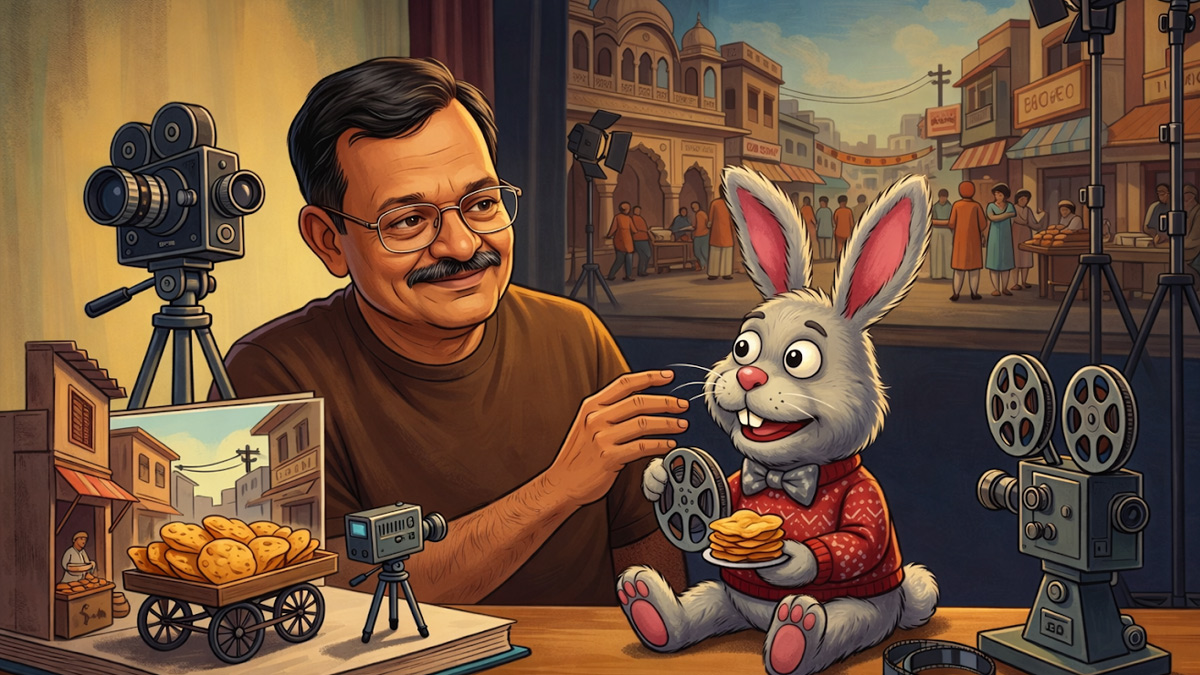
MUMBAI: There are careers, and then there are canvases. Gyan Sahay, the veteran cinematographer, director, and producer who passed away on 10 March 2026 in Mumbai, had one of the latter. Over several decades in the Indian film and television industry, he turned lenses, lights, and the occasional puppet rabbit into something approaching art.
A graduate of the Film and Television Institute of India (FTII) in Pune, Sahay built his reputation as a director of photography across a career that stretched from the early 1970s all the way to the digital age. He was the kind of craftsman who understood that a well-composed shot is not merely a technical achievement but a quiet act of storytelling.
For most Indians of a certain age, however, Sahay will forever be the man behind the rabbit. His direction of the iconic long-running television commercial for Lijjat Papad, featuring its now-legendary puppet bunny, gave the country one of its most cheerfully persistent advertising images. It was the sort of work that sneaks into the national subconscious and takes up permanent residence.

His big-screen credits as cinematographer include Anokhi Pehchan (1972), Pagli (1974), Pas de Deux (1981), and Hum Farishte Nahin (1988). In 1999, he stepped behind a different kind of camera altogether, making his directorial debut with Sar Ankhon Par, a drama that featured Vikas Bhalla and Shruti Ulfat, with a cameo by Shah Rukh Khan for good measure.
On television, Sahay was particularly prized for his command of multi-camera production setups, a skill that made him a go-to technician for large-scale shows and reality programmes. In an industry that has never been especially patient with complexity, he was the calm hand on the rig.
In later life, Sahay turned teacher. He participated regularly in masterclasses and Digi-Talks, often hosted by organisations such as Bharatiya Chitra Sadhna, sharing hard-won wisdom on cinematography, the comedy of timing in a shot, and the sweeping changes brought by the shift from celluloid to digital. He was also said to have been involved in a project concerning a biographical film on Infosys co-founder N.R. Narayana Murthy.
Tributes from the film industry poured in following the news of his passing, with colleagues remembering him as a senior cameraman who served as a rare bridge between two entirely different eras of Indian cinema. That is, perhaps, the finest thing one can say of any craftsman: he kept up, and he brought others along with him.