Hindi
Romantic films can also carry social messages: Yash Chopra

NEW DELHI: Filmmaker Yash Chopra has strongly defended his brand of cinema saying that he does not show mere commercial romanticism but infuses a lot of meaningful content into it,
Speaking on the sidelines of a festival of films by his elder brother B R Chopra, Yash Chopra said that it was erroneous to say that his films did not have the kind of social commitment that one saw in the films of his brother.
While noting that he had got his first break as a director in his brother’s ‘Dhool ka Phool’, he said he was entitled to make his own kind of cinema.
 Asked about the absence of his son Aditya from the assemblage of the large number of members of the B R Chopra family and others who attended the festival which concluded here over the weekend, he said his son was busy with the release of their film ‘Tashan’.
Paying a tribute to his brother, he said Baldev Raj Chopra was probably the only filmmaker in India who had never made any compromises and gone ahead and made the kinds of films he wanted irrespective of their commercial outcome.
The cinematic tribute from 18 to 20 April with nine masterpieces from the BR stable were part of ‘Guild Greats’, an initiative of the Film and Television Producers Guild of India. Co-organised by ASSOCHAM, the event was sponsored by Time Broadband Services Group’s ‘My Time‘ to kick-start the announcement of IPTV service launch in India through empowering technology and compelling content.
Yash Chopra recalled how his brother had proved wrong filmmakers at the time who felt films on themes like widow re-marriage, rehabilitation of prostitutes, or a court room drama sans songs would never be able to woo audiences.
Speaking at the inauguration and a discussion on the second day, BR’s son Ravi said his father has always been a man of principles who has continued to make films that he felt committed about, irrespective of the financial returns. BR is a ‘karmayogi’ who firmly believes in the motto of BR Films from the Mahabharata which says one must do one’s duty without worrying about the consequences. Ravi said he would not dare re-make any of his father‘s films because he could never bring out the finesse they contained, and stressed that the message in his father’s films came out in a subtle manner without the film turning into a documentary.
Amit Dev who is chairman of the ASSOCHAM Committee on Convergence said though India had the largest entertainment industry in the world, it global share was not very high. He said the Guild and ASSOCHAM had come together on a single platform and the offshoot was creation of a Content Licensing Centre. He announced another festival of Dr Chopra’s films would be held later in the year.
Time Broadband MD Sujata Dev said the launch of IPTV (Internet Protocal Television) on TV sets, computers and mobiles would make TV more interactive, and help to fight piracy and empower content protection. Time Broadband is preparing to shortly launch IPTV over both Mobile and Broadband in India , through collaboration with recently licensed progressive telecom operators; under the brand of “MY TIME” content package.

Hindi
Zee5 and Applause Entertainment team up for whodunnit ‘Everybody Loves Sohrab Handa’
Rajat Kapoor directs star-studded murder mystery streaming from 10 April.
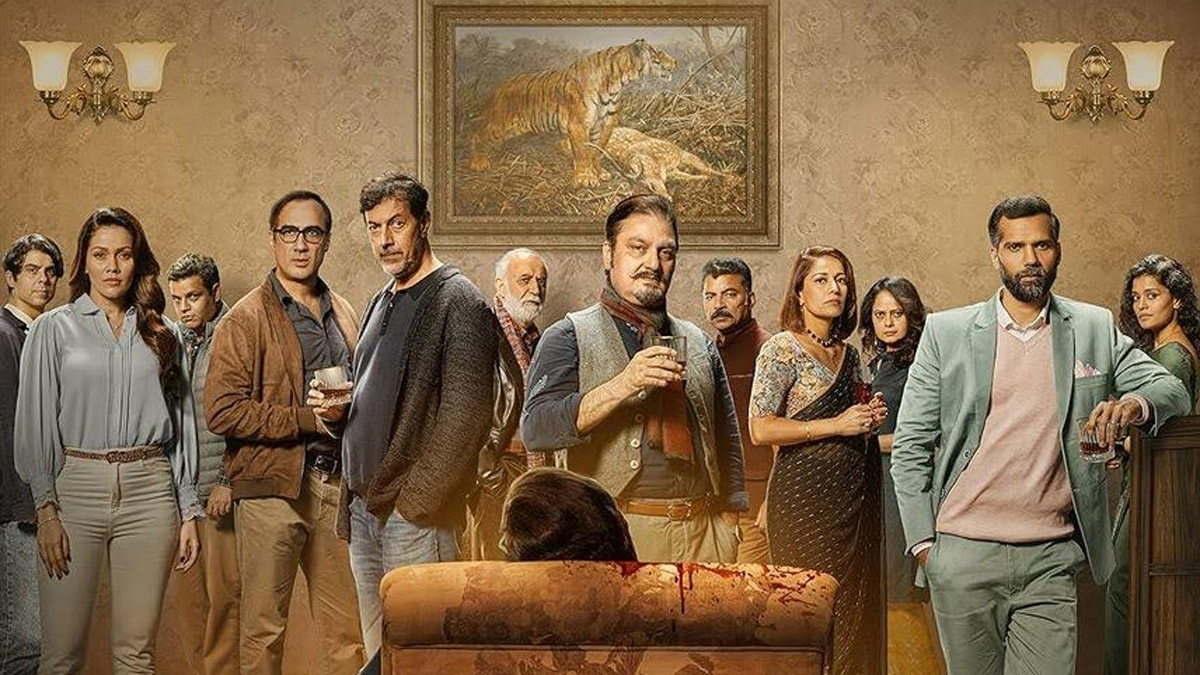
MUMBAI: Zee5 is serving up another killer collaboration and this time, the murder mystery comes with a generous side of dark humour and family dysfunction. The streaming platform has partnered with Applause Entertainment and Mithya Talkies to bring Everybody Loves Sohrab Handa, a fresh, twisted whodunnit written and directed by acclaimed filmmaker and actor Rajat Kapoor. The film will stream exclusively on Hindi Zee5 from 10 April.
The movie reimagines the classic murder mystery genre with a contemporary, darkly comic edge. It revolves around a group of friends and family who smile, drink, and celebrate together until the silence snaps and long-buried secrets spill out. The stellar ensemble cast includes Vinay Pathak, Ranvir Shorey, Waluscha De Sousa, Saurabh Shukla, Chandrachoor Rai, Neil Bhoopalam, Koel Purie, Palomi Ghosh, and Rajat Kapoor himself.
This latest offering continues the successful partnership between Zee5 and Applause Entertainment, which has previously delivered diverse hits such as Mithya, Bloody Brothers, and Jab Khuli Kitaab.

&TV Business Head of hindi Zee5 and chief channel officer Kaveri Das said, “Our collaboration with Applause Entertainment has consistently delivered distinct, high-impact storytelling. Everybody Loves Sohrab Handa is a natural progression, reinforcing our focus on genre-led content with a compelling whodunnit premise and a strong ensemble cast.”
Applause Entertainment business head for movies Sunil Chainani added, “This film adds yet another compelling layer to our slate with Rajat Kapoor’s unmistakable voice.”
Rajat Kapoor shared, “What interested me was not just the mechanics of a whodunnit, but the emotional violence that precedes physical violence. These are people who smile at each other, but there’s so much that is not said.”
The film promises razor-sharp writing, layered performances, and simmering tension, inviting viewers not just to solve the crime but to unravel the complex relationships at its heart.
If you love a good murder mystery served with wit and emotional depth, Everybody Loves Sohrab Handa looks set to be your next addictive watch. Mark your calendars, the whodunnit drops on Hindi Zee5 from 10 April.







