Hindi
Rekha, Kamal Haasan chief guests in IFFI 2008

NEW DELHI: Veteran actress Rekha will inaugurate the 39th International Film Festival of India in Panaji on 22 November in the presence of Goa Governor S S Sidhu, Chief Minister Digambar Kamath, and Union Minister of State for Information and Broadcasting Minister Anand Sharma.
Talented actor Kamal Haasan will be the Chief Guest at the closing ceremony on 2 December at which the awards will also be presented.
While upcoming actress Amrita Rao will conduct the opening ceremony, Rekha will be assisted by Telugu actress Illina D Cruz, who is originally from Goa, in lighting the traditional lamp.
Additional Director General (Media and Communications) and Film Festival Director S M Khan said at a press conference here that he did not like the term ‘Diya Girl’ and preferred to treat Illina as a Special Guest.
‘Song of Sparrows’ by the eminent Iranian filmmaker Majid Majidi will be the closing film. No final decision has been taken yet on the opening film, Khan admitted.
Over 225 films from more than 30 countries will be screened at the festival in several sections.
Around Rs 250 million is being spent by the Directorate of Film Festivals of the Information and Broadcasting Ministry, which is organizing the annual Festival in collaboration with the Entertainment Society of Goa and the Indian film industry. Panaji had been chosen as the permanent venue for the Festival in 2004.
A unique feature this year is the screening of four films made with the Taj Mahal – recognized once again recently as one of the seven wonders of the world – from the silent era in 1928 to the last one in 2005 made by Akbar Khan who will himself be attending the Festival. The other films are ‘Taj Mahal: A Celluloid Journey’ will be Shiraj (silent film) – 1928, Shah Jahan –1964, and Taj Mahal –1963.
The competition section will have 15 films from all over the world. These include My Mother’s Tears (Argentina/Germany), Rupantor (Transformation) (Bangladesh), The Shaft (China), Kanachivaram and Mahasatta (India), The Song of Sparrows (Iran), The Red Spot (Japan/Germany), Tulpan (Kazakhstan), Pensil (Malaysia), Ploning (Philippines) , Akasa Kusum (Sri Lanka), and The Coffin (Thailand).
While the main attraction will be the 56 films in the Cinema of the World section, another interesting section is Film India Worldwide which will showcase films made by Non-Resident Indians (NRIs) in collaboration with foreign filmmakers or made on Indian themes. The entries in this segment are Tandoori Love (Switzerland), Death Without Consent (USA), Barah Aana and Chaurasta-Cross Roads of Love (India). The films of eminent filmmakers Aki Kaurismaki (Finland), John Landis (USA) and Wong Kar Wai (Hong Kong) will be screened in the Foreign Retrospectives.
There will be special tributes to filmmakers Peter Chan, who is chairing the international jury, and Niki Karimi who is also a member of the jury.
In addition, there will be 47 films (26 Feature Films and 21 Non-Features) in the Indian Panorama, the highest for any year since the Panorama was first started in 1978. Six international acclaimed Indian films from the pre-1950 are also being screened from the Treasures of the National Film Archives of India.
Seven films of all-time veterans Dilip Kumar, Lata Mangeshkar, B Saroja Devi and Tapan Sinha are being presented in Lifetime Classics to pay a tribute to these personalities for the Lifetime Honour they received from the Government to mark 60 years of Indian Independence. The Indian section will also have a special tribute to the legendary Bimal Roy with six films by or on him, and LV Prasad with two films. A special section will be a tribute to 75 years of Kannada cinema.
The Festival will also pay homage to film personalities GP Sippy, BR Chopra, FC Mehra, Jayashree Gadkar, Raghuvaran, Mahendra Kapoor, Jeeva, Sridhar, Vijay Tendulkar and Nabendu Ghosh who passed away over the past year.
There will be special lecture on Devika Rani and Himanshu Rai who were pioneers in the era of Film Studios, by Kishwar Desai.

Hindi
Remembering Gyan Sahay, the lens behind film, television and advertising
From a puppet rabbit selling poppadums to Hindi cinema, he framed it all.
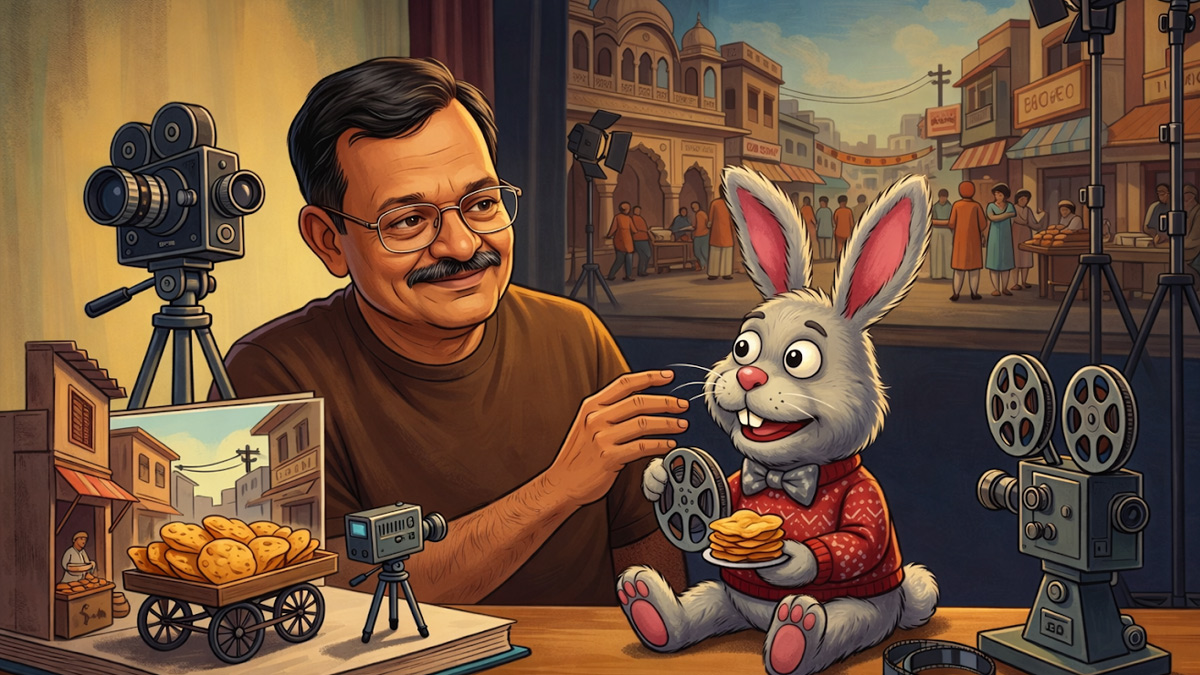
MUMBAI: There are careers, and then there are canvases. Gyan Sahay, the veteran cinematographer, director, and producer who passed away on 10 March 2026 in Mumbai, had one of the latter. Over several decades in the Indian film and television industry, he turned lenses, lights, and the occasional puppet rabbit into something approaching art.
A graduate of the Film and Television Institute of India (FTII) in Pune, Sahay built his reputation as a director of photography across a career that stretched from the early 1970s all the way to the digital age. He was the kind of craftsman who understood that a well-composed shot is not merely a technical achievement but a quiet act of storytelling.
For most Indians of a certain age, however, Sahay will forever be the man behind the rabbit. His direction of the iconic long-running television commercial for Lijjat Papad, featuring its now-legendary puppet bunny, gave the country one of its most cheerfully persistent advertising images. It was the sort of work that sneaks into the national subconscious and takes up permanent residence.

His big-screen credits as cinematographer include Anokhi Pehchan (1972), Pagli (1974), Pas de Deux (1981), and Hum Farishte Nahin (1988). In 1999, he stepped behind a different kind of camera altogether, making his directorial debut with Sar Ankhon Par, a drama that featured Vikas Bhalla and Shruti Ulfat, with a cameo by Shah Rukh Khan for good measure.
On television, Sahay was particularly prized for his command of multi-camera production setups, a skill that made him a go-to technician for large-scale shows and reality programmes. In an industry that has never been especially patient with complexity, he was the calm hand on the rig.
In later life, Sahay turned teacher. He participated regularly in masterclasses and Digi-Talks, often hosted by organisations such as Bharatiya Chitra Sadhna, sharing hard-won wisdom on cinematography, the comedy of timing in a shot, and the sweeping changes brought by the shift from celluloid to digital. He was also said to have been involved in a project concerning a biographical film on Infosys co-founder N.R. Narayana Murthy.
Tributes from the film industry poured in following the news of his passing, with colleagues remembering him as a senior cameraman who served as a rare bridge between two entirely different eras of Indian cinema. That is, perhaps, the finest thing one can say of any craftsman: he kept up, and he brought others along with him.