Hindi
PVR, Prestige tie up for 60 screens

MUMBAI: PVR Cinemas has entered into an agreement with Bangalore-based Prestige Group that will allow it to open and operate 60 screens in South India.
According to the deal, PVR will be operating multiplexes for all of Prestige’s Forum malls. The partnership will be on a profit sharing basis.
“The Forum takes pleasure in announcing that PVR will be operating the cineplexes for all the Forum malls at Bangalore including Whitefield and Shantiniketan. They also include malls coming up at Cochin, Hyderabad, and Mangalore,” said Prestige group chairman and managing director Irfan Razack.
 “Since the inception of The Forum, we have made a conscious effort to provide an exhilarating experience to the customers who enter the mall and thus have a clear strategy to take it forward. The association with PVR is a part of this strategy. While competition is an indelible part of the business environment, partnerships today are paving the way for growth and to mutually complement each others’ businesses”, added Razack.
The Forum mall is Bangalore’s first and most popular malls. The tie-up is a part of Prestige’s growth plan with a strategy to provide the ‘Forum Experience’ across South India.
“Retail today is like a focal point of social gathering at a place for relaxation, entertainment, good food and comfort zones. We want to think big, for us a mall means at least 200,000 square feet. We want to provide people with multiple choices in entertainment, and so our malls in most places will generally have six screens or more,” informed Razack.
As per the current approvals, Prestige has planned 10 malls till 2011 ranging from 600,000 to 1,000,000 square feet. The mall in Cochin will have an area of 1,000,000 square feet, with 700,000 square feet accounting for retail and the balance split over hospitality, office space and screens.
Razack is looking at an average of six screens per mall, or about 60 screens for the ten malls. He is looking at cities like Coimbatore, Belgaum, Hubli, Mysore, Vijayawada, Goa and Pune for setting up malls. Depending upon the studies by the Prestige group and PVR, each mall will have three screens or more.
By 2012-15 depending upon the speed at which the government infrastructure reaches some of these tier II and tier III cities, Razack has plans for another 20 malls across the country, but mainly in South India, and is looking at about 200 screens in all, making Forum one of the largest players in this segment.
For PVR, the multiplex with eleven screens at the Forum mall in Bangalore is the highest grossing multiplex across the country that attracts the highest number of footfalls.
Last year, PVR announced that it plans to launch digital cinema in small towns under the PVR Talkies brand. At present this initiative is limited to just three cities – Aurangabad, Latur and Baroda. According to PVR Limited president and CEO Pramod Arora, this is because a level of maturity is to be attained by cine goers in villages and smaller towns in India to make it feasible to launch multiple screens there.
“We will have about 250 additional screens at an investment of about Rs.3.5 billion over the next three years,” said PVR Limited joint managing director Sanjeev Kumar Bijli. At present, PVR has 95 screens and plans to add another 31 by end March 2008 in Chennai, Mumbai and Chandigarh.
According to Bijli, online revenues nationally account for seven per cent of sales, while in Bangalore the revenues, especially by way of ticketing through ATMs,’ are about 20 per cent of the total ticket sales.
During the last fiscal (April 2006 to March 2007), PVR’s net profit had gone up by 93 per cent to Rs 105 million. According to Arora, PVR’s net profit during the last two quarters of this financial year (April-June 2007 and July- September 2007) has already surpassed this and is in excess of Rs 120 million.

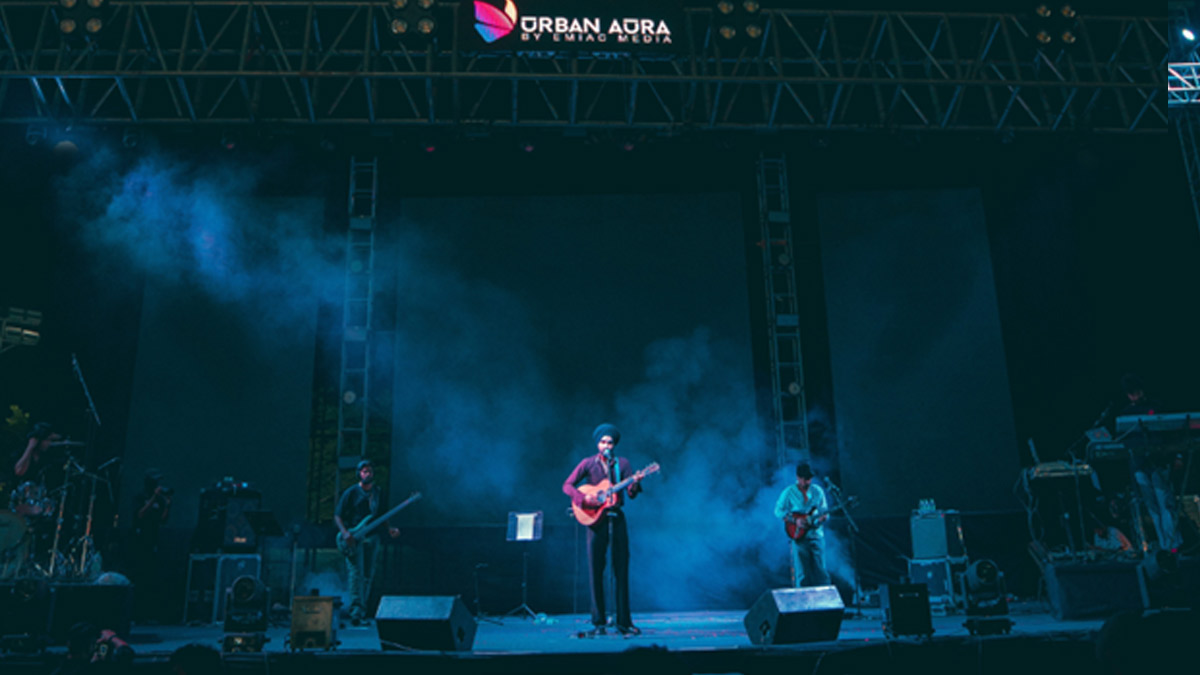
In a music industry that often rewards speed, spectacle, and instant recall, Navjot Ahuja’s journey feels refreshingly different. His story is not built on noise. It is built on patience, discipline, emotional honesty, and a quiet commitment to becoming better with every passing year. After 14 years of struggle, learning, performing, and writing, Navjot stands today as an artist whose success has not changed his centre. If anything, it has only made his purpose clearer.
For Navjot, music has never been about chasing fame alone. It has always been about expression. It is about writing more truthfully, singing more skillfully, understanding himself more deeply, and becoming a kinder human being in the process. That rare clarity is what gives his journey its beauty.
Where It All Began: A Writer Before a Singer
Indian singer and songwriter Navjot Ahuja’s musical journey began in the most familiar of places: school assemblies. But even then, what was growing inside him was not only the desire to sing. It was the need to write.

Long before he saw himself as a performer, he had already discovered the emotional release that writing offered him. For Navjot, words became the first true channel for feeling. Songwriting came before singing because writing was the only way he could let emotions flow through him fully. That inner pull shaped his artistic identity early on.
Like many young musicians, he sharpened his craft by creating renditions of popular songs.
Those experiments became his training ground. But the turning point came in 2012, when he wrote his first original song. That moment did not just mark the beginning of songwriting. It marked the beginning of self-definition.
A Calling He Did Not Chase, But Accepted
What makes the latest Indian singer-songwriter Navjot’s story especially compelling is the way he describes his relationship with music. He does not frame it as a career he aggressively pursued. In his own understanding, music was not something he chose. It was something that chose him.
There was a time when he imagined a very different future for himself. He wanted to become a successful engineer, like many young people shaped by ambition and conventional expectations. But life had a different script waiting for him. During his college years, around 2021, music entered his life professionally and began taking a firmer shape.
That shift was not driven by image-building or industry ambition. It came from acceptance. Navjot embraced the fact that music had claimed him in a way no other path could. That sense of surrender continues to define the artist he is today.
An Artist Guided by Instinct, Not Influence
Unlike many singers who speak openly about idols, icons, and musical role models, Navjot’s creative world is built differently. He does not believe his music comes from imitation or inherited influence. He listens inward.
He has never considered himself shaped by ideals in the traditional sense. In fact, he admits that he does not particularly enjoy listening to songs, especially his own. His decisions as a songwriter and singer come from instinct. He writes what feels right. He trusts what his inner voice tells him. He positions his music according to what he honestly believes in, not what trends demand.
That creative independence gives his work a distinct emotional sincerity. His songs do not feel calculated. They feel alive.
The Long Years of Invisible Struggle
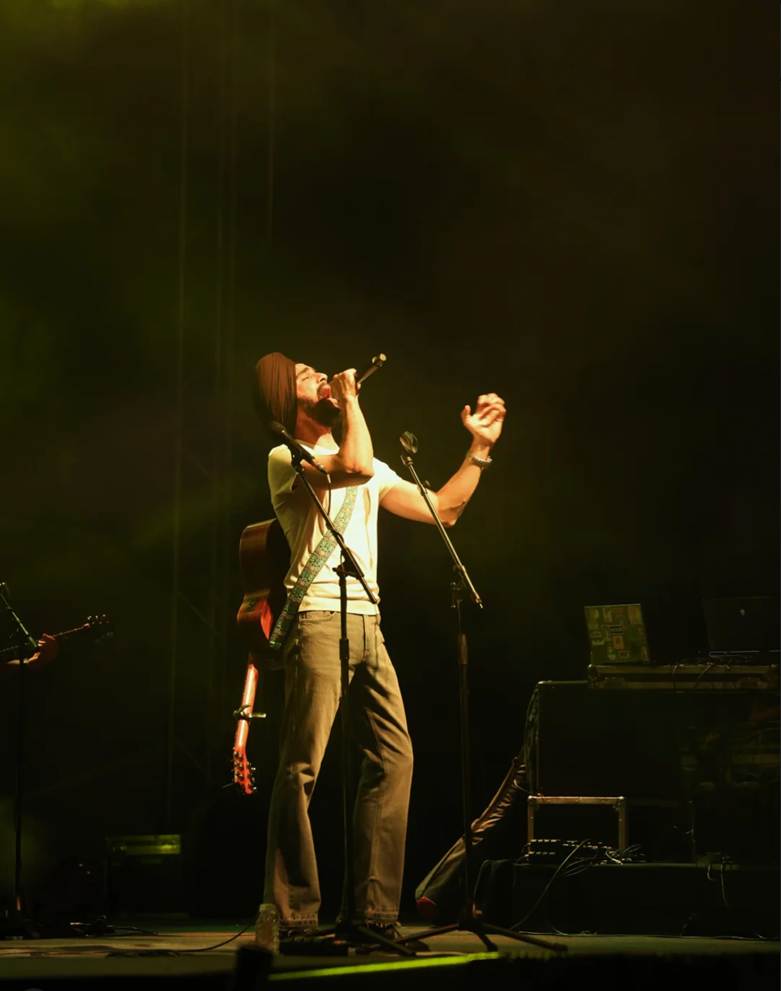
Every artist carries a chapter of struggle, and Navjot’s was long, demanding, and deeply formative. One of the biggest challenges he faced was building continuity as the best new indian singer songwriter in an era where musical collaboration is increasingly fluid.
For emerging singers, especially those trying to build with a band, consistency can be difficult. Instrumentalists today have more opportunities than ever to freelance and perform with multiple artists. While that growth is positive and well deserved, it can make things harder for singers who are still trying to establish a steady team and sound around their work.
For Navjot, one of the most difficult phases came during 2021 and 2022, when he was doing club shows almost every day. It was a period of relentless performance, but not always personal fulfillment. He was largely singing covers because clubs were not open to original songs that audiences did not yet know.
For a new Indian singer and songwriter, that can be a painful compromise. To perform constantly and still not have the freedom to share your own voice requires not just resilience, but restraint.
“Khat” and the Grace of Staying Unchanged
After 14 years of effort, Navjot’s new love song Khat became a defining milestone. Professionally, he acknowledges that the song changed how society viewed him as a musician. It strengthened his place in the public eye and altered his standing in meaningful ways.
Yet personally, he remains unchanged.
That is perhaps the most striking part of his story. Navjot says his routine is still the same. His calm is still the same. His writing process is still the same. He does not want success or failure to interfere with the purity of his art. For him, emotional detachment from public outcomes is essential because the moment an artist becomes too attached to validation, the writing begins to shift.
His joy comes not from numbers, but from the attempt. If he has tried to improve his skill today, if he has written his heart out more honestly than before, then he is at peace.
Growth, Not Glory, Remains the Real Goal
Even now, Navjot is not consumed by labels such as singles artist, performer, or digital success story. His focus remains deeply personal. He wants to sing better. He wants to play instruments better. He wants to understand himself more. And he wants to become a kinder person.
That is what makes Navjot Ahuja’s journey so moving. It is not simply the story of a musician finding recognition. It is the story of an artist who continues to grow inward, even as the world begins to look outward at him. In an age obsessed with applause, Navjot reminds us that the most meaningful success often begins in silence, honesty, and the courage to remain true to oneself.






