Hindi
Producers re-release hit films at single screens in Mumbai

MUMBAI: After lying low for two weeks, in the period of which there was no headway in solving the crisis, some big producers like Yash Raj Films, Studio 18 and UTV have announced the release of some of their old films in Mumbai‘s select single-screen theatres.
While Studio 18 has re-released Ghajini with approximately 20 prints in Mumbai, Yash Raj Films has released Dhoom:2 in two Mumbai single-screen theatres along with Rab Ne Bana Di Jodi in an equal number of single-screens.
On the other hand, UTV Motion Pictures is in plans to re-release at least five of its films like Jodhaa Akbar, Race, A Wednesday, Oye Lucky! Lucky Oye!, Fashion, Goal, Aamir, Kismat Konnection and Welcome to Sajjanpur in the weeks to come.
“We have decided to release these movies in Mumbai as a testing ground since it is a lucrative market. We will extend it to the other cities if the revenue-share issue is not settled with the multiplex owners. With this move, we producers have shown multiplex owners that if need arises we will go ahead and release our new films in single screens,” noted film producer Mukesh Bhatt told Indiantelevision.com.
Interestingly, the movies are kept away from the multiplex operators who also own single-screen theatres in Mumbai. Fame India Ltd. and Fun Cinemas, who run a chain of multiplexes across the country, also own a single-screen theatre each in Mumbai.
“Since we are multiplex owners, film producers wouldn‘t approach us anyway since we are at loggerheads,” says Fun Cinemas COO Vishal Kapur.
What is the logic behind such releases? “Big producers have released their films in single-screen theatres because they don‘t want viewers to be disheartened and at the same time making it amply clear to multiplex owners that there are other outlets too,” replies former IMPPA (Indian Motion Pictures Producers Association) general secretary Anil Nagrath.
Does the re-release of films that have been shown multiple times on TV make any sense? “Absolutely not,” replies trade analyst NP Yadav. “All this is the ploy of big-time producers to show multiplex owners that they can do business without them and nothing else. It is a matter of pressure tactics,” he states.
Meanwhile, the two parties are slated to meet middle of next week. “We are meeting next week to resolve the crisis. If we arrive at a settlement, films will start releasing by May,” informs Bhatt.
What does he foresee would be the result of the meeting? “Look I am a producer and not an astrologer,” quips Bhatt.

Hindi
Marico founder Harsh Mariwala’s book Harsh Realities set for film adaptation
Almighty Motion Picture taps Karan Vyas to script Marico story
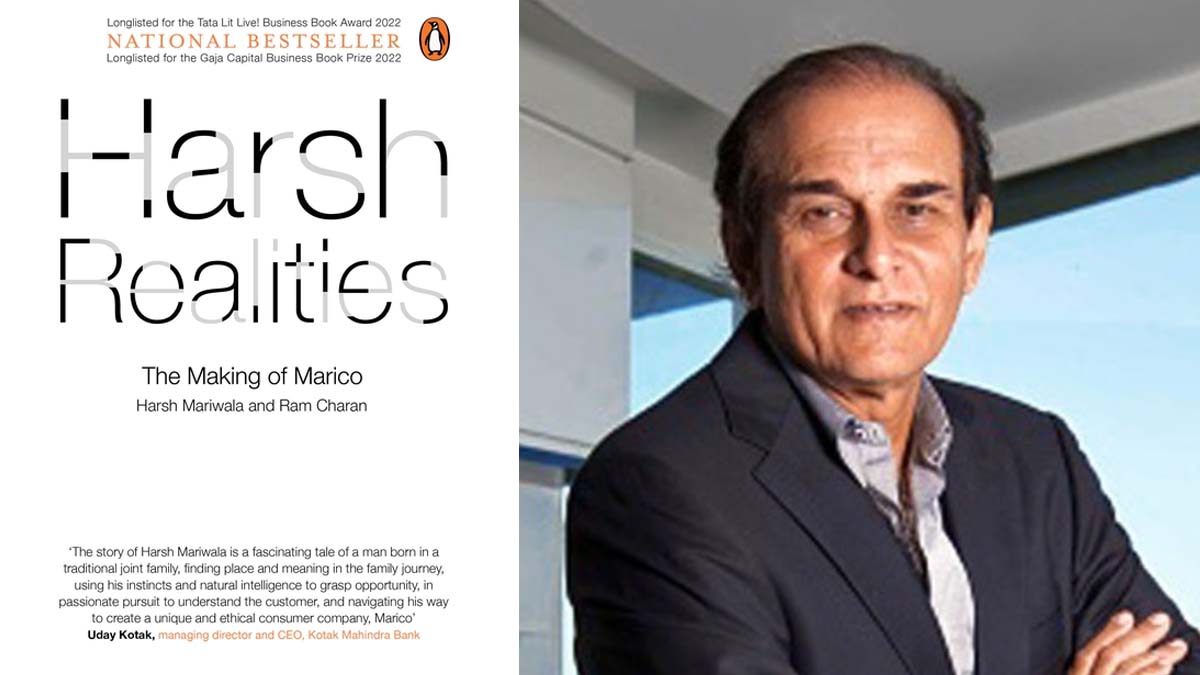
MUMBAI: Almighty Motion Picture is turning its lens on India Inc., with plans to adapt Harsh Realities: The Making of Marico into a screen project. The story charts the rise of Harsh Mariwala, the chairman and founder of Marico, and is currently in early development, according to a report by Variety.
Writer Karan Vyas, known for his work on Scam 1992, Scoop and Made in India – A Titan Story, is attached to pen the screenplay. The project continues the studio’s growing interest in real-life Indian narratives that blend business with human drama.
At the heart of the story lies a defining moment in 1987, when Mariwala chose to step away from the family-run Bombay Oil Industries and strike out on his own. What followed was not just the creation of a company, but the reinvention of a legacy. Marico would go on to become a global FMCG player, with brands like Parachute, Saffola, Set Wet and Livon becoming household names, reaching nearly one in three Indians.

The source material, co-authored by Mariwala and renowned business strategist Ram Charan, offers more than a boardroom chronicle. It captures the grit behind the growth, the risks behind the rewards and the leadership lessons forged along the way.
The adaptation aims to move beyond balance sheets and brand milestones, focusing instead on the person behind the enterprise. Expect a narrative that leans into the emotional stakes of entrepreneurship, where decisions are as personal as they are professional.
Today, Marico draws about a quarter of its revenue from international markets across Asia and Africa, reflecting its steady transformation from a domestic player into a multinational force. Yet, if the makers have their way, the screen version will remind audiences that every global success story begins with a leap of faith.
With development set to begin soon, this is one business story that may just trade spreadsheets for storytelling, and profit margins for moments that linger








