Hindi
Prime Focus Q3 net profit up 5% at 59 million

MUMBAI: Prime Focus has posted a standalone net profit of Rs 58.7 million for the quarter ended 31 December 2007, up 4.96 per cent compared to the corresponding quarter last fiscal.
During the period, standalone revenue grew 48.4 per cent to stand at Rs 220.3 million.
During the quarter, Prime Focus has acquired Post Logic Studios (with offices in Hollywood and New York) and Frantic Films (with offices in Los Angeles, Winnipeg and Vancouver) for a total consideration of $ 43 million. The acquisitions have added to Prime Focus’ global footprint, which previously entailed of six visual effects and post-production facilities across India and four facilities in London.
Prime Focus MD Namit Malhotra said, “With our the recent acquisitions of Frantic Films and Post Logic Studios, the Prime Focus Group now has strategic positioning in the world’s largest entertainment markets viz. US, UK and India. With this incredible talent pool and technology we can easily deliver the best creative and technical services for content companies all over the globe”.
It has launched unsubordinated unsecured foreign currency convertible bonds worth $ 55 million due in 2012. The Bonds will be convertible into ordinary shares of the Company, quoted in Indian Rupees and listed on the Bombay Stock Exchange and the National Stock Exchange.
The company has completed post production work of films like Saawariyan, Om Shanti Om and Welcome among others. Besides it has also executed the post production and visual effects work on television commercials like Lenovo, Hero Hondo Hunk, Tata AIG, Bajaj Avenger, Skoda Fabia and Ford Fiesta.
Malhotra added, “This year we will be focusing on further strengthening our global pipeline to deliver unmatched value and service to our customers and become the leading visual effects and post-production service provider in each local market.”

Hindi
Zee5 and Applause Entertainment team up for whodunnit ‘Everybody Loves Sohrab Handa’
Rajat Kapoor directs star-studded murder mystery streaming from 10 April.
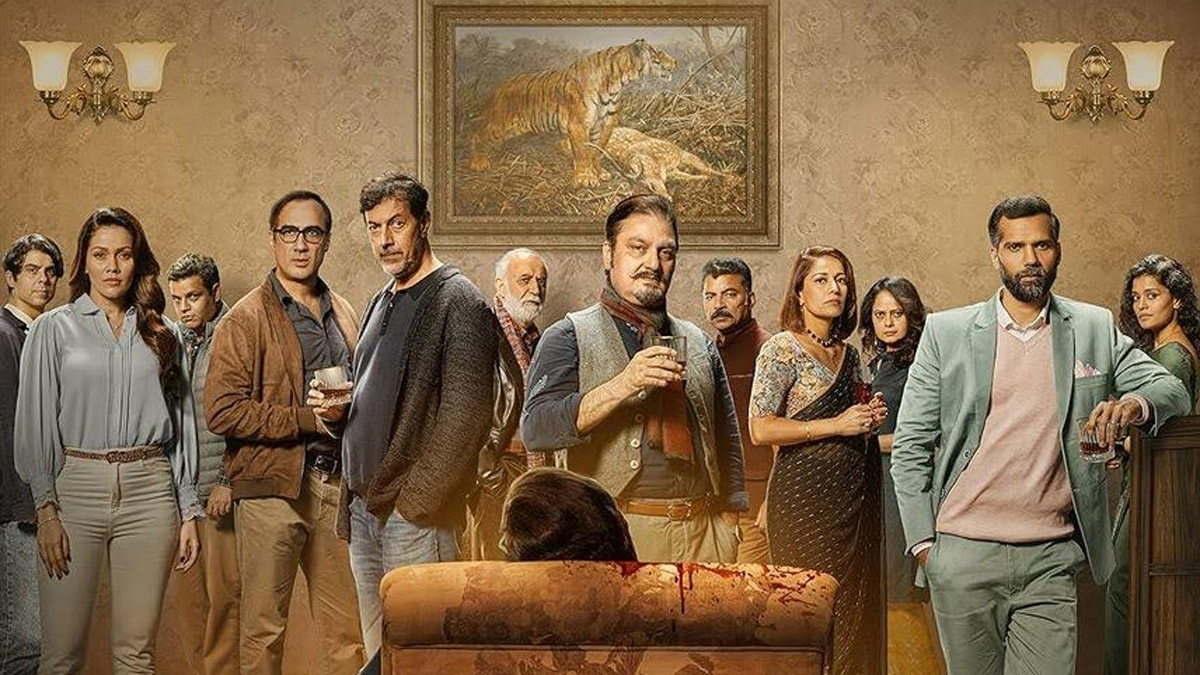
MUMBAI: Zee5 is serving up another killer collaboration and this time, the murder mystery comes with a generous side of dark humour and family dysfunction. The streaming platform has partnered with Applause Entertainment and Mithya Talkies to bring Everybody Loves Sohrab Handa, a fresh, twisted whodunnit written and directed by acclaimed filmmaker and actor Rajat Kapoor. The film will stream exclusively on Hindi Zee5 from 10 April.
The movie reimagines the classic murder mystery genre with a contemporary, darkly comic edge. It revolves around a group of friends and family who smile, drink, and celebrate together until the silence snaps and long-buried secrets spill out. The stellar ensemble cast includes Vinay Pathak, Ranvir Shorey, Waluscha De Sousa, Saurabh Shukla, Chandrachoor Rai, Neil Bhoopalam, Koel Purie, Palomi Ghosh, and Rajat Kapoor himself.
This latest offering continues the successful partnership between Zee5 and Applause Entertainment, which has previously delivered diverse hits such as Mithya, Bloody Brothers, and Jab Khuli Kitaab.

&TV Business Head of hindi Zee5 and chief channel officer Kaveri Das said, “Our collaboration with Applause Entertainment has consistently delivered distinct, high-impact storytelling. Everybody Loves Sohrab Handa is a natural progression, reinforcing our focus on genre-led content with a compelling whodunnit premise and a strong ensemble cast.”
Applause Entertainment business head for movies Sunil Chainani added, “This film adds yet another compelling layer to our slate with Rajat Kapoor’s unmistakable voice.”
Rajat Kapoor shared, “What interested me was not just the mechanics of a whodunnit, but the emotional violence that precedes physical violence. These are people who smile at each other, but there’s so much that is not said.”
The film promises razor-sharp writing, layered performances, and simmering tension, inviting viewers not just to solve the crime but to unravel the complex relationships at its heart.
If you love a good murder mystery served with wit and emotional depth, Everybody Loves Sohrab Handa looks set to be your next addictive watch. Mark your calendars, the whodunnit drops on Hindi Zee5 from 10 April.






