Hindi
NFDC to get Rs 300 mn boost from MIB; Om Puri joins as chairman

MUMBAI: National Film Development Corporation of India (NFDC) has been allocated a sum of Rs 300 million for five years by the Information & Broadcasting ministry for film production and promotion of new talent.
NFDC is also ready to release four films this fiscal. While three out of these four films, namely The White Elephant, Lucky Red Seeds and Via Darjeeling, are co-productions with NDTV Imagine, Mirchi Movies, and Moxie Entertainment respectively, Bioscope is a solo production film from the NFDC stable.
Via Darjeeling, a film by Arindam Nandy, is ready to release this July. The film stars Kay Kay Menon, Parvin Dabas, Sonali Kulkarni, Vinay Pathak, Rajat Kapoor, Sandhya Mridul and Simone Singh.
“Via Darjeeling is ready for a July release. The film will be distributed by PVR across the country,” stated NFDC MD Nina Lath Gupta.
Lucky Red Seeds, directed by Anjali Menon, is slated to release this November.
“Lucky Red Seeds represent the memories seen through the young eyes of Vicky – one of the millions of Indian children raised outside their country. The film, in Malayalam, will be released in November with English subtitles,” said NFDC production manager D. Ramakrishnan.
Bioscope, NFDC‘s solo production, has been written, scripted and directed by KM Madhusudhanan. The film depicts the inner meaning of moving images.
It is a story about Diwakaran, and what became of his very close friend, the “bioscope”. Traveling through villages, he erected tents and screened early film strips using a projector, known at that time as “bioscope”.
Both Bioscope and The White Elephant are currently under the production stage and will see a release in the latter part of the fiscal.
Additionally, NFDC will participate in the film market at the 61st Cannes festival next month to promote its new productions.
“We have entered Bioscope and Lucky Red Seeds for the festival screenings and are hoping that these two movies will be selected. The names of the shortlisted films are awaited,” said Gupta.
Also, NFDC has appointed film actor Om Puri as their new chairman. The actor assumed his new role from 4 April ‘08 onwards for a period of 3 years.
The appointment has been made after a gap of almost one year when film distributor and financier Manmohan Shetty resigned from the post.
Talking about his plans Om Puri stated that he will encourage and promote young film makers who have the potential of making a good film which is rich in content. NFDC will recognize young talent with interesting projects and help them produce films.
He also wants to promote various workshops like in the area of script writing and screen play as deserving talent can be tapped.
Furthermore, Om Puri also plans to introduce an effective concept called “cooperatives”. In this model if the script or the film demands established and famous actors, a unanimous arrangement will be reached between NFDC as a production house and the cast and crew of a particular film. After deciding on the script, NFDC will approach them with an offer to work in the film on a subsidised fee.
If the film becomes a success in the box office, the profit garnered will be shared with all those who are involved in the project. The idea behind this concept is to give boost to film makers with experiential and viable scripts but limited budgets. This proposal will help procure prominent talents for small budget films.
Earlier, Dadasaheb Phalke awardee and film director Hrishikesh Mukherjee and Bollywood actor Hema Malini had served as chairman of NFDC.

Hindi
Zee5 and Applause Entertainment team up for whodunnit ‘Everybody Loves Sohrab Handa’
Rajat Kapoor directs star-studded murder mystery streaming from 10 April.
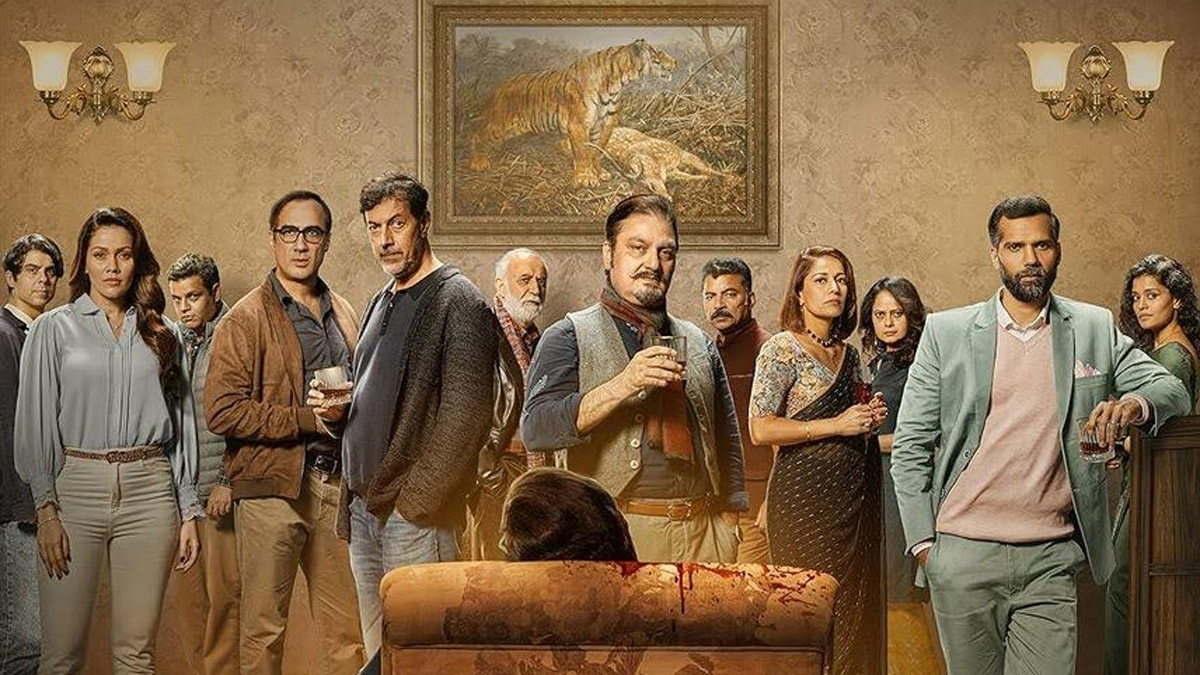
MUMBAI: Zee5 is serving up another killer collaboration and this time, the murder mystery comes with a generous side of dark humour and family dysfunction. The streaming platform has partnered with Applause Entertainment and Mithya Talkies to bring Everybody Loves Sohrab Handa, a fresh, twisted whodunnit written and directed by acclaimed filmmaker and actor Rajat Kapoor. The film will stream exclusively on Hindi Zee5 from 10 April.
The movie reimagines the classic murder mystery genre with a contemporary, darkly comic edge. It revolves around a group of friends and family who smile, drink, and celebrate together until the silence snaps and long-buried secrets spill out. The stellar ensemble cast includes Vinay Pathak, Ranvir Shorey, Waluscha De Sousa, Saurabh Shukla, Chandrachoor Rai, Neil Bhoopalam, Koel Purie, Palomi Ghosh, and Rajat Kapoor himself.
This latest offering continues the successful partnership between Zee5 and Applause Entertainment, which has previously delivered diverse hits such as Mithya, Bloody Brothers, and Jab Khuli Kitaab.

&TV Business Head of hindi Zee5 and chief channel officer Kaveri Das said, “Our collaboration with Applause Entertainment has consistently delivered distinct, high-impact storytelling. Everybody Loves Sohrab Handa is a natural progression, reinforcing our focus on genre-led content with a compelling whodunnit premise and a strong ensemble cast.”
Applause Entertainment business head for movies Sunil Chainani added, “This film adds yet another compelling layer to our slate with Rajat Kapoor’s unmistakable voice.”
Rajat Kapoor shared, “What interested me was not just the mechanics of a whodunnit, but the emotional violence that precedes physical violence. These are people who smile at each other, but there’s so much that is not said.”
The film promises razor-sharp writing, layered performances, and simmering tension, inviting viewers not just to solve the crime but to unravel the complex relationships at its heart.
If you love a good murder mystery served with wit and emotional depth, Everybody Loves Sohrab Handa looks set to be your next addictive watch. Mark your calendars, the whodunnit drops on Hindi Zee5 from 10 April.







