Hindi
New distribution avenues obviate docu filmmakers’ dependence on state: IDPA

NEW DELHI: The scene appears to be changing for makers of meaningful short, documentary and animation films.Though the multiplex culture has shrunk distribution possibilities in the cinema hall, those associated with this genre of cinema are no longer despondent, with many more channels including television channels and portals accepting their films and paying for them, albeit in small sums. In addition, there are the new entrepreneurs who are taking packages of small films to rural or semi-urban areas or schools and colleges, and showing these films and then indulging in discussions.
This was the general outcome at the open forum organised by the Indian Documentary Producers‘ Association (IDPA) in collaboration with the Films Division. Those who attended the forum agreed that there was no need for filmmakers to depend on state support either for financing or exhibition outlets as technology had opened newer avenues.
Nautanki.tv COO Vikram Prabhu said that he launched the portal after he had collected a large sum of money to make a feature film, a project he was forced to give up for various reasons. He then started the portal which is now showing features and non-features on mutually agreed business models. The online TV channel is now viewed by people all over the country and abroad, and is encouraging filmmakers to approach him to put their film online. He said he was surprised to learn that the number of people interested in seeing short films was very large.
Rakesh Sharma, whose film The Final Solution had won several awards a couple of years ago, said there exist a variety of avenues for short films. He said that it was perhaps ironical that his film had done well because it was banned, but there were demands from different parts of the country for the film. He has now allowed all portals to “pirate and circulate” his film on condition that they buy at least one print. Very often those who pirate the films come back to him as they are not satisfied until they have the original. He sells his prints at subsidised rates as that helps him show it all over the country and overseas. He has, so far, managed to sell 18,000 DVDs of The Final Solution and 8,000 copies of Aftershocks, both based on events in Gujarat.
Sharma asked why a portion of the huge entertainment tax collected by the governments was not being ploughed back into the industry. He also questioned why there was no subsidy for distribution, and why multiplexes were not showing short films despite the fact that they had been given a five-year tax holiday. A condition could have been laid before giving the tax holiday that at least one screen be devoted to short films. He also said filmmaking was no longer capital intensive since one could make a film and edit it on a PC. He suggested that short filmmakers put promotionals of other filmmakers in their films.
Saratchandran and P Babu Raj related their experiences of how they had taken their own films and those of others to different parts of Kerala where audiences and students took part in discussions. Saratchandran said that some television channels in Kerala like the terrestrial channel Kerala Vision were devoted to documentary films.
Babu said dependence on Doordarshan had become futile and therefore filmmakers had to find their own outlets. Entrepreneur Subhash Chheda also agreed and said good money could be made with wise screenings in semi-urban and rural areas.
Gargi Sen, a distributor of short films, said this was done on a 65-35 basis. However, she also added that she only had 130 films with her.
Vidyarthi Chatterjee who conducted the discussion said it was futile depending on the state or on Doordarshan, while NDTV producer Gunjan Jain said her channel was now acquiring documentary films.

Hindi
Zee5 and Applause Entertainment team up for whodunnit ‘Everybody Loves Sohrab Handa’
Rajat Kapoor directs star-studded murder mystery streaming from 10 April.
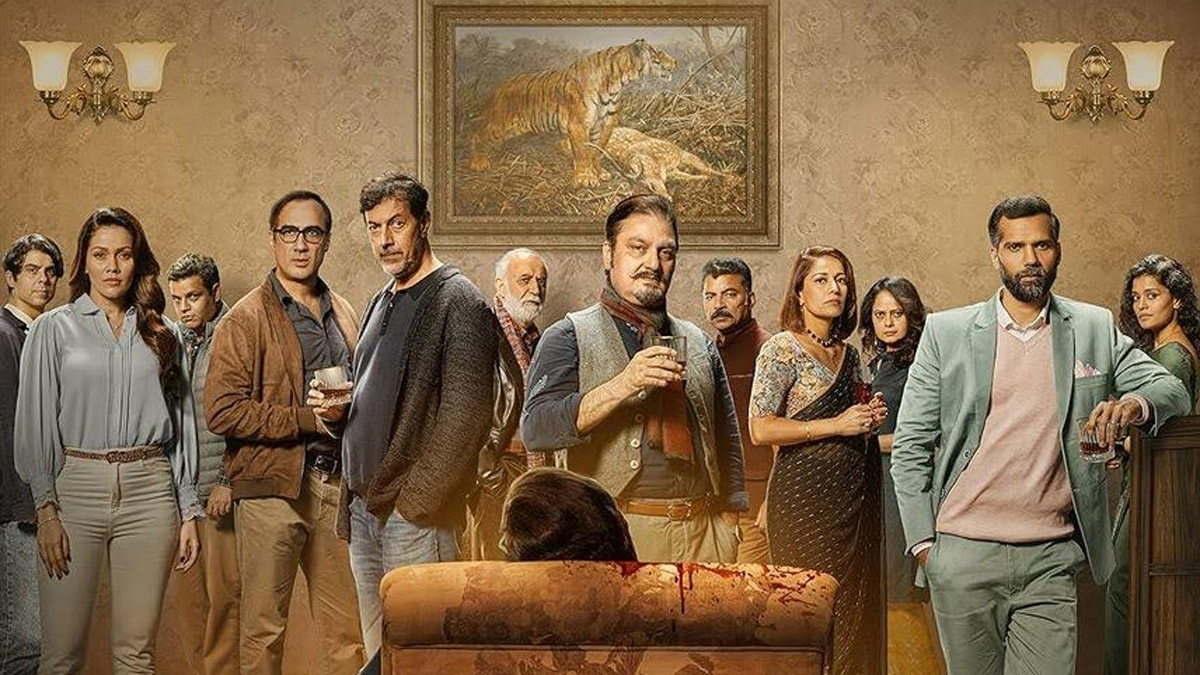
MUMBAI: Zee5 is serving up another killer collaboration and this time, the murder mystery comes with a generous side of dark humour and family dysfunction. The streaming platform has partnered with Applause Entertainment and Mithya Talkies to bring Everybody Loves Sohrab Handa, a fresh, twisted whodunnit written and directed by acclaimed filmmaker and actor Rajat Kapoor. The film will stream exclusively on Hindi Zee5 from 10 April.
The movie reimagines the classic murder mystery genre with a contemporary, darkly comic edge. It revolves around a group of friends and family who smile, drink, and celebrate together until the silence snaps and long-buried secrets spill out. The stellar ensemble cast includes Vinay Pathak, Ranvir Shorey, Waluscha De Sousa, Saurabh Shukla, Chandrachoor Rai, Neil Bhoopalam, Koel Purie, Palomi Ghosh, and Rajat Kapoor himself.
This latest offering continues the successful partnership between Zee5 and Applause Entertainment, which has previously delivered diverse hits such as Mithya, Bloody Brothers, and Jab Khuli Kitaab.

&TV Business Head of hindi Zee5 and chief channel officer Kaveri Das said, “Our collaboration with Applause Entertainment has consistently delivered distinct, high-impact storytelling. Everybody Loves Sohrab Handa is a natural progression, reinforcing our focus on genre-led content with a compelling whodunnit premise and a strong ensemble cast.”
Applause Entertainment business head for movies Sunil Chainani added, “This film adds yet another compelling layer to our slate with Rajat Kapoor’s unmistakable voice.”
Rajat Kapoor shared, “What interested me was not just the mechanics of a whodunnit, but the emotional violence that precedes physical violence. These are people who smile at each other, but there’s so much that is not said.”
The film promises razor-sharp writing, layered performances, and simmering tension, inviting viewers not just to solve the crime but to unravel the complex relationships at its heart.
If you love a good murder mystery served with wit and emotional depth, Everybody Loves Sohrab Handa looks set to be your next addictive watch. Mark your calendars, the whodunnit drops on Hindi Zee5 from 10 April.






