Hindi
Multiplexes take Rs 450 million hit

Multiplexes have taken a Rs 450 million knock since the producers began to stop supply of their fresh slate of movies from 4 April.
The pinch is particularly felt hard by the top six plex operators who account for three-fourth of the 850 screens across the country, according to information gathered by Indiantelevision.com.
In this research article, Indiantelevision.com estimates the revenue loss to climb to Rs 850-900 million if the strike continues for a month.

Analysis
Let us examine the impact in revenue caused due to different occupancy rates due to the movie release embargo. The big six namely Big Cinemas, PVR, Inox, Cinemax, Fame Cinemas and Fun Cinemas themselves constitute about three- fourth of the total number of screens. While there are more than 11,000 single-screen cinemas across the country, the multiplexes contribute to well over 50 per cent of the revenue generated.
The occupancy rates are expected to be significantly different in the multiplexes with major Hindi films not being released. According to Fun Cinemas COO Vishal Kapur, screens are currently operating at around 15 per cent occupancy.
The table below shows the number of seats, revenue per-show and revenue per-day generated by all multiplex screens in the country at the given occupancy rates. The occupancy rates have been considered between 10 and 60 per cent across all screens in the country.

Note that in the above table, the average number of seats per screen in a multiplex is taken to be 230 and the total number of screens has been taken at 850. The average price of a movie ticket has been considered to be a conservative Rs 125. Additional losses would include loss in sales in food and beverages at the counters which is estimated to be around Rs 35 per-seat. The total loss, thus, incurred per-seat per-show would amount to Rs 160.
A 10 per cent occupancy rate causes a difference of around Rs 15 million per day across all the 850 screens in the country. During normal times, screens may operate between 15 to 50 per cent occupancy depending on the movies showing at the time, says marketing head of Inox Harshavardhan Gangurde.
Thus if we take a figure of 35 per cent to represent the occupancy rates of multiplex screens at any time of the year, in the current scenario there could well be a difference of 20 per cent in average occupancy rates.
As is evident from the table, the multiplexes earn Rs 30 million less per day from ticket sales and food counters. Per week, this amounts to a loss of Rs 210 million in revenue, taking all multiplex screens into account. This figure does not include additional sources of revenue from vehicle parking and other such ancillary sources. However, the IPL may well have tempered the losses as it has the potential to lower the occupancy rates in the multiplexes.
The big six hit the most
The top six multiplexes took the biggest hit in revenue losses, as is evident from the table below.

IPL impact on movies
Many believe that the IPL is one of the main reasons for bringing a halt to the release of Hindi movies. The IPL took the country by storm in 2008 and is believed to have eaten away significantly into box-office collections. Industry observers believe that this is the right time to hold movies from releasing in multiplexes as it would in any case lead to significant losses. Movies released during the IPL in 2008 (from 18 April to 1 June) include Sirf, Tashan, Anamika, Mr. White Mr. Black, Pranali, Jimmy, Bhootnath, Jannat, Don Muthuswami, Dhoom Dhadaka and Ghatothkach. Clearly, most movies released were not big-budget movies. The only significant movies released during this time were Tashan, Jannat and Bhootnath. Jannat was the only movie which did reasonably well while the others had nothing much to write about.
This year, during the IPL season, producers have decided not to jump into the fray at all. The IPL has provided the perfect time and opportunity to broker a deal with multiplex owners.
Conclusion
There could be a 20 per cent loss in occupancy rates if the United Producers and Distributors Forum stays put in not releasing new movies till a settlement is reached. From our calculations, this difference in occupancy rates would amount to revenue losses of Rs 850-900 million per month in multiplexes. This figure is much lesser than Rs 1-1.5 billion per month as is being claimed by some industry sources.
The IPL has provided the perfect time for producers and distributors to settle the issue with multiplex owners. This issue had been simmering for a while ever since the release of Fanaa by Yash Raj movies way back in 2006. A sensible resolution of this issue hopefully would be reached during this time which would serve the best interests of either party for a good period of time.






Hindi
Remembering Gyan Sahay, the lens behind film, television and advertising
From a puppet rabbit selling poppadums to Hindi cinema, he framed it all.
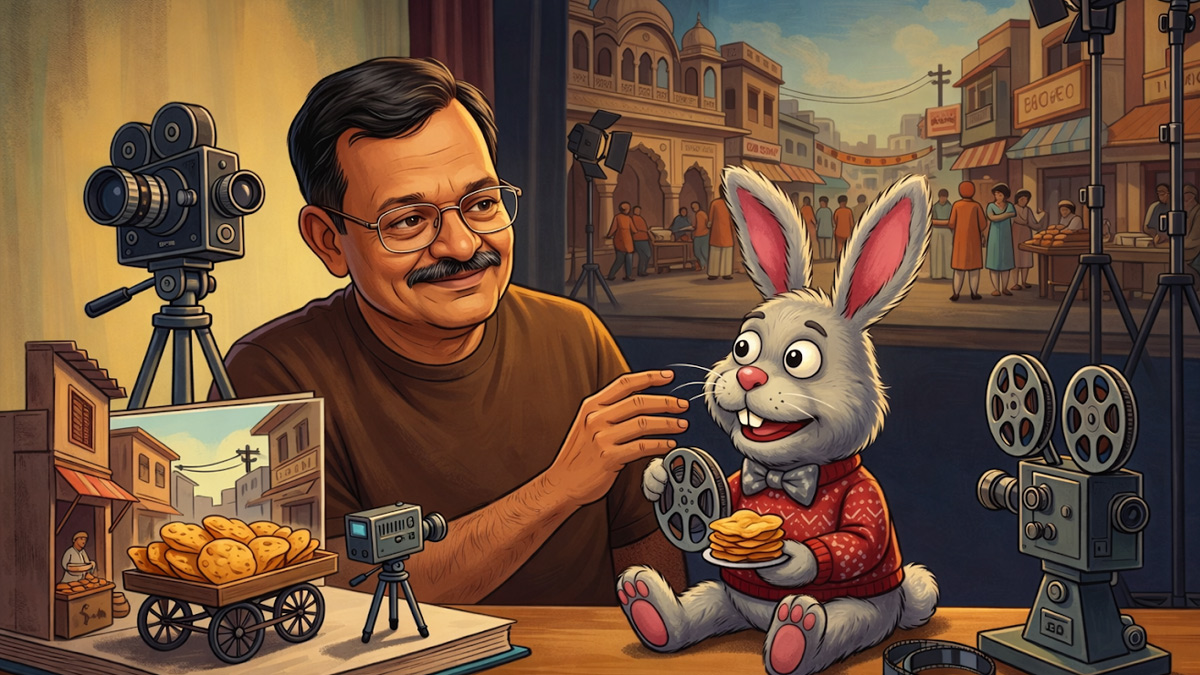
MUMBAI: There are careers, and then there are canvases. Gyan Sahay, the veteran cinematographer, director, and producer who passed away on 10 March 2026 in Mumbai, had one of the latter. Over several decades in the Indian film and television industry, he turned lenses, lights, and the occasional puppet rabbit into something approaching art.
A graduate of the Film and Television Institute of India (FTII) in Pune, Sahay built his reputation as a director of photography across a career that stretched from the early 1970s all the way to the digital age. He was the kind of craftsman who understood that a well-composed shot is not merely a technical achievement but a quiet act of storytelling.
For most Indians of a certain age, however, Sahay will forever be the man behind the rabbit. His direction of the iconic long-running television commercial for Lijjat Papad, featuring its now-legendary puppet bunny, gave the country one of its most cheerfully persistent advertising images. It was the sort of work that sneaks into the national subconscious and takes up permanent residence.
His big-screen credits as cinematographer include Anokhi Pehchan (1972), Pagli (1974), Pas de Deux (1981), and Hum Farishte Nahin (1988). In 1999, he stepped behind a different kind of camera altogether, making his directorial debut with Sar Ankhon Par, a drama that featured Vikas Bhalla and Shruti Ulfat, with a cameo by Shah Rukh Khan for good measure.
On television, Sahay was particularly prized for his command of multi-camera production setups, a skill that made him a go-to technician for large-scale shows and reality programmes. In an industry that has never been especially patient with complexity, he was the calm hand on the rig.
In later life, Sahay turned teacher. He participated regularly in masterclasses and Digi-Talks, often hosted by organisations such as Bharatiya Chitra Sadhna, sharing hard-won wisdom on cinematography, the comedy of timing in a shot, and the sweeping changes brought by the shift from celluloid to digital. He was also said to have been involved in a project concerning a biographical film on Infosys co-founder N.R. Narayana Murthy.
Tributes from the film industry poured in following the news of his passing, with colleagues remembering him as a senior cameraman who served as a rare bridge between two entirely different eras of Indian cinema. That is, perhaps, the finest thing one can say of any craftsman: he kept up, and he brought others along with him.