Hindi
‘Madaari’ rides on cast; ‘M Cream’ bores


MUMBAI: Madaari arouses curiosity mainly because of its star cast combination of Irrfan Khan and Jimmy Shergill. As expected, they are on opposite sides of the law. Also, the film packs one of the favourite themes of the masses: a common man against the establishment.
Irrfan is stalking two young boys, both hostelites somewhere in Uttarakhand. The boys, Vishesh Bansal and Sadhil Kapoor, love to defy the hostel regulations. They have timed the sentry’s checkup visits to the dormitory and, accordingly, every night between 12 midnight and 4 am they jump over the hostel premises to go have midnight meals at the roadside thelas. They get their kick out of this act.
Unknown to Vishesh and Sadhil, they are being observed keenly by a scary looking man with longish hair and a beard, Irrfan. He is also seen inquiring about the boys from the food vendor. And, soon enough, he has kidnapped both the boys. While he lets off Sadhil, he has a serious reason for kidnapping Vishesh: he has an axe to grind with Vishesh’s father, Tushar Dalvi, who is the home minister (there is a bit of confusion here as one can’t really determine if this is a state subject or related to the central government.).

Irrfan is an aggrieved person in that he was a single parent of a boy who he doted on. One day, lured by an opportunity to earn some extra money, he lets his son go to school on his own instead of dropping him there as has been his routine. But, within minutes of son and father parting, there is a tragedy. A bridge in the area has collapsed and one of the victims is Irrfan’s son. Had Irrfan gone to drop his son off, he would have perished too.
Irrfan survives and now wants accountability. And what better than kidnapping the home minister’s son and force him to tow your lines? Soon, the whole legal force is out to track Irrfan though they still don’t know who the kidnapper is. The case is handed over to Shergill, who soon understands that the kidnap is not for ransom and the kidnapper has a solid motive. Also, that he is a computer savvy, educated man.
As the manhunt starts, this turns into a road movie. Irrfan keeps moving from place to place so that his calls are not tracked. That is till the cops release Irrfan’s and Vishesh’s pictures. But, meanwhile, Irrfan has not only won over Vishesh to his side but also, thanks to the media, the general public. People are always with the underdog.
The film moves towards the tried and tested climax; it is Irrfan vs. corrupt politicians with masses playing the referee thanks to the media.
As mentioned at the onset, the main attraction in Madaari is its cast. As for the rest, the film offers nothing original. Public works and corruption? The earliest film I remember about building bridges which end in tragedy, is Aadmi Aur Insaan (B R Films: 1969), which had a friendship background, Jaane Bhi Do Yaaro (Kundan Shah: 1983) had comedy as its main theme and there are many others. As for the kidnapping for justice, Gabbar Is Back was a recent release with similar theme. And the cops vs. Irrfan treatment is very much akin to the acclaimed film, A Wednesday!. And, of course, the climax of using the media to involve the public to witness the final confessions has now become as much a part of our films as are songs and dance routines!
The scripting is taut initially but, as soon as Irrfan’s identity is known, the film loses some of its holding power. Also, the way it goes about, it offers no surprises or twists. It also leaves a lot unexplained as to the locale of the story, the wife deserting Irrfan and leaving a kid behind at a time he needed nursing and other such points. Direction goes by the script and does not rise beyond its limitations. Music has situational utility. Cinematography is good as it juxtaposes scenic northern mountains against barren Rajasthan landscapes.
Irrfan is excellent. The film is woven around his character and he makes the most of it. Shergill proves a perfect foil with his restrained performance as well as his very presence. Young Vishesh impresses.
Madaari has limited appeal, especially for the gentry.
Producers: Irrfan Khan, Shailesh Singh, Madan Paliwal, Sutapa Sikdar, Shailja Kejriwal.
Director: Nishikant Kamat.
Cast: Irrfan Khan, Vishesh Bansal, Jimmy Shergill, Tushar Dalvi, Nitesh Pandey, Sadhil Kapoor.
M Cream …..Trip to boredom!
M Cream may be called a personal movie in that, if the film bore relevance to anybody, it would be to its makers. It is about four college youth perpetually on alcohol and drugs but the ones affected and on a high, it seems, are the makers. It is a product of indulgence. In fact, if at all, then the film tries to pick up events from the late 1960s and transpose them to today! To attribute a genre to the film, it is a road movie.
Imaad Shah, Ira Dubey, Raaghav Chanana and Aurita Ghosh are Delhi University students who are seen anywhere but the university campus. They seem to live in their own world and are always sufficiently stocked with alcohol, drugs and cigarettes. If at all they take a break from these indulgence, it is for sex.
Since their lives revolve around booze and drugs, they feel the need to go search for this mythical wonder hashish, M Cream, said to be found only in the Himalayas. The preparation contains mainly of alcohol stock. The group decides to drop in at Dharamshala, the city of the Dalai Lama. On the way, the equations seem to be changing between these two couples. Imaad,who was earlier attracted to Aurita, is now inclined towards Ira while Aurita shacks up with Raaghav.
Their life is now about travelling through picturesque Himalayan tracks or eating, drinking and smoking when not travelling. Their next stop is at some sort of joint run by Barry John who enlightens them further on drugs and also gives them their first experience with LSD. Of course, wherever they go, there are groups of hippies stocked up with drugs waiting to welcome them, play music and have wild dance parties.
For the sake of some kind of movement, the friends fight and the couples part ways. Imaad and Ira are left on their own. Whether they discover M Cream or not, they sure end up discovering each other!
The film has soulful music, a fusion of songs you can hear again and again on a long drive. Shubha Mudgal along with a couple of foreign artists renders racy songs.
If the film tries to take you back to the hippie era, it fails badly as the makers seem to have no clue about that age and time. For, if anything changed the world, people and way of life after WW2 more drastically, it was the 1960s and early 70s.
Producer: Agniputra Films.
Director: Agneya Singh.
Cast: Imaad Shah, Ira Dubey, Barry John, Auritra Ghosh, Raaghav Chanana, Tom Alter, Lushin Dubey, Beatrice Ordeix.





Hindi
Zee5 and Applause Entertainment team up for whodunnit ‘Everybody Loves Sohrab Handa’
Rajat Kapoor directs star-studded murder mystery streaming from 10 April.
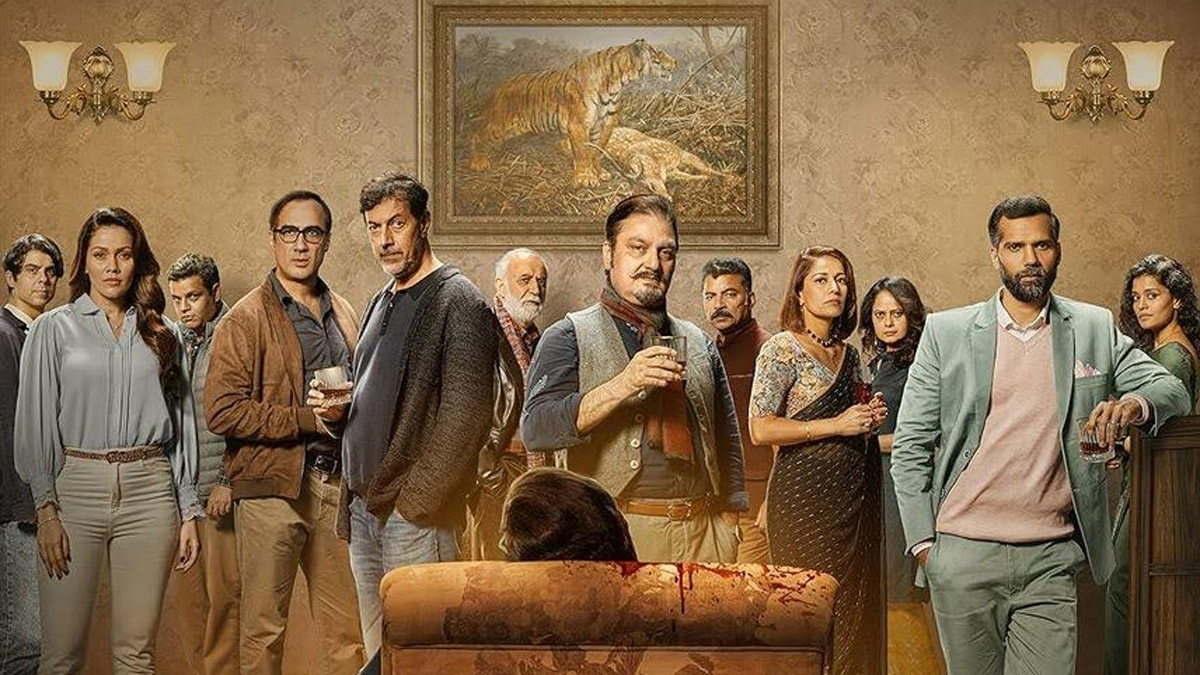
MUMBAI: Zee5 is serving up another killer collaboration and this time, the murder mystery comes with a generous side of dark humour and family dysfunction. The streaming platform has partnered with Applause Entertainment and Mithya Talkies to bring Everybody Loves Sohrab Handa, a fresh, twisted whodunnit written and directed by acclaimed filmmaker and actor Rajat Kapoor. The film will stream exclusively on Hindi Zee5 from 10 April.
The movie reimagines the classic murder mystery genre with a contemporary, darkly comic edge. It revolves around a group of friends and family who smile, drink, and celebrate together until the silence snaps and long-buried secrets spill out. The stellar ensemble cast includes Vinay Pathak, Ranvir Shorey, Waluscha De Sousa, Saurabh Shukla, Chandrachoor Rai, Neil Bhoopalam, Koel Purie, Palomi Ghosh, and Rajat Kapoor himself.
This latest offering continues the successful partnership between Zee5 and Applause Entertainment, which has previously delivered diverse hits such as Mithya, Bloody Brothers, and Jab Khuli Kitaab.
&TV Business Head of hindi Zee5 and chief channel officer Kaveri Das said, “Our collaboration with Applause Entertainment has consistently delivered distinct, high-impact storytelling. Everybody Loves Sohrab Handa is a natural progression, reinforcing our focus on genre-led content with a compelling whodunnit premise and a strong ensemble cast.”
Applause Entertainment business head for movies Sunil Chainani added, “This film adds yet another compelling layer to our slate with Rajat Kapoor’s unmistakable voice.”
Rajat Kapoor shared, “What interested me was not just the mechanics of a whodunnit, but the emotional violence that precedes physical violence. These are people who smile at each other, but there’s so much that is not said.”
The film promises razor-sharp writing, layered performances, and simmering tension, inviting viewers not just to solve the crime but to unravel the complex relationships at its heart.
If you love a good murder mystery served with wit and emotional depth, Everybody Loves Sohrab Handa looks set to be your next addictive watch. Mark your calendars, the whodunnit drops on Hindi Zee5 from 10 April.






