Hindi
‘Kabali’… For loyal fans only

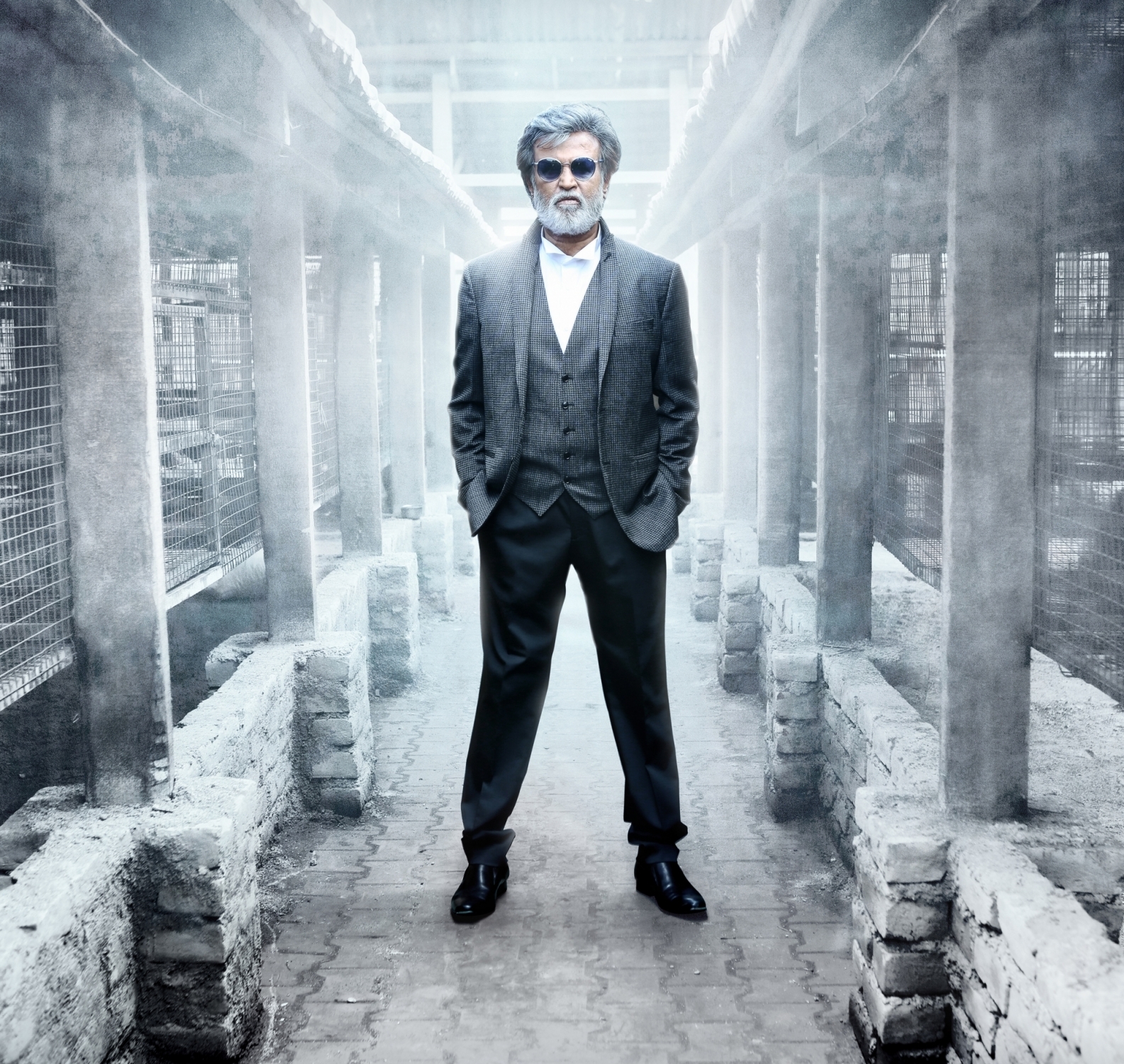
MUMBAI: One might wonder what exactly does ‘Kabali’ mean? But who cares what it means literally—as long as Rajinikanth portrays the role of Kabali, that itself gives the word and the film a meaning. A Rajini film has to have action. It must make him look infallible, a larger than life human being. It must project him as a family loving and caring man. The film should also project his philanthropic side and as a man who is always ready to do his bit for the downtrodden and suppressed.
While Kabali makes sure to incorporate all these (from what could be gathered from its Hindi dubbed version), it also has to keep in mind that Rajini is in his mid-60s and his action has to be so designed as to not show his age. The makers also need to keep in mind the fact that the recent Rajini films have not quite met with the expectations of his fans and, hence, of the box office. To give the film a more universally acceptable look and feel, the story and all the action takes place in Malayasia.
As the film opens, Rajini is being set free from a jail after serving a 25-year sentence. And, you lose half the confidence in your super hero for as far as you are concerned, he is not the kind to be locked up behind cell doors!

There was a gang war where a huge massacre was taking place but, when the police arrive, Rajini is caught red-handed while his opponents vanished from the scene just in time to avoid being caught. Now that Rajini is coming out, it is time to resume the gang wars. Rajini has made it to this status from a union leader at a rubber plantation where circumstances made him take to crime. Mainly, he had to safeguard his own Dalit people. He starts with breaking taboos by dressing up in a smart suit and shoes. That is his idea of defiance.
Rajini’s mentor, Naser, is killed by the Chinese gangsters because while the Chinese indulged in drugs and flesh trade, Naser was against it. Rajini takes over his place to continue the crusade. Meanwhile, Rajini also wants to avenge the deaths of his wife, Radhika Apte, and daughter, Dhansika who was yet to born.
The first half of the film passes with little happening save for a couple of gang shootouts as both parties take turns to raid their opponent. It is at the close of first half that Rajini meets the daughter he presumed dead. She is a grown up lady now who has been shadowing her father with an intent to protect him if need be.
As the second half starts, most parts are devoted to reuniting the family after which, the Chinese gang resumes its attacks. Each time, Rajini either manages to survive or outsmart the enemy. This goes on till the final showdown where, at a terrace party, Rajini is caught unarmed and alone. But, as it turns out, he is not alone and most of those around pretending to be the catering staff at the party are his men! The crossfire starts and you can’t make out who is shooting who, nor do you care. The last duel between the Chinese villain, Winston Chao (a Taiwanese actor) and Rajini also avoids hand to hand which used to be the hero’s forte. After all, you can’t challenge age. Our audience love Pakistan-bashing and, with this movie, it seems they will also come to love some Chinese bashing!
Kabali is all about Rajinikanth and nothing else. The script is routine while the direction is patchy. Dialogue loses much of its appeal and claps in Hindi as do songs. Photography is good. Performances are okay.
Kabali created hype and expectations being a Rajinikanth movie. The Hindi audience has never cared much for his stardom even if the media keeps painting him on par with top actors in Hindi. Kabali will go down as just another dubbed South movie after a couple of days’ curious watchers, mainly the South Indian pockets in rest of India.
Producer: Kalaipuli S. Thanu.
Director: Pa. Ranjith.
Cast: Rajinikanth, Winston Chao, Radhika Apte, Dhansika.




Hindi
Remembering Gyan Sahay, the lens behind film, television and advertising
From a puppet rabbit selling poppadums to Hindi cinema, he framed it all.
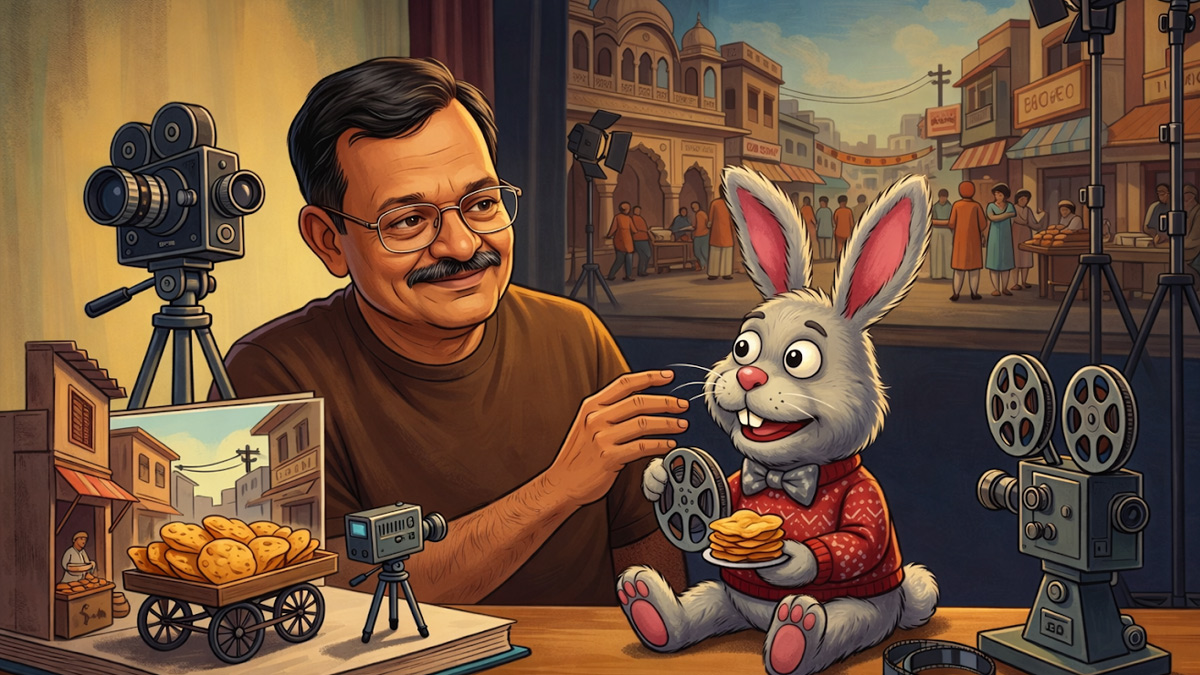
MUMBAI: There are careers, and then there are canvases. Gyan Sahay, the veteran cinematographer, director, and producer who passed away on 10 March 2026 in Mumbai, had one of the latter. Over several decades in the Indian film and television industry, he turned lenses, lights, and the occasional puppet rabbit into something approaching art.
A graduate of the Film and Television Institute of India (FTII) in Pune, Sahay built his reputation as a director of photography across a career that stretched from the early 1970s all the way to the digital age. He was the kind of craftsman who understood that a well-composed shot is not merely a technical achievement but a quiet act of storytelling.
For most Indians of a certain age, however, Sahay will forever be the man behind the rabbit. His direction of the iconic long-running television commercial for Lijjat Papad, featuring its now-legendary puppet bunny, gave the country one of its most cheerfully persistent advertising images. It was the sort of work that sneaks into the national subconscious and takes up permanent residence.
His big-screen credits as cinematographer include Anokhi Pehchan (1972), Pagli (1974), Pas de Deux (1981), and Hum Farishte Nahin (1988). In 1999, he stepped behind a different kind of camera altogether, making his directorial debut with Sar Ankhon Par, a drama that featured Vikas Bhalla and Shruti Ulfat, with a cameo by Shah Rukh Khan for good measure.
On television, Sahay was particularly prized for his command of multi-camera production setups, a skill that made him a go-to technician for large-scale shows and reality programmes. In an industry that has never been especially patient with complexity, he was the calm hand on the rig.
In later life, Sahay turned teacher. He participated regularly in masterclasses and Digi-Talks, often hosted by organisations such as Bharatiya Chitra Sadhna, sharing hard-won wisdom on cinematography, the comedy of timing in a shot, and the sweeping changes brought by the shift from celluloid to digital. He was also said to have been involved in a project concerning a biographical film on Infosys co-founder N.R. Narayana Murthy.
Tributes from the film industry poured in following the news of his passing, with colleagues remembering him as a senior cameraman who served as a rare bridge between two entirely different eras of Indian cinema. That is, perhaps, the finest thing one can say of any craftsman: he kept up, and he brought others along with him.