Hindi
Jai Gangaajal….Drab and routine


Jai Gangaajal, as the title suggests is the sequel to Prakash Jha’s 2003 film, Gangaajal. Unlike its precursor, this film has a female protagonist playing the crusading cop. As is Jha’s wont, the film has a Bihar background and pits an honest police person with a corrupt local politician and his goons.
The police force in the town of Lakhisarai is corrupt and at the beck and call of the politicians, especially the local MLA, ManavKaul. Manav has been winning elections for the last four terms as no one daresstand against him. His strategy is simple, fear. Anyone who dares to raise his voice against him is killed. The police is by his side with Prakash Jha, who takes to acting with this film, is his eyes and ears in the force.
Manav is into land grabbing, having already presold plots which belong to farmers and local bazaar traders. The land is needed for an ambitious power plant which is the dream project of the chief minister and Manav. Both stand to make crores through the deal.The victims, led by Rahul Bhat, are agitating but not with much success. The police frame whoever protests in some or the other case.


To help his cause and control dissentin the region, the chief minister appoints Priyanka Chopra to take control of the Lakhisarai police force. The chief minister has obliged Priyanka’s family a lot, andas such, he expects her to toe his line. He does not want controversies as the elections are due soon.
As Priyanka takes charge, she realizes that she has to contend not only with Manav and his goons led by his maniacal brother NinadKamat, but also remove the rot which has set into her police force. Almost all officers seem to be working for Manav instead of for the state.
Priyanka arrests one of Manav’s goons for molesting a girl in broad daylight in a crowded street. When the goon is presented in court, bomb explosions in the court house help the goon escape. As Priyanka chases the goon, Jha shoots him as if to show that he is trying to save Priyanka. Priyanka understands that not only Jha and others work for Manav, but are also working against her.
There is, however, one farmer who refuses to sell his land leading to Manav’s deal being stuck. The farmer is lynched, his daughter is raped and found hanging from a tree. The incident changes Jha. He is no more willing to help Manav and proceeds to arrest Kamat. Encouraged, the mob also gets involved.
The rest of the film is about Priyanka helping her officers regain their confidence and the end of Manav’s empire. In the process,the best scenes are hogged by Jha himself, leaving Priyanka in the shadows.
The film offers nothing new when compared to other such UP-Bihar Bahubali films. While the first half is fairly gripping, the script loses steam in the second half. Jha’s direction is passable with no sparks of genius anywhere. The film lacks music and romance and is lengthy at 148 minutes (after deleting 10 minutes) with no major stars to pull it through except Priyanka. Priyanka is good as a determined cop. Jha impresses as a corrupt cop turned kosher. Manav is okay while Kamat andMurli Sharma are good.
Jai Ganaajal is a dry film with no entertainment value as such. The opening has been discouraging and so are the reports.
Producer: Prakash Jha.
Director: Prakash Jha.
Cast: Priyanka Chopra, ManavKaul, Prakash Jha, NinadKamat.



Hindi
Remembering Gyan Sahay, the lens behind film, television and advertising
From a puppet rabbit selling poppadums to Hindi cinema, he framed it all.
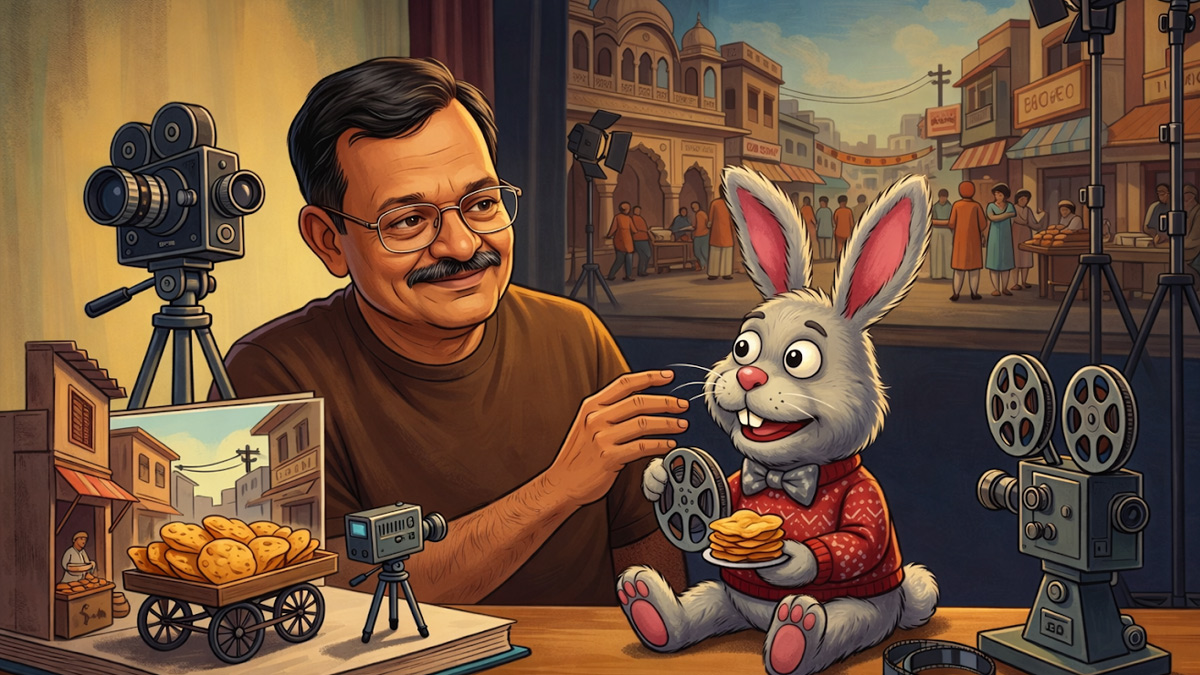
MUMBAI: There are careers, and then there are canvases. Gyan Sahay, the veteran cinematographer, director, and producer who passed away on 10 March 2026 in Mumbai, had one of the latter. Over several decades in the Indian film and television industry, he turned lenses, lights, and the occasional puppet rabbit into something approaching art.
A graduate of the Film and Television Institute of India (FTII) in Pune, Sahay built his reputation as a director of photography across a career that stretched from the early 1970s all the way to the digital age. He was the kind of craftsman who understood that a well-composed shot is not merely a technical achievement but a quiet act of storytelling.
For most Indians of a certain age, however, Sahay will forever be the man behind the rabbit. His direction of the iconic long-running television commercial for Lijjat Papad, featuring its now-legendary puppet bunny, gave the country one of its most cheerfully persistent advertising images. It was the sort of work that sneaks into the national subconscious and takes up permanent residence.
His big-screen credits as cinematographer include Anokhi Pehchan (1972), Pagli (1974), Pas de Deux (1981), and Hum Farishte Nahin (1988). In 1999, he stepped behind a different kind of camera altogether, making his directorial debut with Sar Ankhon Par, a drama that featured Vikas Bhalla and Shruti Ulfat, with a cameo by Shah Rukh Khan for good measure.
On television, Sahay was particularly prized for his command of multi-camera production setups, a skill that made him a go-to technician for large-scale shows and reality programmes. In an industry that has never been especially patient with complexity, he was the calm hand on the rig.
In later life, Sahay turned teacher. He participated regularly in masterclasses and Digi-Talks, often hosted by organisations such as Bharatiya Chitra Sadhna, sharing hard-won wisdom on cinematography, the comedy of timing in a shot, and the sweeping changes brought by the shift from celluloid to digital. He was also said to have been involved in a project concerning a biographical film on Infosys co-founder N.R. Narayana Murthy.
Tributes from the film industry poured in following the news of his passing, with colleagues remembering him as a senior cameraman who served as a rare bridge between two entirely different eras of Indian cinema. That is, perhaps, the finest thing one can say of any craftsman: he kept up, and he brought others along with him.







