Hindi
Int’l film co-productions vital for growth: Frames panel

MUMBAI: While funding remained one of the key concerns at the Ficci Frames session on “Scope of International Co-productions” saw eminent panelists insisting that this is the best route for all-round growth of the industry globally. The panelist discussed the compelling need to ink international co production deals citing the demand for global films. A formal treaty, however, looks difficult at the moment. India is a new entrant among the existing players like Italy, Germany and Switzerland, who have already signed co production deals with many countries. The first co production deal that India did was in 1985 with France, which included import and export of films produced in both countries. |
Currently India is locked in international co-production deals with UK, Italy, Germany and Brazil. Countries like Hungary, Spain, China, Australia, South Africa and New Zealand are in the process of making it to the India list. Ministry of Information and broadcasting director Sangeeta Singh says, “At the moment we do not offer any direct financial incentives to the filmmakers, but we have a very vibrant industry which is full of opportunities and will help the filmmakers grow.” “India does not offer any subsidies to the international producer, unlike UK which offers 20 per cent subsidy. However individual states can do that,” added Singh. In such cases international producers informally tie up with local producers to make a film. American Icing Sherley is an example, as pointed out by the US-based American Pride Films Group president and director of the film Namrata Sing: “Sometimes due to the lack of funding and of political support, we go for such deals. My film will be distributed by iDreams in India.” |
“But creativity and good content rules, no matter whether the deals happen or not. A good comedy or a drama or an action film will be appreciated beyond boundaries,” maintained Namrata Singh. The panelists agreed that sometimes to work out a deal, the film has local actors from the countries involved in the treaty. That helps to market the film in both the countries as well internationally. Tandoori Love, one such film is an example of that. The film has Indian actors in it but has been co-produced by Switzerland, Germany and Austria based producers. Switzerland based filmmaker Oliver Paulus says: “Although we have shot some scenes in India, but we never found a producer to co-produce our film from here.” “Co-production deals always turn out to be beneficial if done between countries with similar political and economic conditions,” said Department of Canadian heritage director Gordon Platt. |
Platt adds that such deals are improvement tools for the existing film industry in a country. “It gives a chance to share your resources and creativity to create a bigger product which can be made known worldwide with right mix of marketing,” Platt adds Carlo Donzella, Italy‘s consultant for EU and International Affairs says: “We need to build up a regulation for incentives which can be offered to the co producers. All of us need to work out a scheme for financing flexibility.” |

Hindi
Zee5 and Applause Entertainment team up for whodunnit ‘Everybody Loves Sohrab Handa’
Rajat Kapoor directs star-studded murder mystery streaming from 10 April.
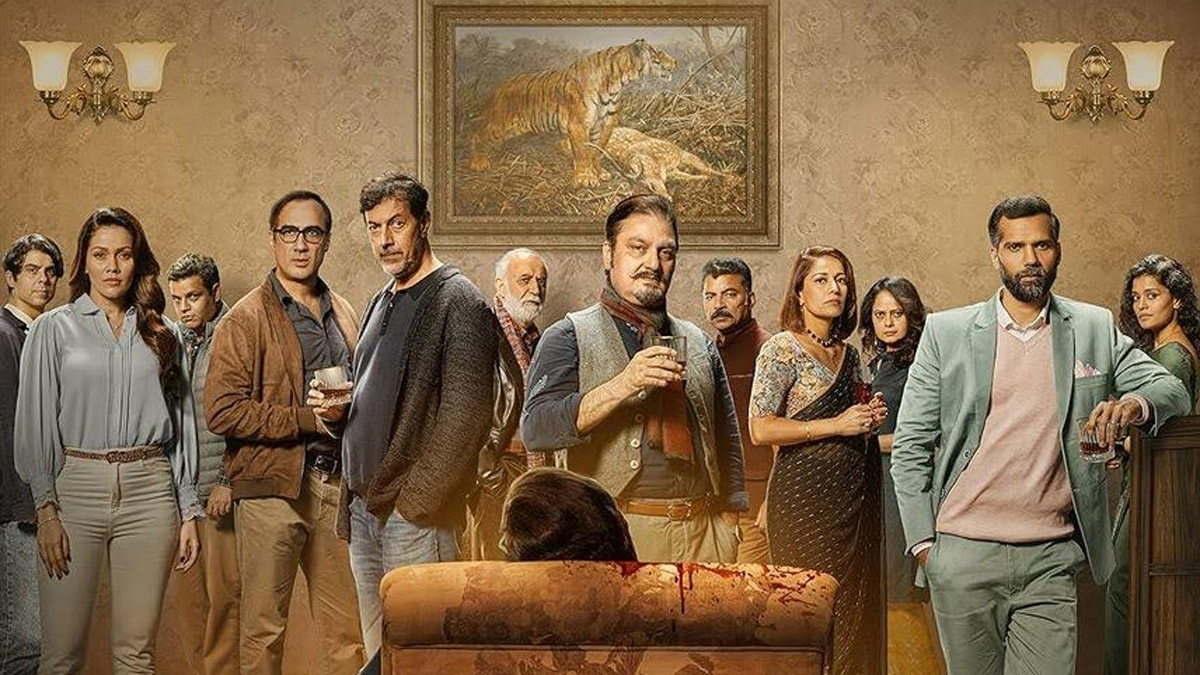
MUMBAI: Zee5 is serving up another killer collaboration and this time, the murder mystery comes with a generous side of dark humour and family dysfunction. The streaming platform has partnered with Applause Entertainment and Mithya Talkies to bring Everybody Loves Sohrab Handa, a fresh, twisted whodunnit written and directed by acclaimed filmmaker and actor Rajat Kapoor. The film will stream exclusively on Hindi Zee5 from 10 April.
The movie reimagines the classic murder mystery genre with a contemporary, darkly comic edge. It revolves around a group of friends and family who smile, drink, and celebrate together until the silence snaps and long-buried secrets spill out. The stellar ensemble cast includes Vinay Pathak, Ranvir Shorey, Waluscha De Sousa, Saurabh Shukla, Chandrachoor Rai, Neil Bhoopalam, Koel Purie, Palomi Ghosh, and Rajat Kapoor himself.
This latest offering continues the successful partnership between Zee5 and Applause Entertainment, which has previously delivered diverse hits such as Mithya, Bloody Brothers, and Jab Khuli Kitaab.

&TV Business Head of hindi Zee5 and chief channel officer Kaveri Das said, “Our collaboration with Applause Entertainment has consistently delivered distinct, high-impact storytelling. Everybody Loves Sohrab Handa is a natural progression, reinforcing our focus on genre-led content with a compelling whodunnit premise and a strong ensemble cast.”
Applause Entertainment business head for movies Sunil Chainani added, “This film adds yet another compelling layer to our slate with Rajat Kapoor’s unmistakable voice.”
Rajat Kapoor shared, “What interested me was not just the mechanics of a whodunnit, but the emotional violence that precedes physical violence. These are people who smile at each other, but there’s so much that is not said.”
The film promises razor-sharp writing, layered performances, and simmering tension, inviting viewers not just to solve the crime but to unravel the complex relationships at its heart.
If you love a good murder mystery served with wit and emotional depth, Everybody Loves Sohrab Handa looks set to be your next addictive watch. Mark your calendars, the whodunnit drops on Hindi Zee5 from 10 April.







