Hindi
Hyde Park Group, Platinum Studios start production on ‘Dead Of Night’

MUMBAI: Ashok Amritraj‘s Hyde Park Entertainment Group and Platinum Studios in the US have commenced production on Dead Of Night.
This film is based on the best-selling Italian comic book series, Dylan Dog, created by Tiziano Sclavi and published by Italy‘s Sergio Bonelli Editore. The comic book series has sold more than 56 million units worldwide and has been translated into 17 languages since its debut in 1986. Principal photography is taking place in New Orleans, Louisiana.
Brandon Routh Superman Returns stars as Dylan – a reluctant private investigator who is drawn into the world of vampires, werewolves and the undead — and the film is being directed by Kevin Munroe, whose 2007 re-imagining of Teenage Mutant Ninja Turtles resurrected the billion dollar franchise.
Munroe say brings a fresh take to the genre by focussing less on the transformation from human to non-human and more on the seamless interaction between the living and the undead. Writers Joshua Oppenheimer and Thomas Dean Donnelly Sahara have taken the world of Dylan Dog out of a European setting and given it a New Orleans flavor with its rich bayou and marshland backdrop.
Platinum Studios and the Hyde Park Group are joined in the production with producer Gilbert Adler who is no stranger to comic book adaptations, having produced Superman Returns and Constantine for Warner Bros. The film reteams Adler with Routh, who played Clark Kent in the Superman film.
Hyde Park and Platinum Studios completed the financing for the picture with Australia and New Zealand-based Omnilab Media and Hong Kong-based Standard Chartered Bank.
Recently Omnilab Media played a key role in providing production financing, as well as securing and/or overseeing North American distribution for The Bank Job, W, and The Messenger.
The producers have also hired Harvey Lowry and Oscar winning Drac Studios to handle make-up effects. Drac Studios has received 11 Oscar nominations for Best Achievement in Makeup. It most recently won for The Curious Case of Benjamin Button.

Hindi
Remembering Gyan Sahay, the lens behind film, television and advertising
From a puppet rabbit selling poppadums to Hindi cinema, he framed it all.
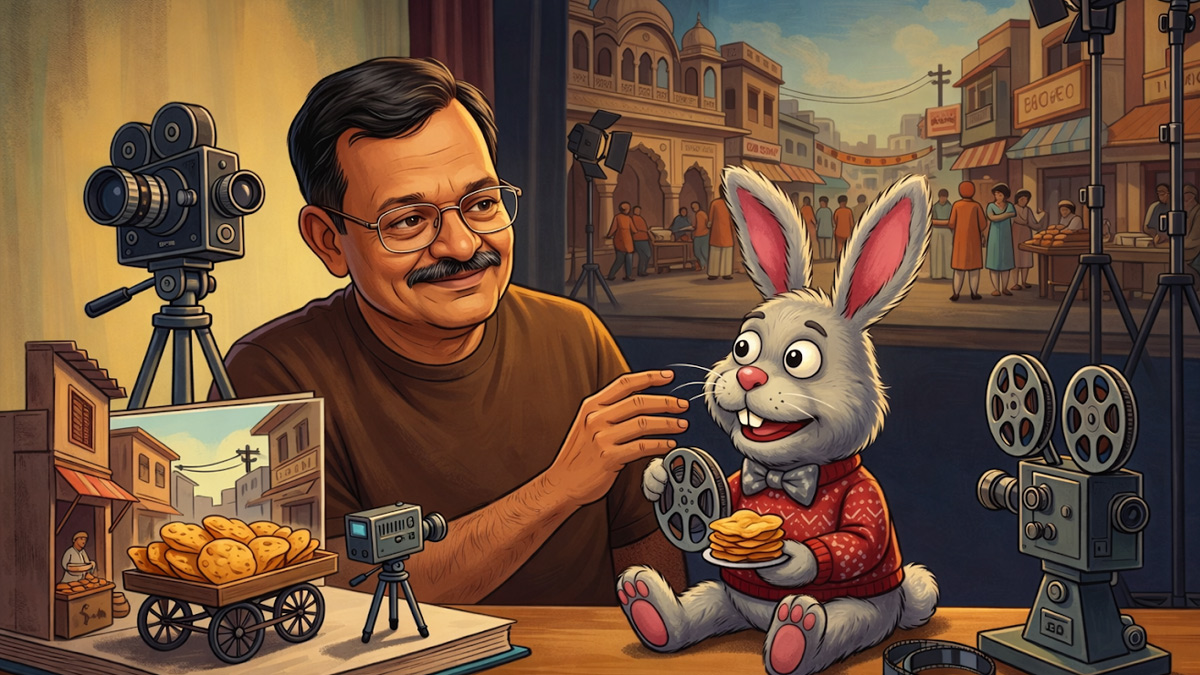
MUMBAI: There are careers, and then there are canvases. Gyan Sahay, the veteran cinematographer, director, and producer who passed away on 10 March 2026 in Mumbai, had one of the latter. Over several decades in the Indian film and television industry, he turned lenses, lights, and the occasional puppet rabbit into something approaching art.
A graduate of the Film and Television Institute of India (FTII) in Pune, Sahay built his reputation as a director of photography across a career that stretched from the early 1970s all the way to the digital age. He was the kind of craftsman who understood that a well-composed shot is not merely a technical achievement but a quiet act of storytelling.
For most Indians of a certain age, however, Sahay will forever be the man behind the rabbit. His direction of the iconic long-running television commercial for Lijjat Papad, featuring its now-legendary puppet bunny, gave the country one of its most cheerfully persistent advertising images. It was the sort of work that sneaks into the national subconscious and takes up permanent residence.

His big-screen credits as cinematographer include Anokhi Pehchan (1972), Pagli (1974), Pas de Deux (1981), and Hum Farishte Nahin (1988). In 1999, he stepped behind a different kind of camera altogether, making his directorial debut with Sar Ankhon Par, a drama that featured Vikas Bhalla and Shruti Ulfat, with a cameo by Shah Rukh Khan for good measure.
On television, Sahay was particularly prized for his command of multi-camera production setups, a skill that made him a go-to technician for large-scale shows and reality programmes. In an industry that has never been especially patient with complexity, he was the calm hand on the rig.
In later life, Sahay turned teacher. He participated regularly in masterclasses and Digi-Talks, often hosted by organisations such as Bharatiya Chitra Sadhna, sharing hard-won wisdom on cinematography, the comedy of timing in a shot, and the sweeping changes brought by the shift from celluloid to digital. He was also said to have been involved in a project concerning a biographical film on Infosys co-founder N.R. Narayana Murthy.
Tributes from the film industry poured in following the news of his passing, with colleagues remembering him as a senior cameraman who served as a rare bridge between two entirely different eras of Indian cinema. That is, perhaps, the finest thing one can say of any craftsman: he kept up, and he brought others along with him.









