Hindi
Honesty in film distribution key to successful opening weekend


MUMBAI: With the explosion of multiplexes, Indian filmmakers are increasingly putting importance on the performance of a film in the first weekend. The days of the Silver and Golden jubilee are long gone. While a strong star cast and a well-armed publicity machinery play a big role, filmmakers must also be honest with audiences and to themselves when they market and distribute their films. |
This was one of the points made during a session on “Opening Weekend: How To Get The Audience In?” The speakers were Eros Multimedia COO Jyoti Deshpande, Specialtreats CEO Colin Burrows, film critic Komal Nahata, P9 CEO Naveen Shah and filmmaker Kunal Kohli. Nahata made several points about what film distributors should keep in mind. One of these is that they should be honest while marketing and distributing their films. Having cameos of huge stars in big flicks and keeping that under wraps works the best for a project. Examples of this would be Aishwarya Rai in Mohabbtein and Salman Khan in Kuch Kuch Hota Hain. He highlighted the lack of new talent in the industry. Along with that, Nahata added that a hit pair may not necessarily guarantee a sure-shot success story. For instance, Hrithik Roshan-Aishwarya Rai starrer Jodhaa Akhbar did not garner a good opening weekend. |
As far as the smaller, independent films are concerned, it is very important that they offer novelty in terms of content and presentation. In addition, hit music makes a great package. Deshpande stressed the scientific way of achieving the desired opening weekend. She notes that unlike the US, in India the DVD market is not big enough to help a film that has done poorly in theatres. So relying on the opening weekend helps mitigate risks. She also addressed the new trend of individual producers hopping to big distributors, and the entry of corporates changing the scenario for existing production houses. But is the opening weekend the be-all and end-all? Kohli answered in the negative saying that a good film can survive a slow start. He offered the examples of Munnabhai MBBS, which had absolutely no marketing gimmicks lined up, but did very well. He also offered examples of Chak De which did well beyond just the opening weekend. Intelligent marketing can help a film that does not have big stars. He gave the example of Hum Tum where the distributor did tie ups with MTV, Sony for the show Jassi as well as cartons in The Times of India. Another way of marketing a movie today, rightly pointed out by Navin Shah, CEO, P9, is merchandising. The best example of the same would be 2007‘s Om Shanti Om which tied up with Shoppers Stop. And if that doesn‘t work for the production house, myriad television channels are waiting to cash in on big stars to augment their TRPs. And in return, the forthcoming film gets huge mileage. However, lastly what does a small-budget project do in situation like this? The solution offered by Kohli is market it the big way and pitch it against a big-budget film. Loins of Punjab and Mithya are the perfect instances of the same. |

Hindi
Zee5 and Applause Entertainment team up for whodunnit ‘Everybody Loves Sohrab Handa’
Rajat Kapoor directs star-studded murder mystery streaming from 10 April.
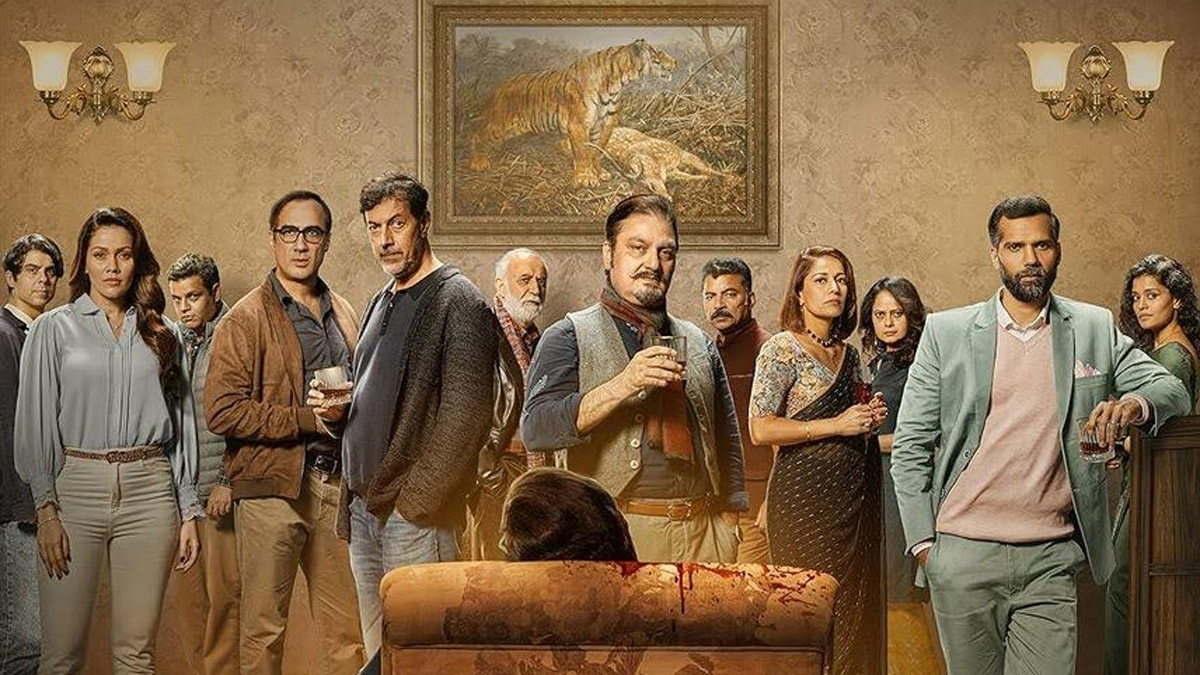
MUMBAI: Zee5 is serving up another killer collaboration and this time, the murder mystery comes with a generous side of dark humour and family dysfunction. The streaming platform has partnered with Applause Entertainment and Mithya Talkies to bring Everybody Loves Sohrab Handa, a fresh, twisted whodunnit written and directed by acclaimed filmmaker and actor Rajat Kapoor. The film will stream exclusively on Hindi Zee5 from 10 April.
The movie reimagines the classic murder mystery genre with a contemporary, darkly comic edge. It revolves around a group of friends and family who smile, drink, and celebrate together until the silence snaps and long-buried secrets spill out. The stellar ensemble cast includes Vinay Pathak, Ranvir Shorey, Waluscha De Sousa, Saurabh Shukla, Chandrachoor Rai, Neil Bhoopalam, Koel Purie, Palomi Ghosh, and Rajat Kapoor himself.
This latest offering continues the successful partnership between Zee5 and Applause Entertainment, which has previously delivered diverse hits such as Mithya, Bloody Brothers, and Jab Khuli Kitaab.

&TV Business Head of hindi Zee5 and chief channel officer Kaveri Das said, “Our collaboration with Applause Entertainment has consistently delivered distinct, high-impact storytelling. Everybody Loves Sohrab Handa is a natural progression, reinforcing our focus on genre-led content with a compelling whodunnit premise and a strong ensemble cast.”
Applause Entertainment business head for movies Sunil Chainani added, “This film adds yet another compelling layer to our slate with Rajat Kapoor’s unmistakable voice.”
Rajat Kapoor shared, “What interested me was not just the mechanics of a whodunnit, but the emotional violence that precedes physical violence. These are people who smile at each other, but there’s so much that is not said.”
The film promises razor-sharp writing, layered performances, and simmering tension, inviting viewers not just to solve the crime but to unravel the complex relationships at its heart.
If you love a good murder mystery served with wit and emotional depth, Everybody Loves Sohrab Handa looks set to be your next addictive watch. Mark your calendars, the whodunnit drops on Hindi Zee5 from 10 April.







