Hindi
Global women filmfest to showcase 140 films

NEW DELHI: France is the focus country and a total of around 140 feature and short films from over 40 countries are to be screened at the 4th India International Women Film Festival, scheduled to be held here from 7 December.
The eight-day festival which concludes on 14 December will relate to women empowerment, where women are being showcased not just as objects of visual pleasure but behind the camera.
Tributes will be paid to seven Indian women filmmakers: Arundhati Devi, Manju Dey, Sai Paranjpye, Aparna Sen, Kalpana Lajmi, Vijaya Mehta and Prema Karanth.
Hollywood actress Cassandra Gava and Faye Dunway (Oscar Winning Actress) and Bollywood actresses Juhi Chawla and Tanushree Dutta have confirmed participation to encourage women directors and join hands with the IIWFF Slogan “Women Behind the Camera”.
Many celebrities including actress and director Aparna Sen, Madhavi Mukhrjee, filmmaker Nabyendu Chaterjee, painters Jogen Chowdhory and Subha Prasanno are also expected to be present.
According to Festival Director Shymali Banerjee, the Festival has the support of the Union Ministries of Information and Broadcasting, Culture, and External Affairs, and the Government of Delhi NCT. The Associate Partners who have confirmed so far include Sahara India, Asian Academy of Film and Television, 1Take Movie.COM, Times of India, Radio Mirchi, and Zee TV.
The programme this year includes Competition –World Cinema (Feature), Competition (Documentary), Indian Panorama, Retrospective, Kinder Films, Joint Hands, Focus Institute, Male Voice, and Short Films (Out of Competition).
IIWFF is launching a Talent campus this year, which is a platform for amateur filmmakers to conquer the real reel experiences from internationally acclaimed filmmakers. The 2008 Talent Campus will include certain smoldering issues in the field of World Cinema, and will be in the form of Seminars, Workshops and Guest Lectures, and a specially designed programme ’24 Hrs Filmmaking Competition’ which is also a Part of Talent Campus. The top two films will be awarded in the Closing Ceremony and all films will be exhibited on the last day of the festival. Each candidate will be given a Certificate of Recommendation.
The film festival ambience will include a film lounge, seminars, Face to Face, Painting Exhibitions, Open Forums and Cultural Programmes.

Hindi
Remembering Gyan Sahay, the lens behind film, television and advertising
From a puppet rabbit selling poppadums to Hindi cinema, he framed it all.
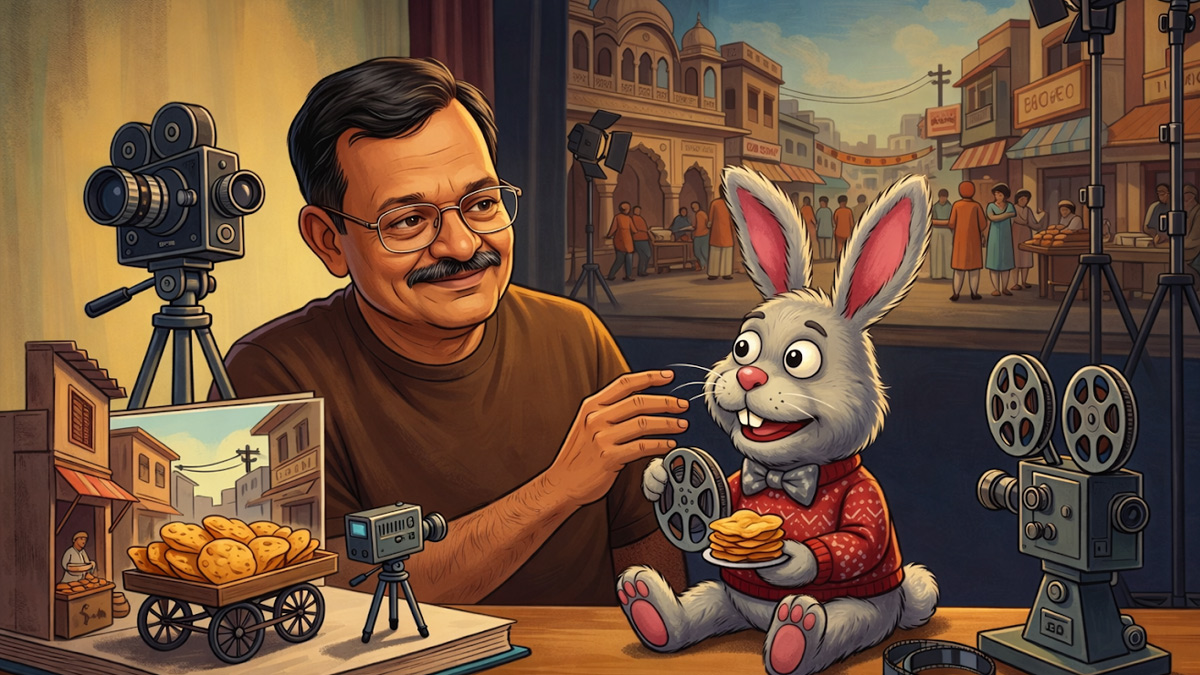
MUMBAI: There are careers, and then there are canvases. Gyan Sahay, the veteran cinematographer, director, and producer who passed away on 10 March 2026 in Mumbai, had one of the latter. Over several decades in the Indian film and television industry, he turned lenses, lights, and the occasional puppet rabbit into something approaching art.
A graduate of the Film and Television Institute of India (FTII) in Pune, Sahay built his reputation as a director of photography across a career that stretched from the early 1970s all the way to the digital age. He was the kind of craftsman who understood that a well-composed shot is not merely a technical achievement but a quiet act of storytelling.
For most Indians of a certain age, however, Sahay will forever be the man behind the rabbit. His direction of the iconic long-running television commercial for Lijjat Papad, featuring its now-legendary puppet bunny, gave the country one of its most cheerfully persistent advertising images. It was the sort of work that sneaks into the national subconscious and takes up permanent residence.

His big-screen credits as cinematographer include Anokhi Pehchan (1972), Pagli (1974), Pas de Deux (1981), and Hum Farishte Nahin (1988). In 1999, he stepped behind a different kind of camera altogether, making his directorial debut with Sar Ankhon Par, a drama that featured Vikas Bhalla and Shruti Ulfat, with a cameo by Shah Rukh Khan for good measure.
On television, Sahay was particularly prized for his command of multi-camera production setups, a skill that made him a go-to technician for large-scale shows and reality programmes. In an industry that has never been especially patient with complexity, he was the calm hand on the rig.
In later life, Sahay turned teacher. He participated regularly in masterclasses and Digi-Talks, often hosted by organisations such as Bharatiya Chitra Sadhna, sharing hard-won wisdom on cinematography, the comedy of timing in a shot, and the sweeping changes brought by the shift from celluloid to digital. He was also said to have been involved in a project concerning a biographical film on Infosys co-founder N.R. Narayana Murthy.
Tributes from the film industry poured in following the news of his passing, with colleagues remembering him as a senior cameraman who served as a rare bridge between two entirely different eras of Indian cinema. That is, perhaps, the finest thing one can say of any craftsman: he kept up, and he brought others along with him.