Hindi
French participation at IFFI

MUMBAI: More than 15 long features and co-productions, representing the diversity of French cinema, will be showcased at the IFFI this year.
“Among the countries where cinema has played a role in cultural life, France and India occupy indeed a very special place. From the very inception of this new form of art, more than a century ago, both countries felt a strong inclination for what was to be commonly known as the Seventh art,” says Jérôme Bonnafont, Ambassador of France in India.
Among them, the French Oscar entry ‘‘Orchestra Seats” (“Fauteuils d‘orchestre”), the box-office hit “TAXI 4” and three of the most awaited films of this year : “99 francs” (a film adaptation of a best-seller book), “The second wind” (a remake of one of finest film in French cinema history) and the mindblowing “Intimate ennemy” (a first of its kind look at the Algerian struggle for independence), whose directors will do us the honour to participate to IFFI and interact with the Indian audience and media during this celebration of cinema.
The 6 films “Living together” collection prepared by the French Ministry of Foreign Affairs are modern-day fables about French society and its divides which convey the vital need to learn how to get to know and understand each other, while the Film heritage section, co-organised by the Thomson Foundation, will be the occasion to see among the masterpieces of the history of World Cinema.
Veteran and respected filmaker and indophile Alain Corneau will be leading the French delegation comprising Florent-Emilio Siri, Jan Kounen, and talented young actress Fanny Valette as well as the Thomson Foundation team, the European Club of Producers, Samira Zaibat of the International critic‘s week in Cannes, and Fabien Westerhoff participating in the NFDC organised Film Bazaar section.
Retrospective “Living Together” : 6 films
1) Samia by Philippe Faucon
2) When you come down from Heaven (Quand tu descendras du cie) by Eric Guirard
3) What’s going on (Wesh, Wesh, qu‘est ce qui se passe ?) by Rabah Ameur-Za?meche
4) My neighbours (Voisins, voisines) by Malik Chibane
5) Zim & Co by Pierre Jolivet
6) Forgetting Cheyenne (Oublier Cheyenne) by Valérie Minetto
World Cinema :
1) The Second Wind (Le 2?me souffle) by Alain Corneau (2007)
2) The Intimate Enemy (L’ennemi intime) by Florent Emilio Siri (2007)
3) 99 Francs by Jan Kounen (2007)
4) Change of address (Changement d’adresse) by Emmanuel Mouret (2006)
5) TAXI 4 by Gérard Krawczyk (2007)
6) Orchestra Seats (Les Fauteuils d’orchestre) by Dani?le Thomson (2006)
7) The Songs of Love (Les Chansons d‘amour) by Christophe Honoré (2007)
8) The Page turner (La Tourneuse de pages) by Denis Dercourt (2005)
9) The Other (L’Autre) by Ariel Rotter (co-production / 2007)
10) Goodbye Bafana by Bille August (co-production / 2007)

Hindi
Marico founder Harsh Mariwala’s book Harsh Realities set for film adaptation
Almighty Motion Picture taps Karan Vyas to script Marico story
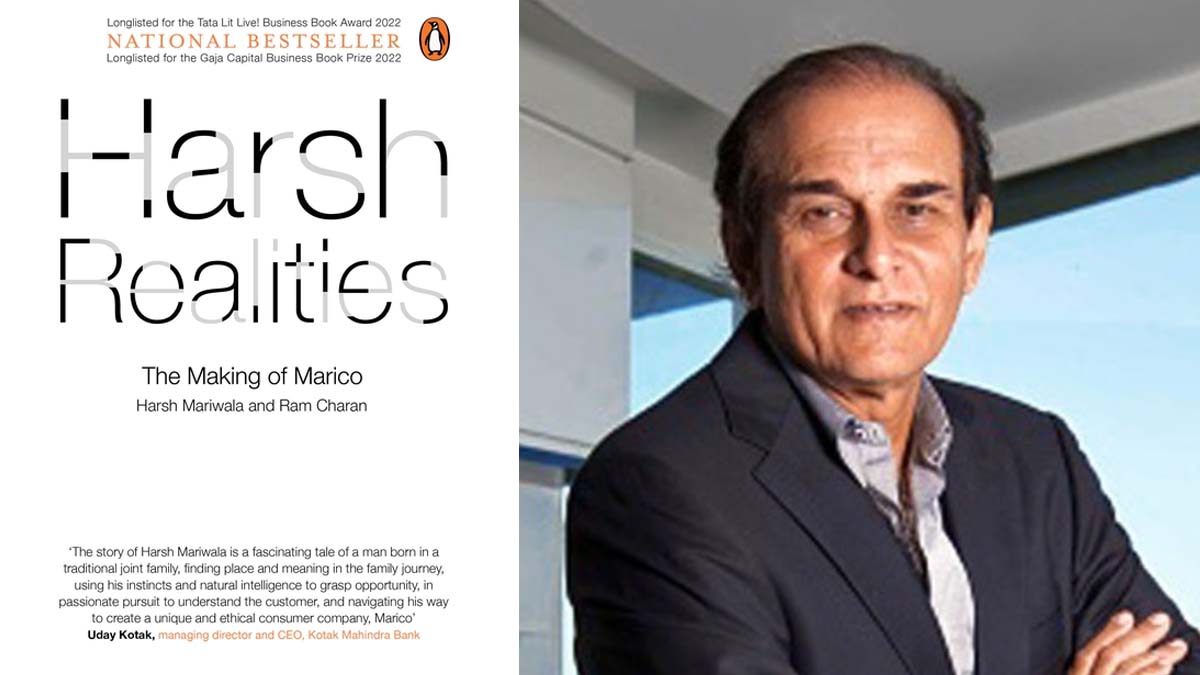
MUMBAI: Almighty Motion Picture is turning its lens on India Inc., with plans to adapt Harsh Realities: The Making of Marico into a screen project. The story charts the rise of Harsh Mariwala, the chairman and founder of Marico, and is currently in early development, according to a report by Variety.
Writer Karan Vyas, known for his work on Scam 1992, Scoop and Made in India – A Titan Story, is attached to pen the screenplay. The project continues the studio’s growing interest in real-life Indian narratives that blend business with human drama.
At the heart of the story lies a defining moment in 1987, when Mariwala chose to step away from the family-run Bombay Oil Industries and strike out on his own. What followed was not just the creation of a company, but the reinvention of a legacy. Marico would go on to become a global FMCG player, with brands like Parachute, Saffola, Set Wet and Livon becoming household names, reaching nearly one in three Indians.

The source material, co-authored by Mariwala and renowned business strategist Ram Charan, offers more than a boardroom chronicle. It captures the grit behind the growth, the risks behind the rewards and the leadership lessons forged along the way.
The adaptation aims to move beyond balance sheets and brand milestones, focusing instead on the person behind the enterprise. Expect a narrative that leans into the emotional stakes of entrepreneurship, where decisions are as personal as they are professional.
Today, Marico draws about a quarter of its revenue from international markets across Asia and Africa, reflecting its steady transformation from a domestic player into a multinational force. Yet, if the makers have their way, the screen version will remind audiences that every global success story begins with a leap of faith.
With development set to begin soon, this is one business story that may just trade spreadsheets for storytelling, and profit margins for moments that linger