International
Films form important component of Festival of India in Peru

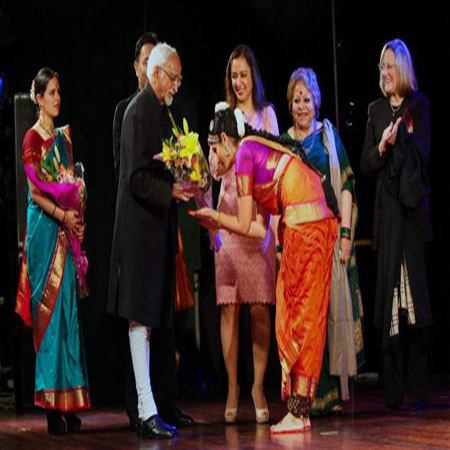
NEW DELHI: Indian films are making a global presence it seems. At the Festival of India in Peru that was recently inaugurated by vice president Hamid Ansari, few new Indian films and old classics including Raja Harishchandra (silent), Taare Zameen Par (Hindi), Ghare Bhaire (Bengali), Ardh Satya (Hindi), Bobby (Hindi), A Wednesday (Hindi) and Kabhi Haan Kabhi Naa (Hindi) are being screened. The Indian Film Festival is being coordinated by the Information and Broadcasting Ministry.
An India-Peru Literature Festival and an Indian Classical Dance Festival is also being held as part of the fest.
 |
Ansari’s visit is the highest ranking bilateral visit since year 1998 from India to Peru. The Festival would manifest many elements of long, rich and diverse Indian cultural heritage and would be the largest Indian cultural festival ever held in Latin America and the Caribbean. This reflects the special place that Peru enjoys among Indians.
The inaugural function was attended by the Peruvian First Vice President Marisol Espinoza and a number of senior dignitaries from the Indian and Peruvian side.

Indian Culture Secretary Ravindra Singh who is in Peru to mark the occasion said the Festival is expected to bring the Indian and Peruvian people closer to each other and will enhance people to people contact.
Highly reputed Indian writers like Arun Kamal, H S Shivaprakash, K Satchidanandan, Purshottam Agarwal, Shyama Prasad Ganguly, and Ms Karabi Deka Hazarika participated in the symposium on India-Latin America: Literary Exchanges and Influences and Contemporary Literary Trends and their Challenges in a Multilingual Society in addition to a session on poetry reading.
Several noted Peruvian Writers including Jose Leon Herrera, Pablo Carreno Cabrejos, Jose Ignacio Lopez Gaston, Marcel Velaquez Castro, and leading poets Carlos German Belli, Mario Montalbetti, and Marcos Martos would be participating in the Literature Festival. The Literature Festival is being coordinated by the Sahitya Academy.
The Indian Dance Festival in Peru is titled ‘Nrityarupa’, the mosaic of Indian dance which encapsulates the experience of Indian dance as it has evolved in various parts of the India. It offers a glimpse of the great mosaic of cultures that constitutes the Indian Nation, and demonstrates in a creative, kinetic form their dynamics in relation to each other. Six dance forms representing the diversity of India’s culture have been chosen for this presentation to audiences in Latin America: Bharatanatyam of Tamil Nadu, Kathank which is pre-eminently the dance of northern India; Odissi from Odisha in eastern India; Manipuri from north-eastern State of India; Kathakali of Kerala at Southern tip of the Indian peninsula; and Chhau which covers a wide swathe of territory in eastern States of the Union.
One seamless presentation of these dances has been visualized by leading to a jubiliant finish. The Indian Dance Festival is being coordinated by the Sangeet Natak Academy.
The Festival of India in Peru is being coordinated by the Culture Ministry in association with the Sahitya Academy, the Sangeet Natak Academy and the I&B Ministry.



International
Russia-India cinematic spectacle Persimmon of My Love set for grand Moscow debut
Hindi cinema style musical revives Indo-Soviet cinema ties for today

MUMBAI: A new chapter in cross-border storytelling is set to unfold as Persimmon of My Love gears up for its premiere in Moscow on 1 April 2026, marking the first large-scale cinematic collaboration between Russia and India in decades.
Positioned as a modern nod to the cultural exchange that once brought Indian classics to Soviet audiences, the film blends Hindi cinema flair with Russian storytelling, aiming to rekindle a long-standing cinematic friendship.
Directed by Marius Weisberg, the musical comedy follows two brothers navigating a lively world of music, family and romance. The lead roles are played by Demis Karibidis and Mikhail Galustyan, with Karibidis also contributing as a screenwriter.
Shot entirely in India, the production leans heavily into Hindi cinema style spectacle. Filming took place across Mumbai studios and the cities of Udaipur and Jodhpur, whose architecture was used to create the fictional setting of Khurmada. A crew of over 350 worked on the project, with large-scale sequences featuring up to 1,000 extras.
The film also brings Indian creative talent into the mix. Dance sequences are choreographed by Jay Kumar, while music by Zurab Matua features songs in both Hindi and Russian, adding to its cross-cultural appeal.
Backed by TNT channel, MyWayStudio and the Russian Cinema Fund, the project reflects a broader push to strengthen cultural ties between the two countries.
With its mix of colour, comedy and cross-border collaboration, Persimmon of My Love is not just a film release but a reminder that cinema, much like music, travels well across borders.






