Hindi
Film institutes cater to commercial needs, repress creativity

MUMBAI: Even the government-run Film and Television Institute of India (FTII) in Pune and the Satyajit Ray Film and Television Institute (SRFTI) in Kolkata are now gearing towards fulfilling the needs of the market instead of concentrating on creativity, speakers at the open forum organised by the Indian Documentary Producers Association (IDPA) and the Films Division said here.
Most of them said, however, that there is little doubt that film institutes like FTII and SRFTI have played a major role in nurturing fresh talent.
But they also said that the aim appears to be to just produce people who can be absorbed by the market as the institutes in the private sector are doing. The speakers were divided on how an idealistic situation can be achieved. Opinions differed with regard to whether the government should have a role to play in the film institutes or they should only be in the private sector.
Renowned filmmaker Mani Kaul, one of the earliest to graduate from the FTII, said the regimen at the institute has become very controlled when compared to the years he was there. He said there was greater opportunity at that time for aspiring filmmakers to interact with filmmakers and writers. Kaul also said that the students in his time benefited from the films of the National Film Archives of India.
He maintained that the courses at present are too structured, only aimed at producing people who can be absorbed by the industry. It is necessary to give the students a chance to pick their own style.
Kart Inderbidgin, who heads Subhash Ghai’s Whistling Woods International in Mumbai, did not agree on giving open space to students as they would spend their time outside the campus, though he admitted that it is an idealistic dream. However, he said that after the first few semesters, the students are given time to plan things on their own. He felt that there has to be some discipline in any institution. He suggested the corporate houses come forward to sponsor students for the courses since the fee is very high in the private institutes. “After all, it is they who want the filmmakers,” he added.
He regretted that the FTII is always facing student unrest, and said this is perhaps one reason why India has not been able to compete on the world market, prompting Kaul – who was conducting the discussion – to remark that Indian cinema has managed to retain at least 93 per cent share in Indian theatres leaving less than ten per cent for Hollywood, unlike European countries which are almost totally dominated by Hollywood.
Meghnath who is an independent filmmaker without training from any institute said the future of the institutes and their products will be decided by the market and those who have the purchasing power.
While he was worried that the voice of the silent majority might not be heard since not all can afford the institutes, he was happy that new technologies haves democratised filmmaking. Thus, many new entrepreneurs are entering the field without formal training. But he also admitted that the institutes have a role to play to produce good filmmakers.
Shyamal Karmakar, a faculty member of the SRFTI, said there is little doubt that the institutes are necessary as they have produced a lot of talent. But the private institutes are far too expensive. He also agreed with Kaul that there is a need to give some open space to the students to interact with filmmakers and writers. He said that the institutes have also resulted in more filmmakers taking the risk of experimentation with newer stories and ideas.
Jeroo Mulla who teaches cinema as part of the mass communications course in Sophia College said that a good outcome of the institutes has been the entry of a large number of women filmmakers. Stressing that institutes are necessary, she agreed that it is ultimately the market forces which decide everything.
Kartikeya Talreja of Digital Academy said the craft can be taught but not the art which is inherent in those who entered the field. “And art flourishes where the money is,” he said. But citing figures from the FICCI-PWC report on the future of Indian entertainment, he said the future is very bright and there are more opportunities than ever before.
Vidyarthi Chatterjee, a film society enthusiast, said there is dire need for the state to support the film institutes.
Onkar Lal Sharma who is a cine writer and an executive committee member in the Film Federation of India suggested that universities start courses in cinema instead of just leaving this to the institutes.

Hindi
Zee5 and Applause Entertainment team up for whodunnit ‘Everybody Loves Sohrab Handa’
Rajat Kapoor directs star-studded murder mystery streaming from 10 April.
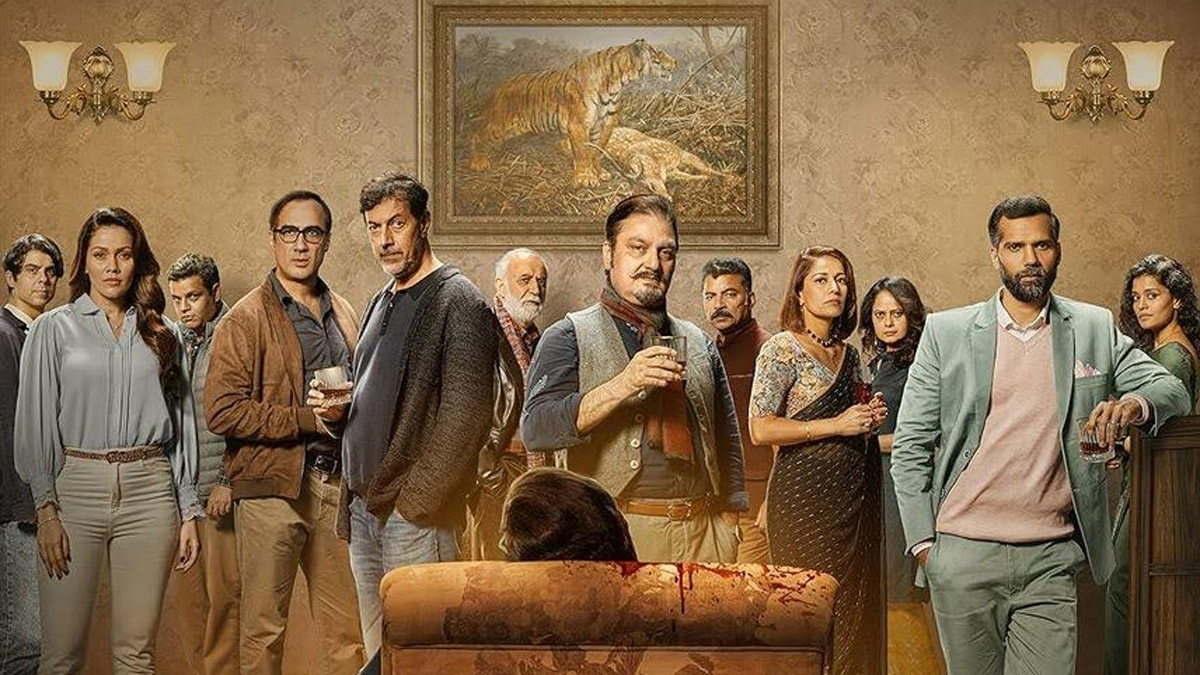
MUMBAI: Zee5 is serving up another killer collaboration and this time, the murder mystery comes with a generous side of dark humour and family dysfunction. The streaming platform has partnered with Applause Entertainment and Mithya Talkies to bring Everybody Loves Sohrab Handa, a fresh, twisted whodunnit written and directed by acclaimed filmmaker and actor Rajat Kapoor. The film will stream exclusively on Hindi Zee5 from 10 April.
The movie reimagines the classic murder mystery genre with a contemporary, darkly comic edge. It revolves around a group of friends and family who smile, drink, and celebrate together until the silence snaps and long-buried secrets spill out. The stellar ensemble cast includes Vinay Pathak, Ranvir Shorey, Waluscha De Sousa, Saurabh Shukla, Chandrachoor Rai, Neil Bhoopalam, Koel Purie, Palomi Ghosh, and Rajat Kapoor himself.
This latest offering continues the successful partnership between Zee5 and Applause Entertainment, which has previously delivered diverse hits such as Mithya, Bloody Brothers, and Jab Khuli Kitaab.

&TV Business Head of hindi Zee5 and chief channel officer Kaveri Das said, “Our collaboration with Applause Entertainment has consistently delivered distinct, high-impact storytelling. Everybody Loves Sohrab Handa is a natural progression, reinforcing our focus on genre-led content with a compelling whodunnit premise and a strong ensemble cast.”
Applause Entertainment business head for movies Sunil Chainani added, “This film adds yet another compelling layer to our slate with Rajat Kapoor’s unmistakable voice.”
Rajat Kapoor shared, “What interested me was not just the mechanics of a whodunnit, but the emotional violence that precedes physical violence. These are people who smile at each other, but there’s so much that is not said.”
The film promises razor-sharp writing, layered performances, and simmering tension, inviting viewers not just to solve the crime but to unravel the complex relationships at its heart.
If you love a good murder mystery served with wit and emotional depth, Everybody Loves Sohrab Handa looks set to be your next addictive watch. Mark your calendars, the whodunnit drops on Hindi Zee5 from 10 April.






