Hindi
Film industry needs to look beyond box office

MUMBAI: Tapping revenues beyond the box office is a challenge that the Indian film industry has to wake up to. This is particularly important when film production and marketing costs are going up. Kick-starting the session on “Rethinking Fim Marketing and Distribution: Beyond Box Office” at Ficci-Frames here today, Moser Baer entertainment business CEO Harish Dayani said that only two per cent of India‘s population go to the cinema theatres to watch a film. Even as this percentage is declining, the game is to tap the remaining 98 per cent. |
The need of the hour is to deliver the product to the consumers at their convenience without leaving any room for piracy which takes away a major chunk of the box office revenues. Speaking on the scope that online distribution of films throws up, Rajshri Productions director Rajjat A Barjatya said: “We released the film Vivah simultaneously in 200 screens in India and 100 screens overseas as well as online. We got a whooping 6500 downloads worldwide. Online contributed to 50 per cent of our total revenues. The entire model turned out very well and that shows the future of online distribution.” Box office collections, however, stay as the major revenue earner for films. “Film is a brand which needs to be established well. This happens only at the box office and then the brand is ready to be exploited on other platforms. No one would buy an unknown brand,” said Sony Pictures India CEO Uday Singh. The Sony distribution company recently diversified into film production and released Saawariya which fared average at the box office. |
Indian filmmakers have started exploiting various revenue streams including merchandising. Mates CEO Darshana Bhalla cited the example of blockbuster film Om Shanti Om which earned 63 per cent through box office collections, but also raked in revenues from merchandising. OSO tied up with retail chain Shoppers Stop and organized fashion shows to promote the film. Home video accounted for 15 per cent of the film‘s gross earnings. |
Speaking at the session, Reliance Entertainment chief marketing officer Saurabh Varma said: “One will mainly see film merchandising on stationary, apparels and special items created around the subject of the movie.” |

Hindi
Zee5 and Applause Entertainment team up for whodunnit ‘Everybody Loves Sohrab Handa’
Rajat Kapoor directs star-studded murder mystery streaming from 10 April.
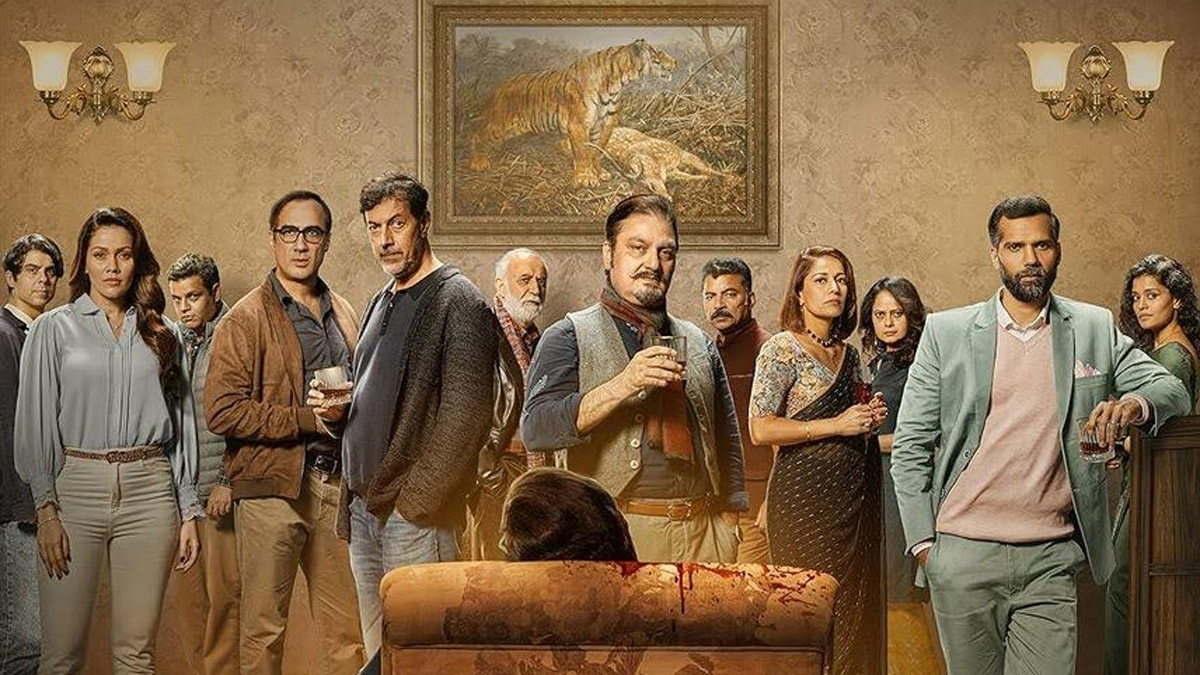
MUMBAI: Zee5 is serving up another killer collaboration and this time, the murder mystery comes with a generous side of dark humour and family dysfunction. The streaming platform has partnered with Applause Entertainment and Mithya Talkies to bring Everybody Loves Sohrab Handa, a fresh, twisted whodunnit written and directed by acclaimed filmmaker and actor Rajat Kapoor. The film will stream exclusively on Hindi Zee5 from 10 April.
The movie reimagines the classic murder mystery genre with a contemporary, darkly comic edge. It revolves around a group of friends and family who smile, drink, and celebrate together until the silence snaps and long-buried secrets spill out. The stellar ensemble cast includes Vinay Pathak, Ranvir Shorey, Waluscha De Sousa, Saurabh Shukla, Chandrachoor Rai, Neil Bhoopalam, Koel Purie, Palomi Ghosh, and Rajat Kapoor himself.
This latest offering continues the successful partnership between Zee5 and Applause Entertainment, which has previously delivered diverse hits such as Mithya, Bloody Brothers, and Jab Khuli Kitaab.

&TV Business Head of hindi Zee5 and chief channel officer Kaveri Das said, “Our collaboration with Applause Entertainment has consistently delivered distinct, high-impact storytelling. Everybody Loves Sohrab Handa is a natural progression, reinforcing our focus on genre-led content with a compelling whodunnit premise and a strong ensemble cast.”
Applause Entertainment business head for movies Sunil Chainani added, “This film adds yet another compelling layer to our slate with Rajat Kapoor’s unmistakable voice.”
Rajat Kapoor shared, “What interested me was not just the mechanics of a whodunnit, but the emotional violence that precedes physical violence. These are people who smile at each other, but there’s so much that is not said.”
The film promises razor-sharp writing, layered performances, and simmering tension, inviting viewers not just to solve the crime but to unravel the complex relationships at its heart.
If you love a good murder mystery served with wit and emotional depth, Everybody Loves Sohrab Handa looks set to be your next addictive watch. Mark your calendars, the whodunnit drops on Hindi Zee5 from 10 April.







