Hindi
Exposition of panorama 2007 commences in Delhi

NEW DELHI: A Festival of 21 features and 15 non-features which were selected for the Indian Panorama 2007 of the International Film Festival of India commenced in the capital today.
The 8-day exposition organized by the Directorate of Film Festivals opened with Bagher Bacha, a non-feature film in Bangla directed by Bishnu Dev Halder, a former student of the Satyajit Ray Film and Television Institute, Kolkata. It was followed by Ore Kadal in Malayalam directed by Shyamaprasad. Entry to all film shows is free.
This package of Indian Panorama presents a wide spectrum of contemporary themes and treatments. The debut directors like Sameer Hanchate, Bhavana Talwar and Samir Chanda bring with them a refreshing and incisive style of cinema, while the stalwarts like Adoor Gopalakrishnan and Budhadeb Dasgupta challenge ideas and established norms again with their films, Naalu Penungal and Ami Iyasin Aar Amaar Madhubala.
The non-feature film section offers a large variety. The biographicals like Naushad Ali, Pandit Ramnarayan, Mubarak Begum and Rajarshi Bhagyachandra of Manipur chronicle the lives of important Indian personalities. Films like Bagher Bacha, Hope Dies Last in War, Joy Ride and whose Land Is It Anyway are stimulating. The Indian Panorama 2007 presents a wide spectrum of contemporary themes and treatments.
The Indian Panorama package was selected by two juries of eminent film makers. The feature film jury was headed by KS Sethumadhavan, and members included Leslie Carvalho, Dr. Mrunalinni Patil Dayal, Manju Bora, Shubhra Gupta and Abhijit Dasgupta. The non-feature film jury was headed by another renowned film maker Arun Khopkar and members included Pankaj Butalia, Gautam Saikia and Kavita Chaudhary.

Hindi
Zee5 and Applause Entertainment team up for whodunnit ‘Everybody Loves Sohrab Handa’
Rajat Kapoor directs star-studded murder mystery streaming from 10 April.
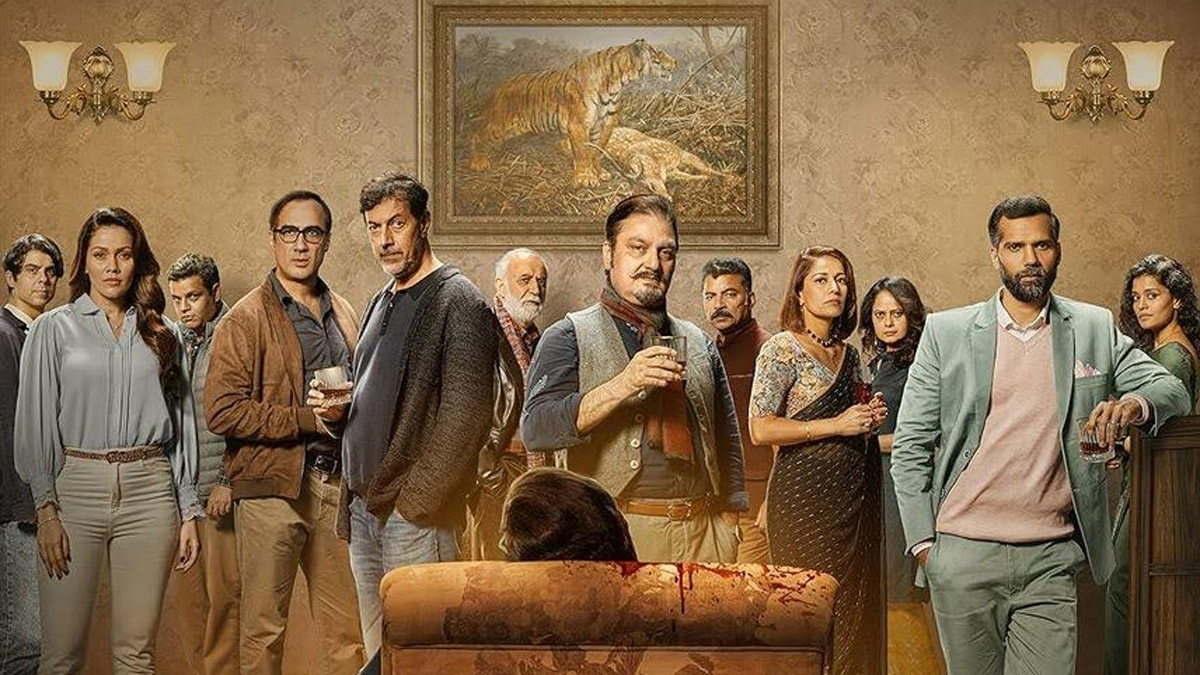
MUMBAI: Zee5 is serving up another killer collaboration and this time, the murder mystery comes with a generous side of dark humour and family dysfunction. The streaming platform has partnered with Applause Entertainment and Mithya Talkies to bring Everybody Loves Sohrab Handa, a fresh, twisted whodunnit written and directed by acclaimed filmmaker and actor Rajat Kapoor. The film will stream exclusively on Hindi Zee5 from 10 April.
The movie reimagines the classic murder mystery genre with a contemporary, darkly comic edge. It revolves around a group of friends and family who smile, drink, and celebrate together until the silence snaps and long-buried secrets spill out. The stellar ensemble cast includes Vinay Pathak, Ranvir Shorey, Waluscha De Sousa, Saurabh Shukla, Chandrachoor Rai, Neil Bhoopalam, Koel Purie, Palomi Ghosh, and Rajat Kapoor himself.
This latest offering continues the successful partnership between Zee5 and Applause Entertainment, which has previously delivered diverse hits such as Mithya, Bloody Brothers, and Jab Khuli Kitaab.

&TV Business Head of hindi Zee5 and chief channel officer Kaveri Das said, “Our collaboration with Applause Entertainment has consistently delivered distinct, high-impact storytelling. Everybody Loves Sohrab Handa is a natural progression, reinforcing our focus on genre-led content with a compelling whodunnit premise and a strong ensemble cast.”
Applause Entertainment business head for movies Sunil Chainani added, “This film adds yet another compelling layer to our slate with Rajat Kapoor’s unmistakable voice.”
Rajat Kapoor shared, “What interested me was not just the mechanics of a whodunnit, but the emotional violence that precedes physical violence. These are people who smile at each other, but there’s so much that is not said.”
The film promises razor-sharp writing, layered performances, and simmering tension, inviting viewers not just to solve the crime but to unravel the complex relationships at its heart.
If you love a good murder mystery served with wit and emotional depth, Everybody Loves Sohrab Handa looks set to be your next addictive watch. Mark your calendars, the whodunnit drops on Hindi Zee5 from 10 April.







