Hindi
‘Dedh Ishqiya’: Not half as fun as Ishqiya

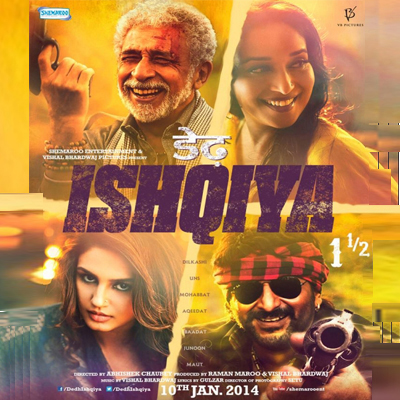
MUMBAI: Here is another sequel, Dedh Ishqiya, following the 2010 film Ishqiya. The producers and the director remain the same and so do the protagonists, Naseeruddin Shah and Arshad Warsi. They continue to be petty thieves always on the run from a local don, Salman Shahid, and while dodging him; their greed leads them into another complication. The idea is interesting since the story involves a lot of plots, betrayals and backstabbing. The end could have been a shocker but seems to have been compromised in favour of pleasing the Indian moviegoer’s senses as well as to deliver the promise of one more sequel.
Shah and Arshad have just stolen a costly necklace from a jeweller’s shop. Their ways of carrying out such heists being crude, they are caught in the act and the police are on their back. Shah uses the opportunity to ditch Arshad since the necklace is with him. A livid Arshad is desperately looking for him and while in action in a whorehouse, he learns the whereabouts of his partner-in-crime. He learns that Shah is headed for Mahmudabad to participate in a mushaira organised by the widow Begum of the province. The Begum, Madhuri Dixit, declares that her husband, the Nawab, was a poet and that is why, before he died he made her promise that she will marry again but to a poet. Hence, she has organised the mushaira so that she could anoint the winner as her husband and the Nawab of the province. Shah’s idea is to gatecrash into the contest, win it and become the Nawab and settle for life.

Shah is at the venue, introduces himself as Nawab of another province and gives looks to Madhuri which make his intentions clear. As the mushaira opens, there are many contestants but Shah impresses. Also impressive is Vijay Raaz, a Nawab from across the river. He will be the villain of the piece for Shah since he has coveted Madhuri forever. Vijay is no poet by any stretch of imagination. What he has done is to kidnap and imprison a reputed poet named Italvi, Manoj Pahwa, who is forced to pen shairis which Vijay goes and mouths at the competition.
It is day two of the contest and Vijay has excelled in his rendition. Shah chooses to opt for a song instead which will also help him express his feelings for Madhuri; by now, he is in love with her! There is a huge round of applause as he finishes the song, the gathering is unanimous in their appreciation but Shah’s joy vanishes as he spots Arshad eyeing him angrily from the crowd. Being inseparable as they are, both join forces again with a common goal, to clean up the Begum’s treasury. What follows is a three-way war of wits between the duo, Madhuri and her aide and confidante, Huma Qureshi and Vijay Raaz and his goons which is fun in parts.
What a viewer misses in Dedh Ishqiya is a character like Vidya Balan in the earlier film. While the Shah- Arshad duo is street smart, Madhuri as the Begum with Adab is not a fitting counter. The other drawback is the villain played by Vijay Raaz, he just does not make the league and overacts; as it is mentioned in one of the scenes, he does not have the DNA for the character he plays. The dialogue is chaste Urdu, so much so that the film comes with English sub-titles! What was the need? The film could easily have had simple Urdu dialogue. It is not as if the characters—Shah and Arshad—are real nawabs.
Abhishek Chaube’s direction is capable. Musically, while some songs may have pleasant tunes; the lyrics are not easy to catch. Cinematography is patchy. The ambience is convincing. Arshad is in his element in a tapori role once again. Shah is good as usual. Madhuri and Huma are okay. Manoj Pahwa, in a brief role, is good.
Dedh Ishqiya has not had a good opening. The package has failed to create attraction for the compulsive early moviegoer which does not augur well for the coming days.
Producers: Raman Maru, Vishal Bhardwaj.
Director: Abhishek Chaube.
Cast: Madhuri Dixit, Arshad Warsi, Naseeruddin Shah, Huma Qureshi, Vijay Raaz, Manoj Pahwa.
‘Yaariyan’: Music Saves the Day
Yaariyan launches a few new artistes but mainly the film launches Divya Khosla Kumar, wife of T-Series head honcho, Bhushan Kumar, who makes her debut, writes the story, shares the credit for screenplay and, most of all, wields the megaphone. Even as the company has made numerous joint ventures or outsourced projects, with this film it introduces an in-house filmmaker.
In keeping with the company’s profile, the film is planned as a musical, which caters to contemporary tastes and youth and hence is a film about college students. It provides all the scope to sing, dance, swing and romance. Finally, the ambience is provided by the picturesque locations of Shimla and South Africa. Thereafter, the story is a bit too far-fetched, twisting and turning as and when needed.
This college is in Sikkim (that is where the story is based notwithstanding the location) where there are all kinds of students except Sikkimmis. The students, as in most such films, come to college as if to a park or a disco; they do everything but study. For most of the first half, the film has no purpose except some supposedly youthful pranks. There is a mandatory bitch, a witch, a plain Jane, a gay character and what have you to complete the clichéd character muster. Not all are relevant. All this makes first half of the film quite testing for the viewer.
It is time something happened to push the film forward. So the story is finally inserted: This College with multiple facilities was set up by the local royal eons back. The royals have sold off many properties on the campus to an Australian prospect hunter. This deal includes the ladies hostel on the premises which is the biggest loss for the boys in the college! The only way these blocks on the property can be salvaged is by winning a bunch of competitions between the local students and their Australian counterparts. So the college guys and girls go on a trip to Australia which, like many such films from Dirty Dozen to Magnificent Seven, include specialists—a rock climber, a chess player, a racer, a rocker modelled on the Archies. As is the reputation pinned on all Indians by films, they get drunk all night, are not in senses the next day for a contest and lose. Also, given what we know of cricket, Australians are always known to play unfair and in the process, they not only cheat but also kill one of hero’s best friends.
The team comes back with ashen faces but all is not lost. There is still a return match to be played on Indian soil. Back home, the hero, Himansh Kohli, chasing all kinds of girls, finally finds his true love in the plain Jane, Rakul Preet Singh, as the oiled-hair girl turns into the Thoroughly Modern Millie. The Indian flag flies high as the rivals are made to see practical Indian values.
While the new actors are okay to passable, direction needs a lot of honing. The hero of the film is its music which has translated into good opening shows for the film which, with its reasonable price tag, should sail through to safety.
Producers: Bhushan Kumar, Krishan Kumar.
Director: Divya Khosla Kumar.
Cast: Himansh Kohli, Dev Sharma, Serah Singh, Rakul Preet Singh, Nicole Faria, Evelyn Sharma, Shreyas Pardi, Gulshan Grover, Deepti Naval, Smita Jaykar, Honey Singh, Arvind Balli.







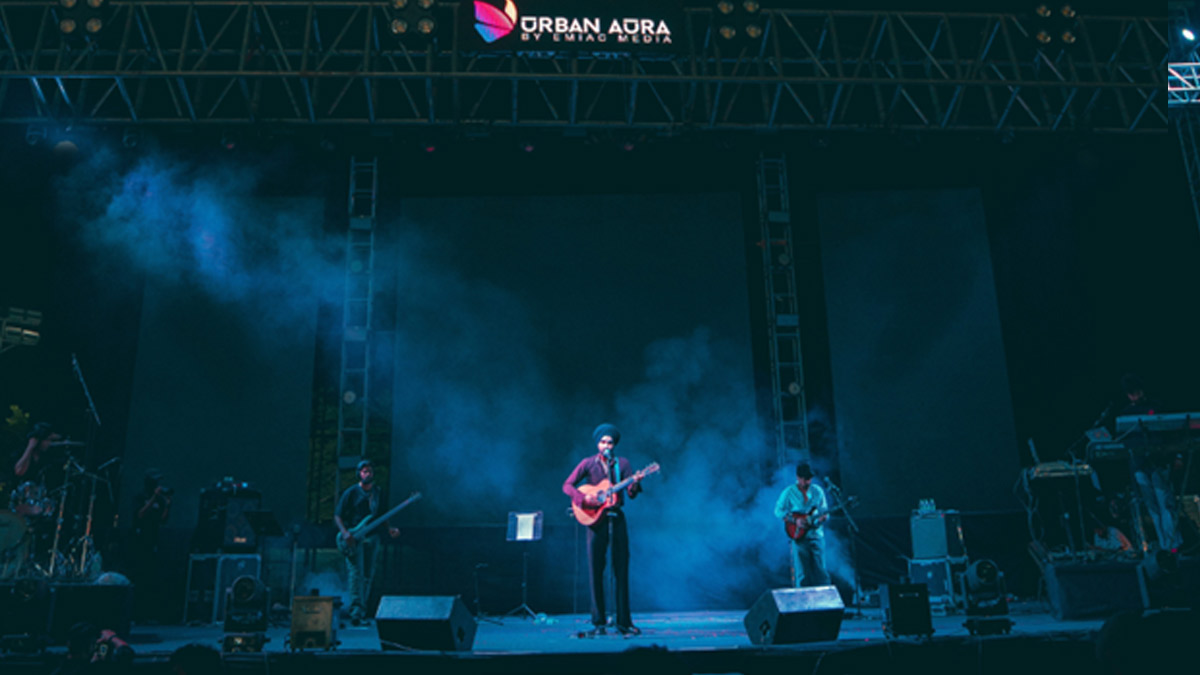
In a music industry that often rewards speed, spectacle, and instant recall, Navjot Ahuja’s journey feels refreshingly different. His story is not built on noise. It is built on patience, discipline, emotional honesty, and a quiet commitment to becoming better with every passing year. After 14 years of struggle, learning, performing, and writing, Navjot stands today as an artist whose success has not changed his centre. If anything, it has only made his purpose clearer.
For Navjot, music has never been about chasing fame alone. It has always been about expression. It is about writing more truthfully, singing more skillfully, understanding himself more deeply, and becoming a kinder human being in the process. That rare clarity is what gives his journey its beauty.
Where It All Began: A Writer Before a Singer
Indian singer and songwriter Navjot Ahuja’s musical journey began in the most familiar of places: school assemblies. But even then, what was growing inside him was not only the desire to sing. It was the need to write.
Long before he saw himself as a performer, he had already discovered the emotional release that writing offered him. For Navjot, words became the first true channel for feeling. Songwriting came before singing because writing was the only way he could let emotions flow through him fully. That inner pull shaped his artistic identity early on.
Like many young musicians, he sharpened his craft by creating renditions of popular songs.
Those experiments became his training ground. But the turning point came in 2012, when he wrote his first original song. That moment did not just mark the beginning of songwriting. It marked the beginning of self-definition.
A Calling He Did Not Chase, But Accepted
What makes the latest Indian singer-songwriter Navjot’s story especially compelling is the way he describes his relationship with music. He does not frame it as a career he aggressively pursued. In his own understanding, music was not something he chose. It was something that chose him.
There was a time when he imagined a very different future for himself. He wanted to become a successful engineer, like many young people shaped by ambition and conventional expectations. But life had a different script waiting for him. During his college years, around 2021, music entered his life professionally and began taking a firmer shape.
That shift was not driven by image-building or industry ambition. It came from acceptance. Navjot embraced the fact that music had claimed him in a way no other path could. That sense of surrender continues to define the artist he is today.
An Artist Guided by Instinct, Not Influence
Unlike many singers who speak openly about idols, icons, and musical role models, Navjot’s creative world is built differently. He does not believe his music comes from imitation or inherited influence. He listens inward.
He has never considered himself shaped by ideals in the traditional sense. In fact, he admits that he does not particularly enjoy listening to songs, especially his own. His decisions as a songwriter and singer come from instinct. He writes what feels right. He trusts what his inner voice tells him. He positions his music according to what he honestly believes in, not what trends demand.
That creative independence gives his work a distinct emotional sincerity. His songs do not feel calculated. They feel alive.
The Long Years of Invisible Struggle
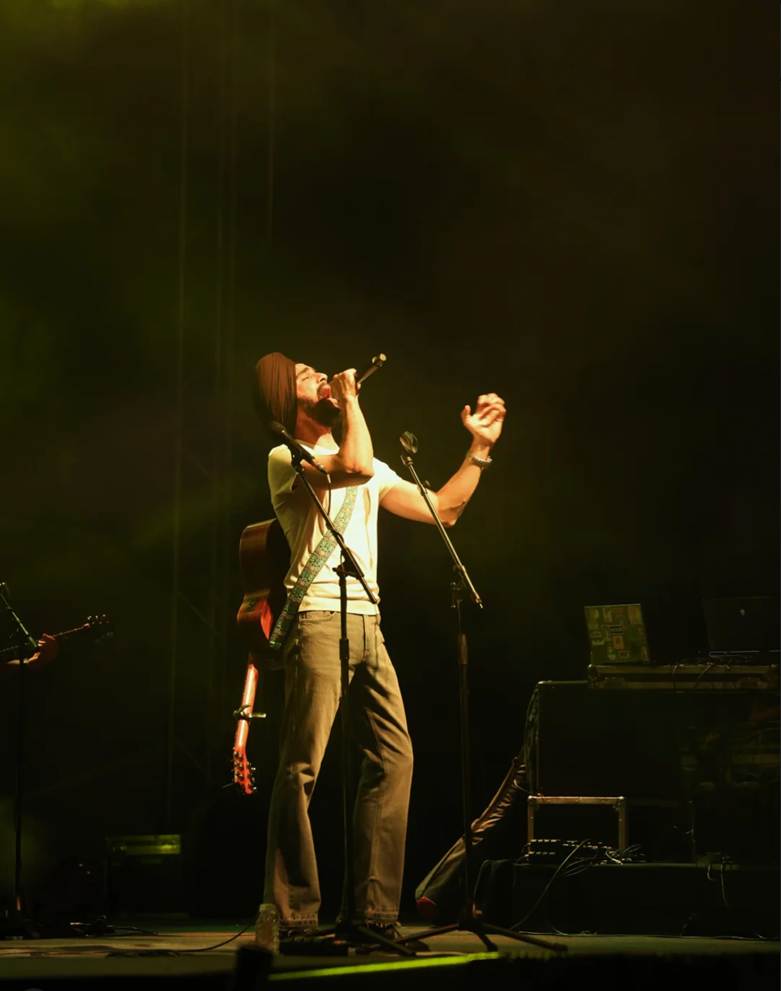
Every artist carries a chapter of struggle, and Navjot’s was long, demanding, and deeply formative. One of the biggest challenges he faced was building continuity as the best new indian singer songwriter in an era where musical collaboration is increasingly fluid.
For emerging singers, especially those trying to build with a band, consistency can be difficult. Instrumentalists today have more opportunities than ever to freelance and perform with multiple artists. While that growth is positive and well deserved, it can make things harder for singers who are still trying to establish a steady team and sound around their work.
For Navjot, one of the most difficult phases came during 2021 and 2022, when he was doing club shows almost every day. It was a period of relentless performance, but not always personal fulfillment. He was largely singing covers because clubs were not open to original songs that audiences did not yet know.
For a new Indian singer and songwriter, that can be a painful compromise. To perform constantly and still not have the freedom to share your own voice requires not just resilience, but restraint.
“Khat” and the Grace of Staying Unchanged
After 14 years of effort, Navjot’s new love song Khat became a defining milestone. Professionally, he acknowledges that the song changed how society viewed him as a musician. It strengthened his place in the public eye and altered his standing in meaningful ways.
Yet personally, he remains unchanged.
That is perhaps the most striking part of his story. Navjot says his routine is still the same. His calm is still the same. His writing process is still the same. He does not want success or failure to interfere with the purity of his art. For him, emotional detachment from public outcomes is essential because the moment an artist becomes too attached to validation, the writing begins to shift.
His joy comes not from numbers, but from the attempt. If he has tried to improve his skill today, if he has written his heart out more honestly than before, then he is at peace.
Growth, Not Glory, Remains the Real Goal
Even now, Navjot is not consumed by labels such as singles artist, performer, or digital success story. His focus remains deeply personal. He wants to sing better. He wants to play instruments better. He wants to understand himself more. And he wants to become a kinder person.
That is what makes Navjot Ahuja’s journey so moving. It is not simply the story of a musician finding recognition. It is the story of an artist who continues to grow inward, even as the world begins to look outward at him. In an age obsessed with applause, Navjot reminds us that the most meaningful success often begins in silence, honesty, and the courage to remain true to oneself.






