Hindi
Court orders Krazzy4 release with two songs cut

MUMBAI: Rakesh Roshan‘s film Krazzy4 will be released on Friday 11 April with its title track deleted.
Music composer Ram Sampath, who sought legal recourse for his 60-second music titled ‘The Thump‘ being copied as the title track of Krazzy 4, has also been granted interim relief of Rs 25,00,000 by the Mumbai High court on Thursday. Sampath had dragged Hrithik Roshan’s director father Rakesh Roshan and composer uncle Rajesh Roshan, to court, alleging that they have “directly lifted” his music for the Krazzy4 album, seeking damages of Rs 20 million.
 The court instructed the Roshans to delete two songs if they want to release the film on Friday. While delivering the verdict, Justice Karnik of the Mumbai high court said, “To my untrained ear, the music appeared to be similar,” after listening to both Sampath‘s work for a Sony Ericsson cellphone advertisement, and the two songs composed by Rajesh Roshan for the film.
The verdict implies that the much hyped Hrithik Roshan number and Shah Rukh Khan‘s Break Free item numbers in the film will have to be removed, reports say. This is easier said than done as the film prints have already been dispatched for the overseas release, as well as territories outside Mumbai.
Sampath’s lawyer Virendra Tulzapurkar told the court that mere monetary compensation would not suffice, adding that “The SMS-s sent by Hrithik establish that they knew the music was not created by them. They have done this knowingly and deliberately,” reports say.
The lawyer also presented the opinion of Shiv Mathur, an independent expert, who confirmed Sampath’s allegation of plagiarism. Tulzapurkar added that the defendants were earning Rs 70 million per month simply from ringtone downloads and Rs 25 million per month from the sales of the music.
Sampath, 32, who has composed music for over 3,000 advertisements, music tracks of films like Khakee and Let’s Talk, and even done a remix for pop sensation Justin Timberlake, had filed a suit for copyright infringement in Bombay High Court. He alleged that four tracks from Krazzy4 were “direct lifts” from the music he had composed for an advertisement titled ‘Thump’ for Sony Ericsson phones in March 2007.
While Sampath remained unavailable for comment, his singer wife Sona Sampath said, “as the matter is subjudice, anything we say will affect us adversely. One individual against so many institutions is tough and we don‘t want to jeopardise the case , but believe the truth shall prevail.”

Hindi
Zee5 and Applause Entertainment team up for whodunnit ‘Everybody Loves Sohrab Handa’
Rajat Kapoor directs star-studded murder mystery streaming from 10 April.
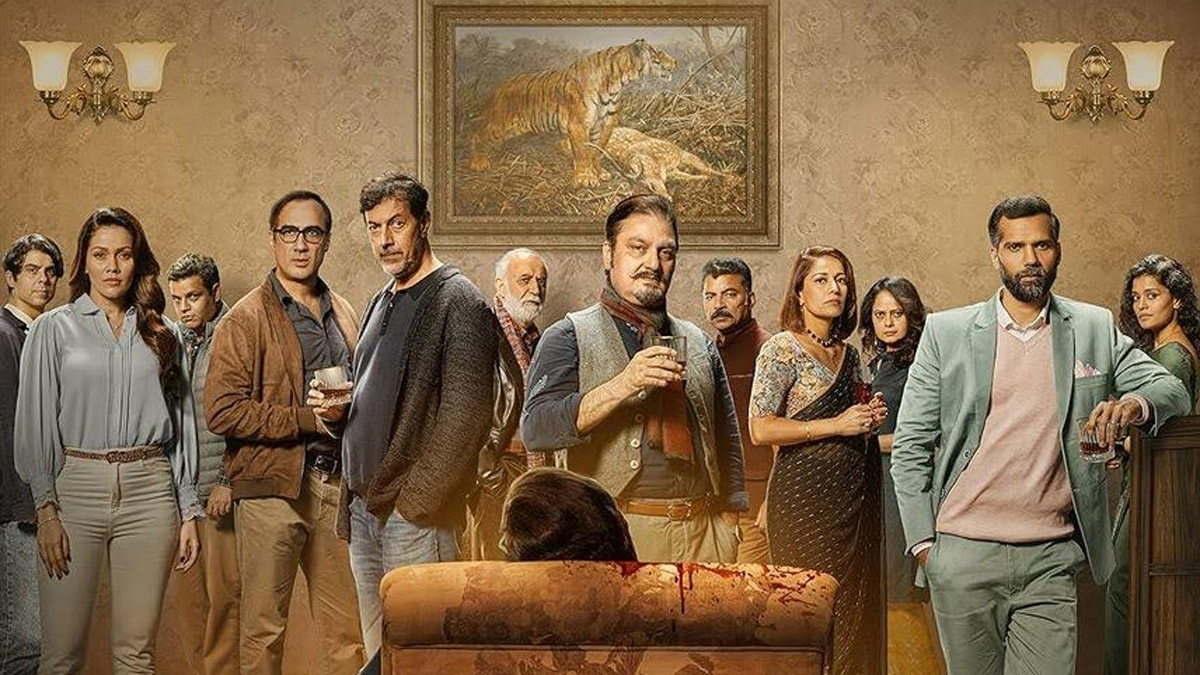
MUMBAI: Zee5 is serving up another killer collaboration and this time, the murder mystery comes with a generous side of dark humour and family dysfunction. The streaming platform has partnered with Applause Entertainment and Mithya Talkies to bring Everybody Loves Sohrab Handa, a fresh, twisted whodunnit written and directed by acclaimed filmmaker and actor Rajat Kapoor. The film will stream exclusively on Hindi Zee5 from 10 April.
The movie reimagines the classic murder mystery genre with a contemporary, darkly comic edge. It revolves around a group of friends and family who smile, drink, and celebrate together until the silence snaps and long-buried secrets spill out. The stellar ensemble cast includes Vinay Pathak, Ranvir Shorey, Waluscha De Sousa, Saurabh Shukla, Chandrachoor Rai, Neil Bhoopalam, Koel Purie, Palomi Ghosh, and Rajat Kapoor himself.
This latest offering continues the successful partnership between Zee5 and Applause Entertainment, which has previously delivered diverse hits such as Mithya, Bloody Brothers, and Jab Khuli Kitaab.

&TV Business Head of hindi Zee5 and chief channel officer Kaveri Das said, “Our collaboration with Applause Entertainment has consistently delivered distinct, high-impact storytelling. Everybody Loves Sohrab Handa is a natural progression, reinforcing our focus on genre-led content with a compelling whodunnit premise and a strong ensemble cast.”
Applause Entertainment business head for movies Sunil Chainani added, “This film adds yet another compelling layer to our slate with Rajat Kapoor’s unmistakable voice.”
Rajat Kapoor shared, “What interested me was not just the mechanics of a whodunnit, but the emotional violence that precedes physical violence. These are people who smile at each other, but there’s so much that is not said.”
The film promises razor-sharp writing, layered performances, and simmering tension, inviting viewers not just to solve the crime but to unravel the complex relationships at its heart.
If you love a good murder mystery served with wit and emotional depth, Everybody Loves Sohrab Handa looks set to be your next addictive watch. Mark your calendars, the whodunnit drops on Hindi Zee5 from 10 April.







