Hindi
Colours of Konkan bags three awards at IDPA

MUMBAI: Nishtha Jain‘s Lakshmi and Me which had been screened at the recent IAWRT Film Festival in Delhi, received the Gold Award for the best documentary while five films received more than one honours each at the annual awards of the Indian Documentary Producers Association (IDPA).
The Gold Award in the Best Short Fiction of a Director category was received for Lost and Found by Harshwardhan G Kulkarni. His film Colours of Konkan: MTDL also got three awards: Excellence in Scriptwriting for an advertising film, Best Corporate Film for Tailormade Films, and Best cinematography for Navneet Misser.
Our Family by K P Jayasankar and Dr Anjali Monteiro received the Gold for sound design (fiction and non-fiction) and script-writing (fiction and non-fiction) and Silver for editing. Lost and Found got the Silver for Navneet Misser for cinematography.
The animation film Manpasand by Dhvani Desai, based on a Panchantra tale which received the Gold Remi at the recent 41st Houston International Film Festival 2008 in the United States, was given the Silver Award in the Best Short Fiction of a Director Category.
The Power of Five by Vijay Singh Tomar received two awards: Gold for Excellence in Editing and Silver for Best Corporate Film.
Harvlele Indradhanush (The Lost Rainbow) by Dhiraj Meshram received the Gold for Best Short fiction film and Silver for Excellence in Script writing (fiction and non-fiction). Vijay Singh Tomar also got the Silver for Editing for 3 Lives. Shivendra Singh got the Silver for best commercial for two films: Havells CFL Rimpoche and Greenply Courtroom.
The other Gold Awards are: Excellence in Sound Design (advertising) to R Anand for Sony Pix, best public service film is ‘The staircase’ by George Mangalath Thomas,
Best commercial is VIP Underwear Adjust by Shivendra Singh, excellence in animation (fiction and non-fiction) for ‘Ostrich’ by Priya Kuriyan, excellence in animation (advertising) shared by Ooga Booga and Ultratech Cement by Vaibhav Studio and Aara (The Fix) respectively, best cell story Memory Space by Dr K P Jayasankar, excellence in short fiction (students) to the Shop that sold Everythingby Abhyuday Khaitan, documentary (students) to Chasing Angelina Jolie by Saurav Dey, cinematography (fiction and non-fiction) to Hope Dies Last in War by Ranjan Palit and S Chkalingam, and editing to Tanvir Ka Safarnama by Arjun Gourisaria and Sukanya Ghosh.
The IDPA-ONGC Gold Award for the Best Film in Environment went to Kali Bein (The Black River) by Surendra Manan and the Silver went to Death Knell the Nilgri‘s biosphere by Maya Jaideep & K G Vasuki.
The Silver Awards went to: Best Documentary Minukku by M R Rajan; Excellence in Cinemarography (advertising) to Tata Indigo – XL by Ravi K Chandran’; sound design (advertising) for The Phenomenon by Paul Jacob; script-writing (advertising) to Little Boy by Deepti Chawla; public service to Help Age by Bappaditya Roy Pictures; animation (Fiction and Non-Fiction) shared by Shadi ka Ghoda by Vivekananda Roy Ghatak and Myths About You by Nandita Jain; Cell story to Anti-Smoking by Aditya Sam Abraham’; short fiction (students) to Dead End by Shashank Khaitan; documentary (students) for Casting Shadow by Nayantara Kotian; and sound design (fiction and non-fiction) by Poomaram Or A Flowering Tree by Vipin Vijay.
Certificates of Merit went to Dr K P Jayasankar and Dr Anjali Monteiro; Vipin Vijay; Rajendra Janglay; and for ‘Reprise’ to Kush, Shubhangi Singh, and Saeed Vahidi.

Hindi
Zee5 and Applause Entertainment team up for whodunnit ‘Everybody Loves Sohrab Handa’
Rajat Kapoor directs star-studded murder mystery streaming from 10 April.
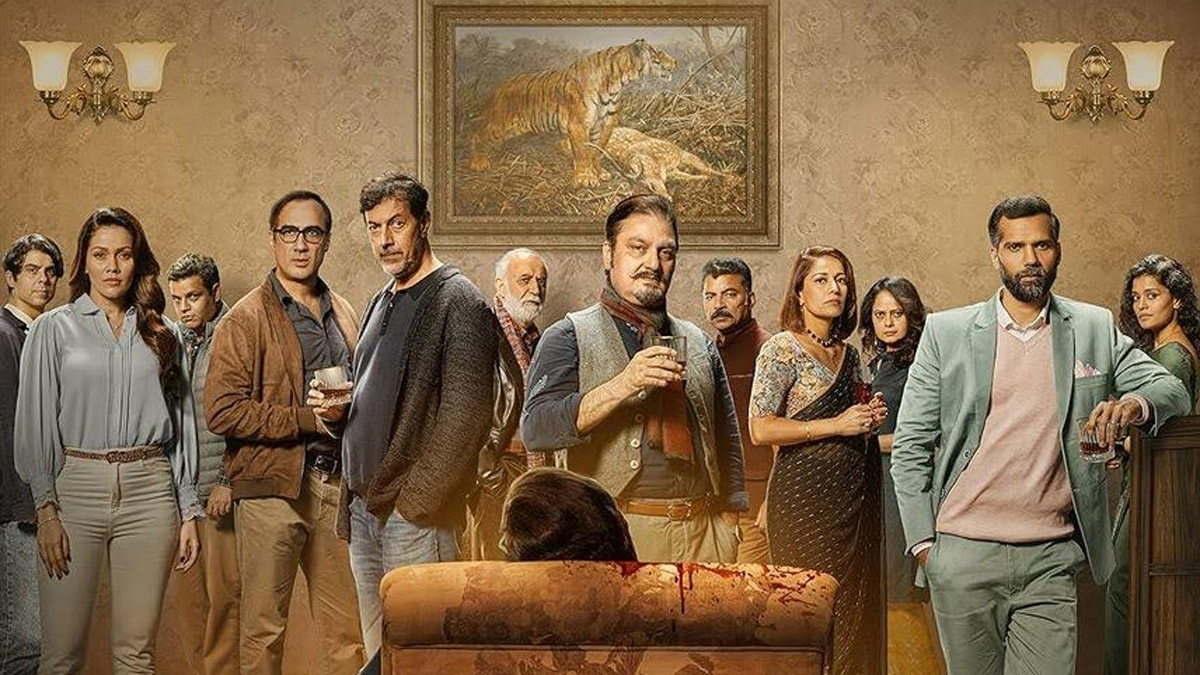
MUMBAI: Zee5 is serving up another killer collaboration and this time, the murder mystery comes with a generous side of dark humour and family dysfunction. The streaming platform has partnered with Applause Entertainment and Mithya Talkies to bring Everybody Loves Sohrab Handa, a fresh, twisted whodunnit written and directed by acclaimed filmmaker and actor Rajat Kapoor. The film will stream exclusively on Hindi Zee5 from 10 April.
The movie reimagines the classic murder mystery genre with a contemporary, darkly comic edge. It revolves around a group of friends and family who smile, drink, and celebrate together until the silence snaps and long-buried secrets spill out. The stellar ensemble cast includes Vinay Pathak, Ranvir Shorey, Waluscha De Sousa, Saurabh Shukla, Chandrachoor Rai, Neil Bhoopalam, Koel Purie, Palomi Ghosh, and Rajat Kapoor himself.
This latest offering continues the successful partnership between Zee5 and Applause Entertainment, which has previously delivered diverse hits such as Mithya, Bloody Brothers, and Jab Khuli Kitaab.

&TV Business Head of hindi Zee5 and chief channel officer Kaveri Das said, “Our collaboration with Applause Entertainment has consistently delivered distinct, high-impact storytelling. Everybody Loves Sohrab Handa is a natural progression, reinforcing our focus on genre-led content with a compelling whodunnit premise and a strong ensemble cast.”
Applause Entertainment business head for movies Sunil Chainani added, “This film adds yet another compelling layer to our slate with Rajat Kapoor’s unmistakable voice.”
Rajat Kapoor shared, “What interested me was not just the mechanics of a whodunnit, but the emotional violence that precedes physical violence. These are people who smile at each other, but there’s so much that is not said.”
The film promises razor-sharp writing, layered performances, and simmering tension, inviting viewers not just to solve the crime but to unravel the complex relationships at its heart.
If you love a good murder mystery served with wit and emotional depth, Everybody Loves Sohrab Handa looks set to be your next addictive watch. Mark your calendars, the whodunnit drops on Hindi Zee5 from 10 April.







