Hindi
Chhod na yaar… this is not comedy

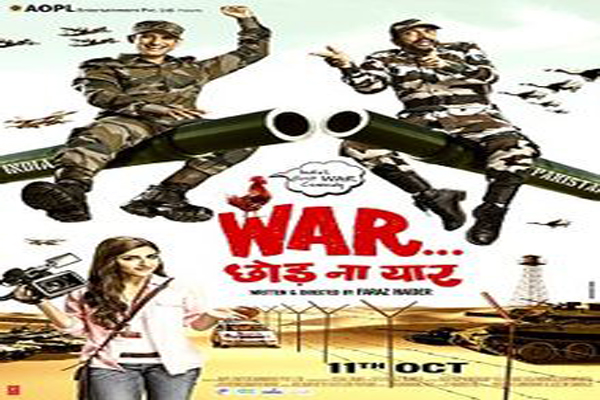
MUMBAI: War Chhod Na Yaar is an attempt at making a war comedy. We don’t make too many war films and a comedy at that; this is the first such attempt at cross-pollination. Since a comedy will need one of the two countries involved as stupid and since it can’t be India or the Indian army, it is the Pakistani army which will have to look inefficient and stupid. It also shows Pakistan as being totally dependent on Chinese arms which are not effective.
 |
|
Producer: AOPL Entertainment P Ltd.
Director: Faraz Haider. Cast: Sharman Joshi, Soha Ali Khan, Javed Jaaferi, Dalip Tahil, Sanjay Mishra, Mukul Dev, Manoj Pahwa. |
A wire fence separates sandy terrain with the Indian army on one side, led by Sharman Joshi, and a bunch of ragtag Pakistani army soldiers on the other, led by Sanjay Mishra and Javed Jaaferi. At nights, both Sharman and Javed meet at the fencing and play cards, with Sharman always carrying a bottle of alcohol as a gift for his Pakistani counterpart. The army on both sides also play antakshari across the wires. However, the playing sessions, antakshari and bonhomie are not going to last as a Pakistani minister manipulated by the Chinese and an Indian minister under influence of an American politician (both played by Dalip Tahil) are planning a war between both the countries. The Pakistani general, Manoj Pahwa, has little interest in what his minister is indulging in and is addicted to a game on his cell phone.
The Indian minister takes Soha Ali Khan, a TV reporter, to the border post under Sharman’s command, where she can shoot his speech which he wants her to telecast the day war starts to make it look as if the minister braved the war and visited the soldiers on the border. The Pakistani minister chooses to send his message shot in a studio but makes it look like he is on border. It is all about the politicians creating tensions though the public may not want it. Even the soldiers don’t want war and want to coexist in peace.
While Soha and Sharman share romantic vibes, she also thinks that as a media person, she can make the world aware of the people’s feelings on both sides which may force politicians to backtrack, bringing an end to the war. A bunch of young people also exchange notes with their friends across the border through social networks. Soha crosses the fence with the help of Javed and interviews Pakistani soldiers, she also interviews the Indian side and asks her channel to telecast live the whole story from the minister confiding in her about the war to the views of the army on both sides.

Comedy has not been the forte of Hindi makers and War Chhod Na Yaar also falls short on being an outright comedy. There are some funny scenes but consistency is missing. There is also repetition. For example, Pahwa and the Chinese leader do the same thing throughout and can’t be expected to be entertaining every time they appear. Also, the end part becomes boring when sermonising begins. Direction is fair. The film has a hummable number in Main jagu aksar….Cinematography is good.
War Chhod Na Yaar not only lacks in face value but its release period is also not conducive to good box office results.




Hindi
Remembering Gyan Sahay, the lens behind film, television and advertising
From a puppet rabbit selling poppadums to Hindi cinema, he framed it all.
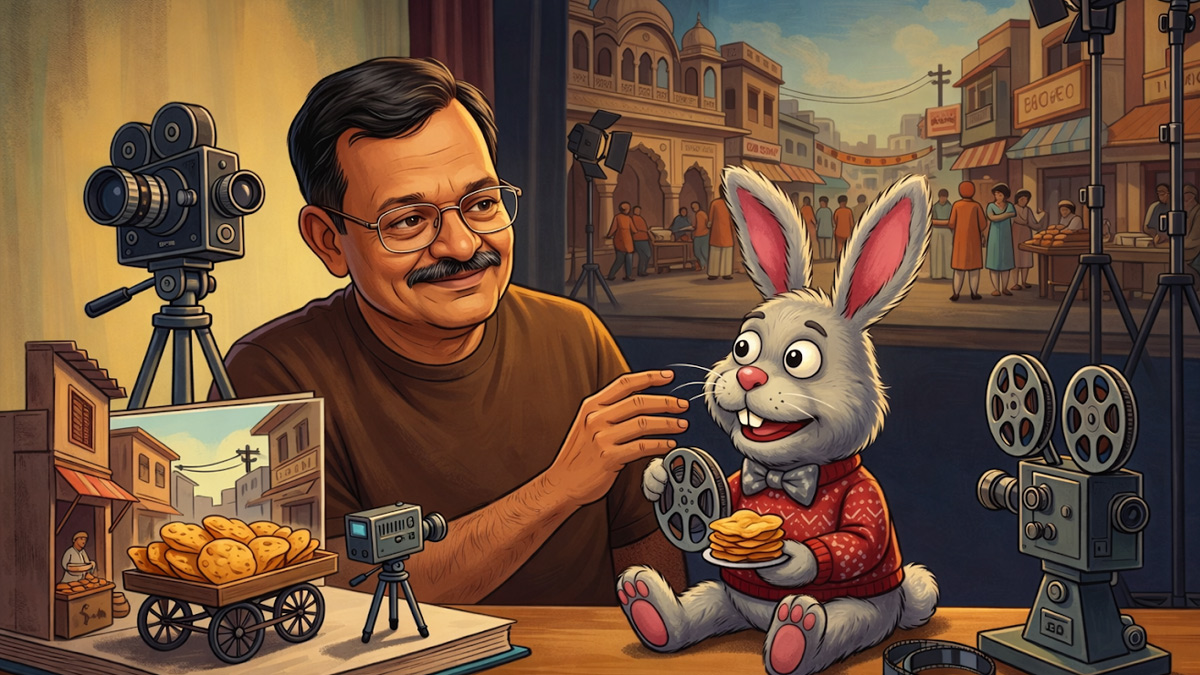
MUMBAI: There are careers, and then there are canvases. Gyan Sahay, the veteran cinematographer, director, and producer who passed away on 10 March 2026 in Mumbai, had one of the latter. Over several decades in the Indian film and television industry, he turned lenses, lights, and the occasional puppet rabbit into something approaching art.
A graduate of the Film and Television Institute of India (FTII) in Pune, Sahay built his reputation as a director of photography across a career that stretched from the early 1970s all the way to the digital age. He was the kind of craftsman who understood that a well-composed shot is not merely a technical achievement but a quiet act of storytelling.
For most Indians of a certain age, however, Sahay will forever be the man behind the rabbit. His direction of the iconic long-running television commercial for Lijjat Papad, featuring its now-legendary puppet bunny, gave the country one of its most cheerfully persistent advertising images. It was the sort of work that sneaks into the national subconscious and takes up permanent residence.
His big-screen credits as cinematographer include Anokhi Pehchan (1972), Pagli (1974), Pas de Deux (1981), and Hum Farishte Nahin (1988). In 1999, he stepped behind a different kind of camera altogether, making his directorial debut with Sar Ankhon Par, a drama that featured Vikas Bhalla and Shruti Ulfat, with a cameo by Shah Rukh Khan for good measure.
On television, Sahay was particularly prized for his command of multi-camera production setups, a skill that made him a go-to technician for large-scale shows and reality programmes. In an industry that has never been especially patient with complexity, he was the calm hand on the rig.
In later life, Sahay turned teacher. He participated regularly in masterclasses and Digi-Talks, often hosted by organisations such as Bharatiya Chitra Sadhna, sharing hard-won wisdom on cinematography, the comedy of timing in a shot, and the sweeping changes brought by the shift from celluloid to digital. He was also said to have been involved in a project concerning a biographical film on Infosys co-founder N.R. Narayana Murthy.
Tributes from the film industry poured in following the news of his passing, with colleagues remembering him as a senior cameraman who served as a rare bridge between two entirely different eras of Indian cinema. That is, perhaps, the finest thing one can say of any craftsman: he kept up, and he brought others along with him.