Hindi
Chef: Where is the audience?

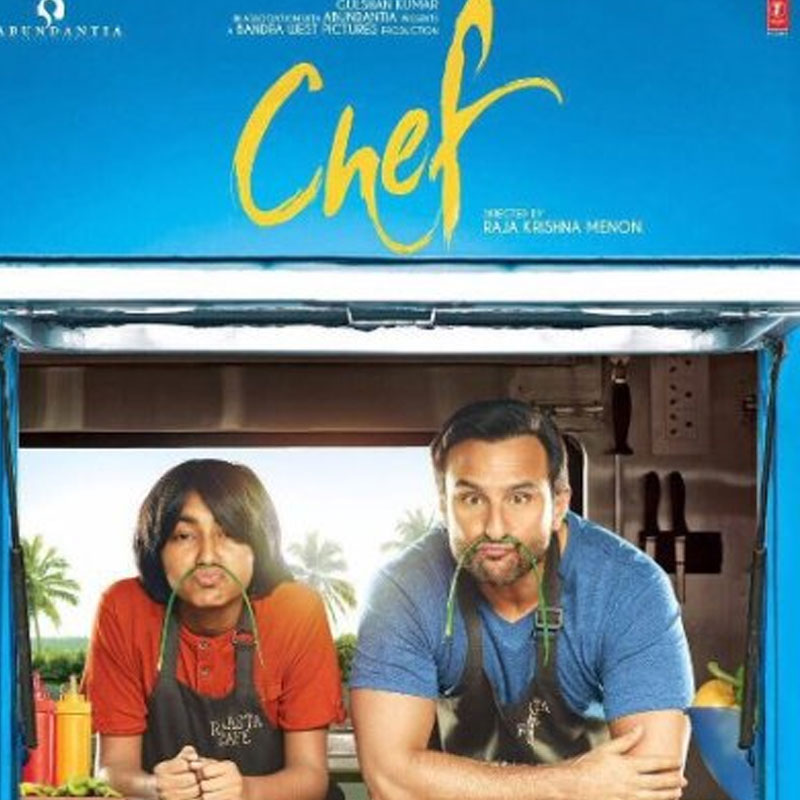
Chef is a remake of 2014 Hollywood film of the same name, written, directed and co-produced by Jon Favreau, who also essayed the lead role.
Once in a while, an English movie story fits to the T catering to the Indian tastes. We had the 1970 film Love Story (Erich Segal) which Rajshri Pictures made in to “Ankhiyon Ke Jharokhon Se” and, may be a few more; Segal’s own Man Woman And Child, which Shekhar Kapur adapted to make the acclaimed 1983 film, Masoom.
There are few such films which have universal sentiments and appeal to all. Chef is one such, despite its alien title. But, then, it aims to cater to the select audience.

The character of Saif Ali Khan is an Old Delhi, Chandni Chowk lad of the pre-3 Idiots generation when the kids were not allowed to dream of a career but parents decided what they would do. Somehow, Saif is interested in cooking and loves to stop at the famous street corner eatery selling chhole puri to learn the art. Aspirations were not encouraged in those days and, as a revolt to his father’s dictates, Saif runs away from home.
Having worked at a couple of Old Delhi dhabas, Saif hones his skills at the Golden Temple, as a kitchen help.
By this time, Saif has excelled at devising new recipes; chefs do that, a cook or a bawarchi just cooks up regular fare. Saif is famous, has made a name for himself in the US having left behind a divorced wife and a teenaged son in Cochin in Kerala.
One fine day, Saif’s food is criticised by a patron. Enraged and believing too much into his reputation as a renowned chef, Saif assaults the patron. Social media takes over, and there is no place for Saif anymore in the culinary circuit.
But, Saif has a growing son, played by Svar Kamble, overly fond of him, and an ex-wife, played by Padmapriya Janakiraman, who thinks Saif should devote some time to the son at this vital juncture in his life. The Padmapriya and Svar want him to visit.
Saif arrives in Kerala, builds bonhomie with his son and both are soon inseparable. While the mother is living her own life, the son discovers his father for the first time.
The world has had this wheelbarrow culture providing street food for ages which gradually moved on to food trucks. Major cities all over the world have a number of them. Then, there are also mobile restaurants like the double-decker buses which move around the scenic places of a town while you dine.
So there is the character of Milind Soman, Padmapriya’s friend, who offers him a dilapidated double-decker bus which he thinks is worth converting into a travelling/mobile restaurant.
Reluctant at first, Saif accepts the offer. He converts the bus into a restaurant with the help of his son.
The film turns into a road movie from here on. Saif may have married a Kerala woman but the place he wants to prove himself in is Delhi. The bus is on the move. Via Goa and other scenic places. A happy ending is promised which is what makes the film adaptable in Hindi from its Hollywood version.
What is good about the film is that is has been de-glamourised right on the onset. An effort is made so that it looks real life. The direction is apt sticking mostly to the original. Dialogue is lifelike. Visually, the film gives a pleasant feeling. Music is fair.
Chef is a watchable feel good film but, coming as it does during a dull period and lacking a draw (only Saif to count on), the opening has been poor and not much hope being held out either.
Producers: Bhushan Kumar, Kishan Kumar, Raja Krishna Menon, Vikram Malhotra, Janani Ravichandran
Director: Raja Krishna Menon.
Cast: Saif Ali Khan, Padmapriya Janakiraman, Svar Kamble, Milind Soman.





Hindi
Zee5 and Applause Entertainment team up for whodunnit ‘Everybody Loves Sohrab Handa’
Rajat Kapoor directs star-studded murder mystery streaming from 10 April.
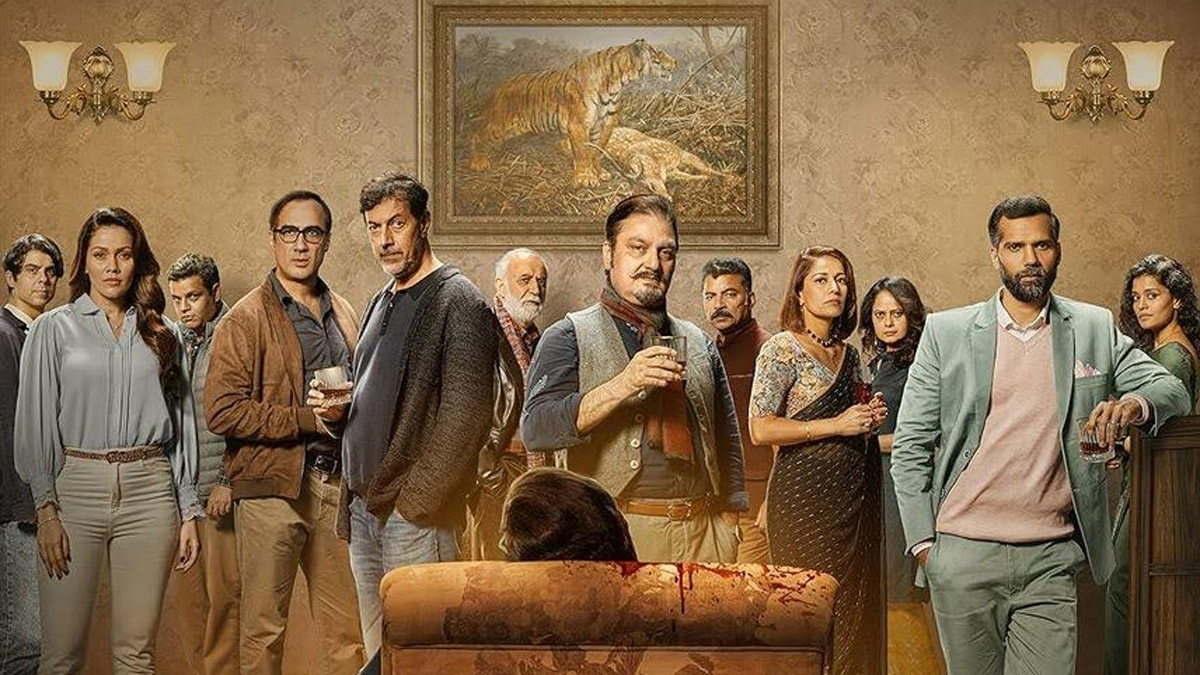
MUMBAI: Zee5 is serving up another killer collaboration and this time, the murder mystery comes with a generous side of dark humour and family dysfunction. The streaming platform has partnered with Applause Entertainment and Mithya Talkies to bring Everybody Loves Sohrab Handa, a fresh, twisted whodunnit written and directed by acclaimed filmmaker and actor Rajat Kapoor. The film will stream exclusively on Hindi Zee5 from 10 April.
The movie reimagines the classic murder mystery genre with a contemporary, darkly comic edge. It revolves around a group of friends and family who smile, drink, and celebrate together until the silence snaps and long-buried secrets spill out. The stellar ensemble cast includes Vinay Pathak, Ranvir Shorey, Waluscha De Sousa, Saurabh Shukla, Chandrachoor Rai, Neil Bhoopalam, Koel Purie, Palomi Ghosh, and Rajat Kapoor himself.
This latest offering continues the successful partnership between Zee5 and Applause Entertainment, which has previously delivered diverse hits such as Mithya, Bloody Brothers, and Jab Khuli Kitaab.
&TV Business Head of hindi Zee5 and chief channel officer Kaveri Das said, “Our collaboration with Applause Entertainment has consistently delivered distinct, high-impact storytelling. Everybody Loves Sohrab Handa is a natural progression, reinforcing our focus on genre-led content with a compelling whodunnit premise and a strong ensemble cast.”
Applause Entertainment business head for movies Sunil Chainani added, “This film adds yet another compelling layer to our slate with Rajat Kapoor’s unmistakable voice.”
Rajat Kapoor shared, “What interested me was not just the mechanics of a whodunnit, but the emotional violence that precedes physical violence. These are people who smile at each other, but there’s so much that is not said.”
The film promises razor-sharp writing, layered performances, and simmering tension, inviting viewers not just to solve the crime but to unravel the complex relationships at its heart.
If you love a good murder mystery served with wit and emotional depth, Everybody Loves Sohrab Handa looks set to be your next addictive watch. Mark your calendars, the whodunnit drops on Hindi Zee5 from 10 April.







