Hindi
Bollywood – on the road to more global recognition, professionalism

Bollywood is slowly spreading its wings overseas. UTV, reports indicate, has already pre-sold the distribution rights for Farhan Akhtar‘s blockbuster Don, which released worldwide today, in Germany.Another noted film maker Karan Johar sold the distribution rights for Kabhi Alvida Naa Kehna (Kank) in Germany and Poland. Rakeysh Mehra‘s Rang De Basanti became the first Hindi film to be screened in a mainstream movie theatre in Israel.
 Stars are increasingly being welcomed. In France for instance, earlier this year at Paris‘ famous Champs Elysees Virgin megastore, French girls and boys strained to get a glimpse of Bollywood ka badshah Shah Rukh Khan who was promoting Veer Zara about a cross border romance. The star and his director Yash Chopra were caught unawares by the extent of the crowd. Increasingly, Bollywood stars like Aishwarya Rai, the Big B Amitabh Bachchan, Aamir Khan, Priyanka Chopra make their presence felt at film festivals, road shows and premieres in several countries. Often, it is not just south Asians who are interested but even the local population who become inquisitive about the buzz.
Johar, who recently attended the Toronto film festival, points out that Bollywood is noted not just for the song and dance sequences, but also for its frank emotional value. That, according to him, is the key differentiator.
Film and Television Producers Guild of India president Amit Khanna believes that the future is bright in terms of growing more mainstream abroad as it is the only alternative to Hollywood that can appeal to global audiences. One market that is exploding is the UK. Bollywood films are now making more money in Britain than UK-made productions and many movies are being shot in this country as also in US to make them more relevant to South Asians living there.

 Shah Rukh Khan in Kank |
69 Bollywood films have been released in the UK this year. 14 productions financed by the Indian film industry are being shot there. In the five weeks since its UK release, Kank grossed more than two million pounds – the same as Vera Drake, the critically acclaimed British film which got Bafta awards and Oscar nominations. It is no surprise that some Indian producers now regard overseas sales as more lucrative than India. This is because besides the traditional NRI markets in the US, UK, Middle East and Australia, mainstream Hindi movies are now starting to find acceptance in countries like Germany, France, Poland, Israel, Turkey, Japan, South America and even China.
This means that films have a better chance of recovering their costs of production. The multiple-delivery system has been a boon for Bollywood. There are new technologies like VoD, which are helping boost the reach of Indian films abroad. An awards event like Iifa helps make locals in a country at least inquisitive about Indian film. Filmmakers are also realising that a film with excellent subject matter can do well abroad, even if there are not many masala songs and dances. It requires good marketing though. A case in point is Lage Raho Munnabhai, which did well in the US and UK due to the Gandhi theme that people can identify with.
|
|

Also pushing Indian films abroad is the fact that Indian filmmakers and producers are making their mark in countries like the US. A case in point is Ashok Amritraj, who with his firm Hyde Park Entertainment, has made films like Bringing Down the House and Shopgirl.
|
Mira Nair‘s work has made Americans and people from other countries aware of Indian film culture |

Both were done with Steve Martin. Then there are the two famous women directors Mira Nair of Monsoon Wedding fame and Gurinder Chadha (Bend it Like Beckham). Both films received Golden Globe nominations a few years back. Of course Bollywood‘s impact abroad is nowhere compared to Hollywood which apart from India dominates in several countries. In some cases it has overtaken the cinema of that country. Still the signs for Bollywood in terms of looking for new markets is good and performing better in countries like the US.
After all Yash Raj Films, reported last year that Bollywood films in the US earn around $100 million a year through theatre screenings, video sales and the sale of movie soundtracks. Yash Raj Films quoted the Internet Movie Database for this. There is still room for improvement though overseas when it comes to distribution and marketing. Efforts should be made to have Bollywood films released in more cinemas particularly in the US.
The now $8 billion Indian film industry produces more than 900 movies a year in more than 20 languages. This makes India the world‘s most prolific film producer.
The Distribution Scene: The Film and Television Producers Guild of India estimates that in India Bollywood films sold 3.9 billion tickets last year making around $1.4 billion. With luxurious multiplexes coming up with tickets priced higher, the situation will only improve. India is expected to have almost 300 multiplexes within a couple of years‘ time. This is quite a change from the single screen scenario a few years ago. This has led to Bollywood changing the way it handles releases. The big blockbusters have more prints released while a smaller film, which is only targeting a select audience, is released in certain areas.
 Gurinder Chadha celebrates the nomination of Bend It Like Beckham at the Golden Globes |
More theatres means that one needs less time to recover costs as the prints released are more. Sometimes a few weeks is enough. There is no longer a need for a Silver or Golden jubilee to make a handsome profit. Multiplexes also resort to differential pricing. So evening shows cost more than morning shows; weekends are more expensive than weekdays. This ensures that a Bollywood film can catch different audiences, whether it is the family or the college crowd.
An interesting and well known connection between India and overseas is that we are using foreign locales for shoots. Besides Switzerland, films are being shot in countries like South Africa, Singapore, London, New Zealand. It is no surprise that the tourism boards of countries like Hong Kong actively woo Indian filmmakers with their facilities and locales.
One positive sign is that there is more organisation and structure with institutional finance now available. Estimates are that around Rs 3 billion in financing will have been sanctioned and disbursed this year. In the past, money came from private financiers and from dubious sources like the underworld.
Better Marketing: Bollywood is also doing more to promote its products. They are increasingly taking advantage of the new media by having contests, offering downloads on the mobile, etc. Music videos are also given to the likes of MTV. There are also tie ups with news channels for interviews, clips. The promotion for Bunty Aur Bablii, for instance, saw the two stars hosting a show on a news channel. Now one also sees the producer, distributor and exhibitor jointly planning promotions and working on it.
Online the sites of Bollywood films are more jazzed up compared to the past. There are games, contests and blogs on offer. According to reports, while a producer would ideally invest 10-15 per cent of the total production budget on marketing and promotions, there are increasing incidents where it is getting stretched to 20-25 per cent.
On ground events are becoming creative. In one marketing incident Mallika Sherawat sold tickets of her film Bachke Rehna Re Baba at a theatre in Delhi. Urmila Matondkar shared her supernatural experiences on Sony‘s show Aahat before the release of her film Naina. In a unique innovation the filmmakers of Oops threw stripping parties at pubs in Mumbai. Oops looked at the lives of male strippers.
While all this is fine it is important to remember that no amount of good marketing can replace the importance of content. A good campaign cannot cover up for a poor film and a negative audience reaction.
Co-productions: The big filmmakers are also doing a wide range of initiatives with a broader purpose. Subhash Ghai, for one, did an IPO for Mukta Arts and also set up a training school Whistlingwoods. Corporates are also entering the business, which is helping it become more professional.
An example is Reliance taking a stake in the Adlabs multiplex chain. It helps that 100 per cent foreign investment is permitted in production, distribution, financing and distribution. Studios from the US are also looking at partnerships. Disney recently invested in UTV taking a 14.9 per cent stake for $14 million in the studio which made Rang De Basanti, India‘s entry for the Oscars. UTV is also doing co-productions with Fox Searchlight for Chris Rock‘s I Think I Love My Wife, Will Smith‘s Overbrook Entertainment and Sony. UTV and Fox will release the Mira Nair film The Namesake next year. UTV is also looking for assistance from its Hollywood partners in pushing Rang De Basanti for the Oscar awards in the US. Should it be among the five foreign films chosen it will serve as a great platform for Indian film to get noticed by millions across the globe.
At an event it recently had for cinema exhibitors, Sony announced that it will be releasing its first co-production in India the Sanjay Leela Bhansali film Saawariya (Beloved) next Diwali. Sony Pictures Entertainment chairman and CEO Michael Lynton said, “India has a rich and a prolific film history and we at Sony Pictures recognise the potential and importance of the Indian market and welcome the opportunity to team up with the film industry in India. This is a defining moment for us as a company and for filmmakers, artists and audiences in India as well.”
Conclusion: With Indian cinema getting more professional in its working, becoming more marketing savvy and finding more markets abroad, as well as foreign studios waking up to Bollywood‘s potential, there is every likelihood that in the coming years Bollywood might become a more globally recognised brand.






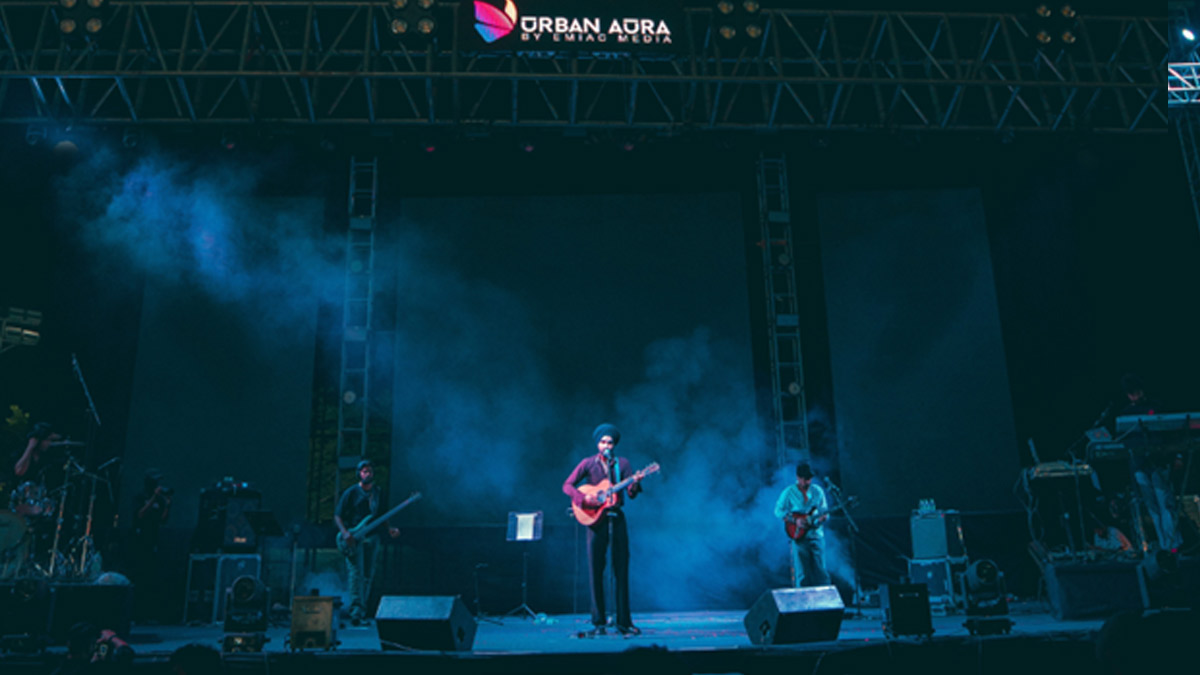
In a music industry that often rewards speed, spectacle, and instant recall, Navjot Ahuja’s journey feels refreshingly different. His story is not built on noise. It is built on patience, discipline, emotional honesty, and a quiet commitment to becoming better with every passing year. After 14 years of struggle, learning, performing, and writing, Navjot stands today as an artist whose success has not changed his centre. If anything, it has only made his purpose clearer.
For Navjot, music has never been about chasing fame alone. It has always been about expression. It is about writing more truthfully, singing more skillfully, understanding himself more deeply, and becoming a kinder human being in the process. That rare clarity is what gives his journey its beauty.
Where It All Began: A Writer Before a Singer
Indian singer and songwriter Navjot Ahuja’s musical journey began in the most familiar of places: school assemblies. But even then, what was growing inside him was not only the desire to sing. It was the need to write.
Long before he saw himself as a performer, he had already discovered the emotional release that writing offered him. For Navjot, words became the first true channel for feeling. Songwriting came before singing because writing was the only way he could let emotions flow through him fully. That inner pull shaped his artistic identity early on.
Like many young musicians, he sharpened his craft by creating renditions of popular songs.
Those experiments became his training ground. But the turning point came in 2012, when he wrote his first original song. That moment did not just mark the beginning of songwriting. It marked the beginning of self-definition.
A Calling He Did Not Chase, But Accepted
What makes the latest Indian singer-songwriter Navjot’s story especially compelling is the way he describes his relationship with music. He does not frame it as a career he aggressively pursued. In his own understanding, music was not something he chose. It was something that chose him.
There was a time when he imagined a very different future for himself. He wanted to become a successful engineer, like many young people shaped by ambition and conventional expectations. But life had a different script waiting for him. During his college years, around 2021, music entered his life professionally and began taking a firmer shape.
That shift was not driven by image-building or industry ambition. It came from acceptance. Navjot embraced the fact that music had claimed him in a way no other path could. That sense of surrender continues to define the artist he is today.
An Artist Guided by Instinct, Not Influence
Unlike many singers who speak openly about idols, icons, and musical role models, Navjot’s creative world is built differently. He does not believe his music comes from imitation or inherited influence. He listens inward.
He has never considered himself shaped by ideals in the traditional sense. In fact, he admits that he does not particularly enjoy listening to songs, especially his own. His decisions as a songwriter and singer come from instinct. He writes what feels right. He trusts what his inner voice tells him. He positions his music according to what he honestly believes in, not what trends demand.
That creative independence gives his work a distinct emotional sincerity. His songs do not feel calculated. They feel alive.
The Long Years of Invisible Struggle

Every artist carries a chapter of struggle, and Navjot’s was long, demanding, and deeply formative. One of the biggest challenges he faced was building continuity as the best new indian singer songwriter in an era where musical collaboration is increasingly fluid.
For emerging singers, especially those trying to build with a band, consistency can be difficult. Instrumentalists today have more opportunities than ever to freelance and perform with multiple artists. While that growth is positive and well deserved, it can make things harder for singers who are still trying to establish a steady team and sound around their work.
For Navjot, one of the most difficult phases came during 2021 and 2022, when he was doing club shows almost every day. It was a period of relentless performance, but not always personal fulfillment. He was largely singing covers because clubs were not open to original songs that audiences did not yet know.
For a new Indian singer and songwriter, that can be a painful compromise. To perform constantly and still not have the freedom to share your own voice requires not just resilience, but restraint.
“Khat” and the Grace of Staying Unchanged
After 14 years of effort, Navjot’s new love song Khat became a defining milestone. Professionally, he acknowledges that the song changed how society viewed him as a musician. It strengthened his place in the public eye and altered his standing in meaningful ways.
Yet personally, he remains unchanged.
That is perhaps the most striking part of his story. Navjot says his routine is still the same. His calm is still the same. His writing process is still the same. He does not want success or failure to interfere with the purity of his art. For him, emotional detachment from public outcomes is essential because the moment an artist becomes too attached to validation, the writing begins to shift.
His joy comes not from numbers, but from the attempt. If he has tried to improve his skill today, if he has written his heart out more honestly than before, then he is at peace.
Growth, Not Glory, Remains the Real Goal
Even now, Navjot is not consumed by labels such as singles artist, performer, or digital success story. His focus remains deeply personal. He wants to sing better. He wants to play instruments better. He wants to understand himself more. And he wants to become a kinder person.
That is what makes Navjot Ahuja’s journey so moving. It is not simply the story of a musician finding recognition. It is the story of an artist who continues to grow inward, even as the world begins to look outward at him. In an age obsessed with applause, Navjot reminds us that the most meaningful success often begins in silence, honesty, and the courage to remain true to oneself.






