Hindi
Big Cinemas, plex owners still to sort out internal differences

MUMBAI: With a view to end the strike, a vital meeting between the producers and distributors body UPDF and multiplex owners is in process.
Though Big Cinemas has almost reached a consensus with the UPDF, other multiplexes that have been requested to toe the line are sticking to their earlier proposal of performance-based revenue share system.
Indiantelevision.com was the first to report that Big Cinemas was spearheading the drive to arrive at a speedy settlement with the film producers and distributors.
A meeting of multiplex owners was held just before the vital meeting in which multiplex-owners suggested a three-tier performance-based revenue sharing terms formula. For the big budget films, the share would be in the ratio of 52:48 (producers, multiplexes) for the first week and 42:58 for the second. The ratio for the medium budget films would be 50:50 and 42:58 while small budget films would have a share system of 48:52 and 38:62.
It may be noted that Big Cinemas agreed to the terms of 50:50, 42:58, 35:65 and 30:70 (producers:multiplexes) for the first four weeks respectively for any budgeted film.
“It all depends on the decision that other plexes take besides Big Cinemas in this important hour and make a breakthrough to arrive at a conclusion. The ball is now in their (multiplexes) court. All depends on how they play their part,” exclaims producer Harry Baweja.

Hindi
Marico founder Harsh Mariwala’s book Harsh Realities set for film adaptation
Almighty Motion Picture taps Karan Vyas to script Marico story
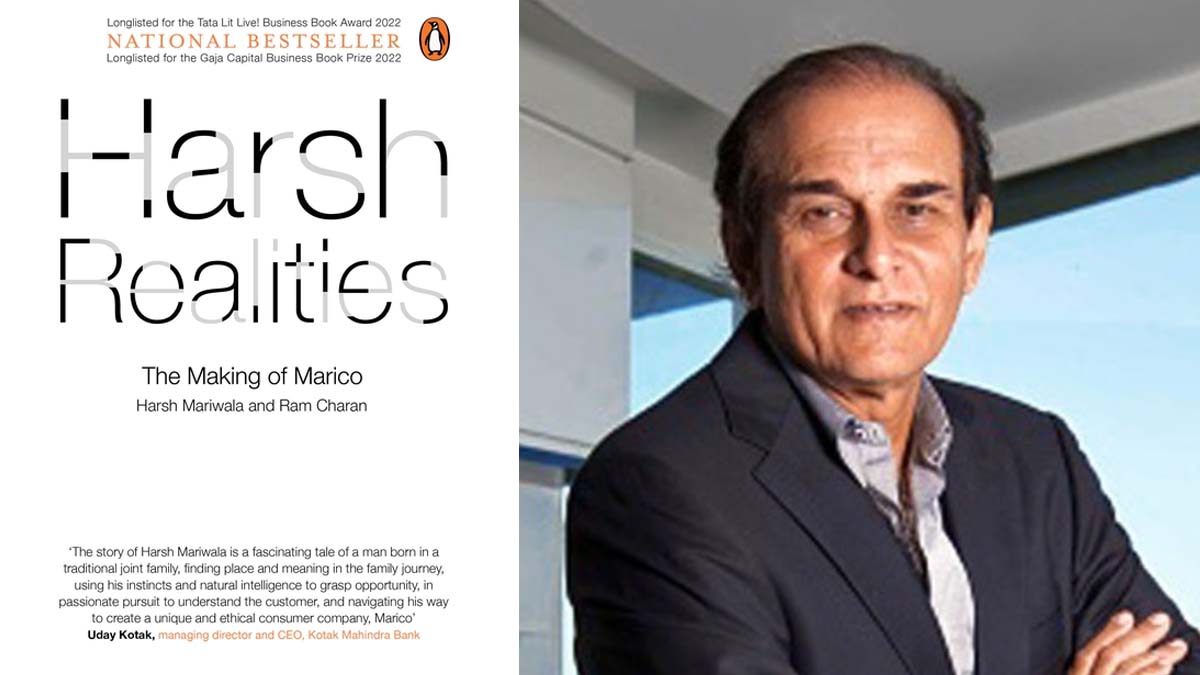
MUMBAI: Almighty Motion Picture is turning its lens on India Inc., with plans to adapt Harsh Realities: The Making of Marico into a screen project. The story charts the rise of Harsh Mariwala, the chairman and founder of Marico, and is currently in early development, according to a report by Variety.
Writer Karan Vyas, known for his work on Scam 1992, Scoop and Made in India – A Titan Story, is attached to pen the screenplay. The project continues the studio’s growing interest in real-life Indian narratives that blend business with human drama.
At the heart of the story lies a defining moment in 1987, when Mariwala chose to step away from the family-run Bombay Oil Industries and strike out on his own. What followed was not just the creation of a company, but the reinvention of a legacy. Marico would go on to become a global FMCG player, with brands like Parachute, Saffola, Set Wet and Livon becoming household names, reaching nearly one in three Indians.

The source material, co-authored by Mariwala and renowned business strategist Ram Charan, offers more than a boardroom chronicle. It captures the grit behind the growth, the risks behind the rewards and the leadership lessons forged along the way.
The adaptation aims to move beyond balance sheets and brand milestones, focusing instead on the person behind the enterprise. Expect a narrative that leans into the emotional stakes of entrepreneurship, where decisions are as personal as they are professional.
Today, Marico draws about a quarter of its revenue from international markets across Asia and Africa, reflecting its steady transformation from a domestic player into a multinational force. Yet, if the makers have their way, the screen version will remind audiences that every global success story begins with a leap of faith.
With development set to begin soon, this is one business story that may just trade spreadsheets for storytelling, and profit margins for moments that linger