Hindi
Azhar…Of a fallen idol!..Dear Dad…Its Complicated!

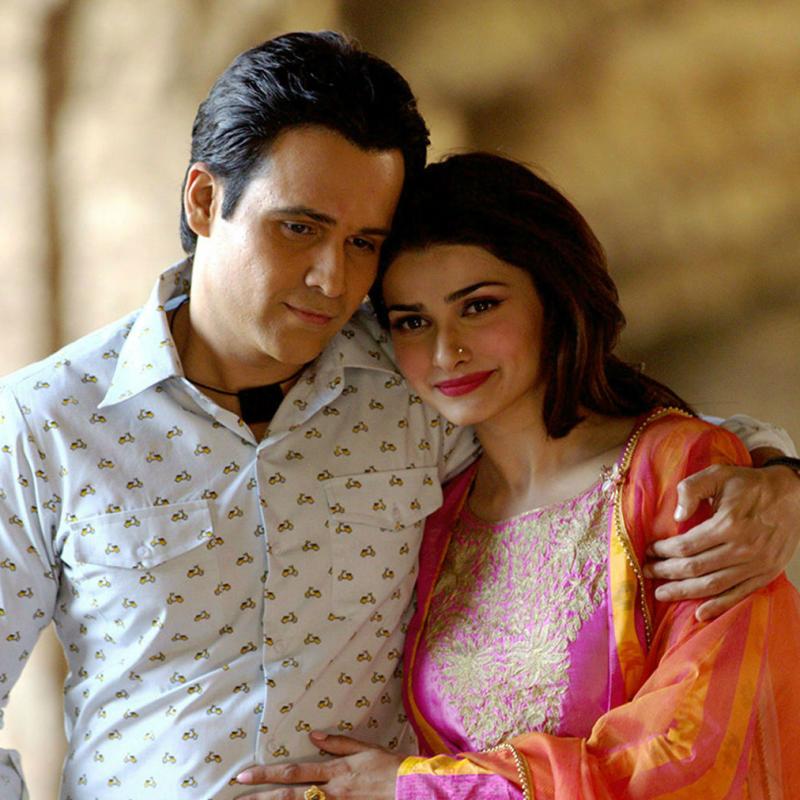
MUMBAI: Biographical or sports films are being mademore often in recent times than they ever were. With a dearth of script ideas as well as the writers to deliver, this is an easy way out to keep production lineup running for a studios like Balaji Motion Pictures. This genre facilitates mid-range star cast films at affordable budgets.
Azhar is one such film from the Balaji stable which mixes the themes of sport as well as a biography and, as a bonus, promises a potential tale to tell which would complete the makers’ requirements.
The film is said to be based on the life of the mercurial cricketer Mohammad Azharuddin; his cricketing career, his marriage followed by a romance with a film star and the controversy that followed implicating him in a match fixing scandal. However, a disclaimer in the titles belies all such claims as well as denies resemblance to any cricketer dead or alive.It is an account of the rise and fall of a celebrated Indian cricketer on his way to becoming a legend.

There a great feeling of joy and celebrations in this Muslim household of Hyderabad as the scion to the family is born. The maternal grandfather, Kulbhushan Kharbanda, names the boyAzharuddin, an Arabic word meaning, brilliant, luminous and such. Kharbanda expects Azhar to shine, stand out and to this end, he hands over a cricket bat in the hands of the child. He has taught Emraan some mantras for success in life and also predicted that not only will he play for India but will play 100 test matches.

Emraan Hashmi playing the protagonist is now grown up having championed the game of cricket at various levels starting from streets. Soon enough, he is selected for the state Ranji Trophy team. Before you realize the scene has changed and jumped several years into future, you seeAzhar playing test cricket for India.
Azhar makes his debut with a ton and follows it up with two more hundreds in next two tests. He is an overnight sensation so much so that the past masters give him various complementary epitaphs. The next step is inevitable; Azhar is offered the captaincy of the Indian team. This is in a very dramatic filmy manner where, instead of the cricket board calling him to the office to convey the decision, it is done by an official of the board doing it in the middle of an empty stadium making it look morelike a conspiracy than anhonour.
The rest of the team consists of senior players and the resentment at Azhar’s appointment to lead them is evident. Leading from the front, Azhar is soon in command and is now playing his 99th test match. That is when the bubble bursts as he is accused of match fixing. He is suspended and also found guilty by the CBI. What follows is an 11 year long court battle to clear his name. The board’s lawyer is Lara Dutta, imported from London. Lara has been an ardent Azhar fan all along, but feels betrayed now and fights the case vigorously.
Azhar, the film, tries to change the deeply embedded perception of people who once idolized the star cricketer. It is not easy to erase their hurt. The script takes recourse to a haphazard narration with past and present overlapping ad nauseam. The direction lets many glitches pass. To claim to have made a film on Azharuddin with a disclaimer does not let one change the facts of the case which dominated the media for long. The only catchy song is the remix of the old time mass hit, Oyeoye…. from Tridev. Even at 131 minutes, the film needs further clipping.
As for performances, Emraan does his best but, Azhar’s persona is too big to live up to even in a disgraced state. While Prachi Desai is impressive, NargisFakri, playing the second wife, is passable. Lara is okay. The casting of other cricketers, especially Kapil is laughable. Kunal Roy Kapur saves quite a few scenes as an idiosyncratic defense lawyer.
Azhar is about a disgraced hero: there may be a few who would watch his tale out of sympathy not as an idol, which is not enough to sustain at the box office.
Producers: Shobha Kapoor, Ekta Kapoor, Sony Pictures Network.
Director: Tony D’Souza.
Cast: Emraan Hashmi, NargisFakhri, Lara Dutta, Gautam Gulati, Manjot Singh, Kunaal Roy Kapur, Rajesh Sharma.
Dear Dad

Dear Dad is a father son bonding story. That would not have been fine thinking of a film like Masoom (1983). But, here, the already perfectly bonded family of two children and their loving parents is shattered as the father comes out the closet to declare his homosexual leanings.
Himanshu Sharma is a 14 year old lad in Delhi living with his father, Arvind Swamy, mother and younger sister. He is ready to go back to hostel in the hill station of Mussorie. The plan is to travel with his friends. But, the father, Arvind, carries a load on his mind and offers to drop Himanshu to Mussorie. It is the coming of age for Himanshu and Swamy wants to first get through to his son’s teen mind presently fed on nude pictures, playing games on his mobile and generally enjoying the stage of life he is in along with his friends. On the drive to Mussorie, while Swamy tries to strike a conversation, the son is immersed in his cell phone.
On the way to Mussorie, Swamy decides to stop at his parental home. Done with dotting momma, Swamy proceeds to see his father who has lost his speech. For, some reason, Swamy decides to tell his father that he was never interested in women. While his father has lost his speech (also, for no explicable reason, also his expressions!) and cant reply, the son overhears Swamy’s confession.
The son, Himanshu, is devastated and feels betrayed. He withdraws from his father and all his affection and is in a rebel mode. The son also suspects his father of wanting to spend the night with a TV reality show celebrity, Aman Uppal, who they have given a lift on the way.
Himanshu has confided in his closest buddy (all closest buddies in films are fat and seem to be jovial; this one fits the stereotypical, too). The friend takes him to a Bengali baba who can turn a homosexual in to a mard again!
While Himanshu wanted a normal happy family of father, mother and sister living happily, his dream is shattered.
Quite a few films seem to open the closet midway through the film lately; the recent examples being Kapoor & Sons while another one, Aligarh, was all about same sex attraction.
Dear Dad is the maker’s film; the audience is less likely to participate. The film follows a script of convenience as things happen because they happen. While the theme is serious, the treatment is casual. The father son patch up is as hurried as the fallout was for after all, a Debonair collecting son should know both sides of a coin!
What works for the film are the beautiful locales of Uttarkhand as the duo travel from Delhi by road, the scenic beauty has been beautifully captured. As for the performances, Swamy underplays his being gay and the son, Himanshu, complements this with aggression. Uppal does very well. The rest are incidental.
Dear Dad will find it tough fit into a slot when it comes to identifying its audience.
Producers: Shaan Vyas, Ratnakar M.
Director: TanujBhramar.
Cast: Arvind Swamy, Himanshu Sharma, Ekavali Khanna, Aman Uppal, BhavikaBhasin.






In a music industry that often rewards speed, spectacle, and instant recall, Navjot Ahuja’s journey feels refreshingly different. His story is not built on noise. It is built on patience, discipline, emotional honesty, and a quiet commitment to becoming better with every passing year. After 14 years of struggle, learning, performing, and writing, Navjot stands today as an artist whose success has not changed his centre. If anything, it has only made his purpose clearer.
For Navjot, music has never been about chasing fame alone. It has always been about expression. It is about writing more truthfully, singing more skillfully, understanding himself more deeply, and becoming a kinder human being in the process. That rare clarity is what gives his journey its beauty.
Where It All Began: A Writer Before a Singer
Indian singer and songwriter Navjot Ahuja’s musical journey began in the most familiar of places: school assemblies. But even then, what was growing inside him was not only the desire to sing. It was the need to write.
Long before he saw himself as a performer, he had already discovered the emotional release that writing offered him. For Navjot, words became the first true channel for feeling. Songwriting came before singing because writing was the only way he could let emotions flow through him fully. That inner pull shaped his artistic identity early on.
Like many young musicians, he sharpened his craft by creating renditions of popular songs.
Those experiments became his training ground. But the turning point came in 2012, when he wrote his first original song. That moment did not just mark the beginning of songwriting. It marked the beginning of self-definition.
A Calling He Did Not Chase, But Accepted
What makes the latest Indian singer-songwriter Navjot’s story especially compelling is the way he describes his relationship with music. He does not frame it as a career he aggressively pursued. In his own understanding, music was not something he chose. It was something that chose him.
There was a time when he imagined a very different future for himself. He wanted to become a successful engineer, like many young people shaped by ambition and conventional expectations. But life had a different script waiting for him. During his college years, around 2021, music entered his life professionally and began taking a firmer shape.
That shift was not driven by image-building or industry ambition. It came from acceptance. Navjot embraced the fact that music had claimed him in a way no other path could. That sense of surrender continues to define the artist he is today.
An Artist Guided by Instinct, Not Influence
Unlike many singers who speak openly about idols, icons, and musical role models, Navjot’s creative world is built differently. He does not believe his music comes from imitation or inherited influence. He listens inward.
He has never considered himself shaped by ideals in the traditional sense. In fact, he admits that he does not particularly enjoy listening to songs, especially his own. His decisions as a songwriter and singer come from instinct. He writes what feels right. He trusts what his inner voice tells him. He positions his music according to what he honestly believes in, not what trends demand.
That creative independence gives his work a distinct emotional sincerity. His songs do not feel calculated. They feel alive.
The Long Years of Invisible Struggle

Every artist carries a chapter of struggle, and Navjot’s was long, demanding, and deeply formative. One of the biggest challenges he faced was building continuity as the best new indian singer songwriter in an era where musical collaboration is increasingly fluid.
For emerging singers, especially those trying to build with a band, consistency can be difficult. Instrumentalists today have more opportunities than ever to freelance and perform with multiple artists. While that growth is positive and well deserved, it can make things harder for singers who are still trying to establish a steady team and sound around their work.
For Navjot, one of the most difficult phases came during 2021 and 2022, when he was doing club shows almost every day. It was a period of relentless performance, but not always personal fulfillment. He was largely singing covers because clubs were not open to original songs that audiences did not yet know.
For a new Indian singer and songwriter, that can be a painful compromise. To perform constantly and still not have the freedom to share your own voice requires not just resilience, but restraint.
“Khat” and the Grace of Staying Unchanged
After 14 years of effort, Navjot’s new love song Khat became a defining milestone. Professionally, he acknowledges that the song changed how society viewed him as a musician. It strengthened his place in the public eye and altered his standing in meaningful ways.
Yet personally, he remains unchanged.
That is perhaps the most striking part of his story. Navjot says his routine is still the same. His calm is still the same. His writing process is still the same. He does not want success or failure to interfere with the purity of his art. For him, emotional detachment from public outcomes is essential because the moment an artist becomes too attached to validation, the writing begins to shift.
His joy comes not from numbers, but from the attempt. If he has tried to improve his skill today, if he has written his heart out more honestly than before, then he is at peace.
Growth, Not Glory, Remains the Real Goal
Even now, Navjot is not consumed by labels such as singles artist, performer, or digital success story. His focus remains deeply personal. He wants to sing better. He wants to play instruments better. He wants to understand himself more. And he wants to become a kinder person.
That is what makes Navjot Ahuja’s journey so moving. It is not simply the story of a musician finding recognition. It is the story of an artist who continues to grow inward, even as the world begins to look outward at him. In an age obsessed with applause, Navjot reminds us that the most meaningful success often begins in silence, honesty, and the courage to remain true to oneself.






