Hindi
Adlabs Cinemas to conduct research on Indian cinema audience

MUMBAI: Adlabs Cinemas, part of the Reliance Anil Dhirubhai Ambani Group, has commissioned research agency IMRB International to carry out an extensive research that will measure the Indian cinema audience by probing the audience on parameters including advertising exposure, cinema habits and exposure to media.
Commencing this month and to be conducted in three phases, the IMRB study will be focused on understanding the moviegoer in terms of movie viewing habits, behaviour and attitudes, and preferences towards movie viewing. It will also focus on cinema viewing metrics like reach and frequency, understanding the in-theatre experience and evaluate the efficacy of the advertising options (at Adlabs screens), and monitoring / auditing the various advertising properties in the Adlabs properties.
“The Indian film industry is the largest in the world in terms of ticket sales and number of films produced annually. Further, the advent of multiplex chains, digital screening of movies and revamp of single screen cinemas has brought back the novelty of movie viewing in theatres. So far, cinema in India has very limited research to measure audience characteristics and preferences and hence, this is an initiative for us to gather insights into the thinking of the new age movie viewer and to understand the exposure, experience and ad efficacy of the theatre medium,” said Adlabs Cinemas COO Tushar Dhingra.
Dhingra believes that the primary reason for advertisers‘ renewed interest in the medium is the recent growth in audiences as well as loyalty of audiences to the cinema medium despite the availability of several other options. Cinemas are attractive destinations to reach out to a captive audience making them attractive advertising avenues. Cinema can also deliver a broad range of demographics.
“Multiplex cinema penetration, digital technology and the attractiveness of cinema audience demographics are driving high growth rates in the cinema advertising sector. Our research will provide an all encompassing perspective on the subject which will enable advertisers to make more informed decisions in the area of cinema advertising,” stated Dhingra.
“We are delighted to partner Adlabs Cinema in this research. This is the first of its kind comprehensive study to understand the cinemagoers holistically as individuals, consumers and media targets. Using technology like RFID, we would be also be mapping their exposure levels to various advertising options in the Adlabs cinemas,” added IMRB International senior vice president Hemant Mehta.

Hindi
Remembering Gyan Sahay, the lens behind film, television and advertising
From a puppet rabbit selling poppadums to Hindi cinema, he framed it all.
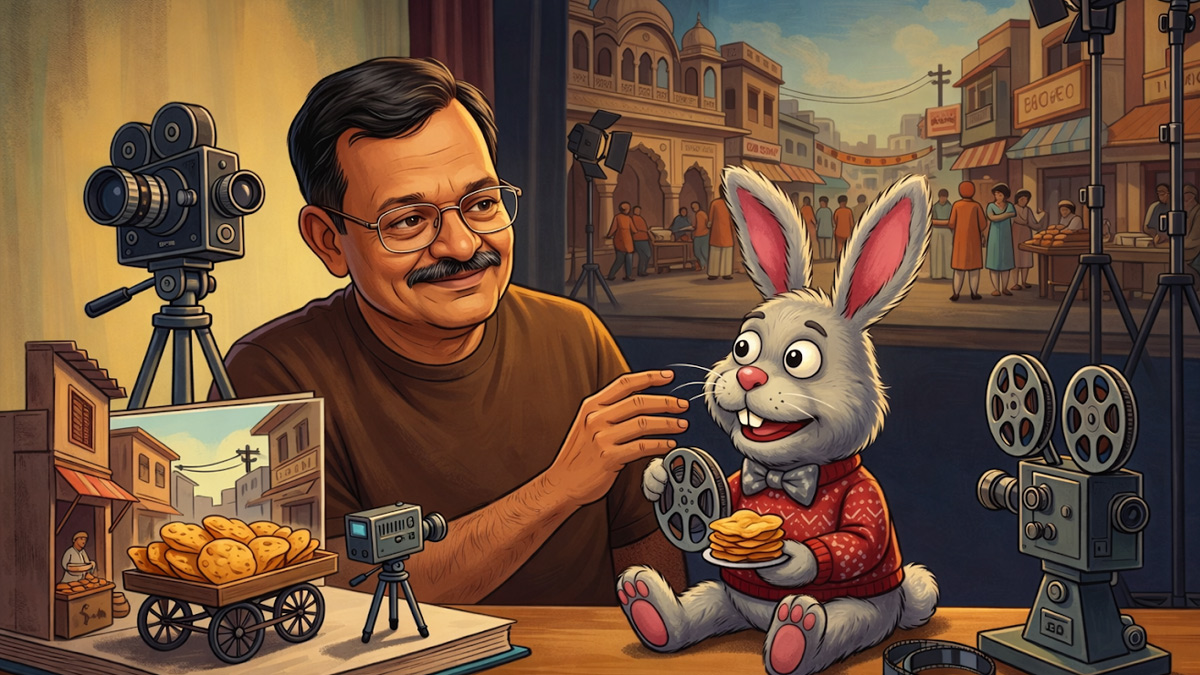
MUMBAI: There are careers, and then there are canvases. Gyan Sahay, the veteran cinematographer, director, and producer who passed away on 10 March 2026 in Mumbai, had one of the latter. Over several decades in the Indian film and television industry, he turned lenses, lights, and the occasional puppet rabbit into something approaching art.
A graduate of the Film and Television Institute of India (FTII) in Pune, Sahay built his reputation as a director of photography across a career that stretched from the early 1970s all the way to the digital age. He was the kind of craftsman who understood that a well-composed shot is not merely a technical achievement but a quiet act of storytelling.
For most Indians of a certain age, however, Sahay will forever be the man behind the rabbit. His direction of the iconic long-running television commercial for Lijjat Papad, featuring its now-legendary puppet bunny, gave the country one of its most cheerfully persistent advertising images. It was the sort of work that sneaks into the national subconscious and takes up permanent residence.

His big-screen credits as cinematographer include Anokhi Pehchan (1972), Pagli (1974), Pas de Deux (1981), and Hum Farishte Nahin (1988). In 1999, he stepped behind a different kind of camera altogether, making his directorial debut with Sar Ankhon Par, a drama that featured Vikas Bhalla and Shruti Ulfat, with a cameo by Shah Rukh Khan for good measure.
On television, Sahay was particularly prized for his command of multi-camera production setups, a skill that made him a go-to technician for large-scale shows and reality programmes. In an industry that has never been especially patient with complexity, he was the calm hand on the rig.
In later life, Sahay turned teacher. He participated regularly in masterclasses and Digi-Talks, often hosted by organisations such as Bharatiya Chitra Sadhna, sharing hard-won wisdom on cinematography, the comedy of timing in a shot, and the sweeping changes brought by the shift from celluloid to digital. He was also said to have been involved in a project concerning a biographical film on Infosys co-founder N.R. Narayana Murthy.
Tributes from the film industry poured in following the news of his passing, with colleagues remembering him as a senior cameraman who served as a rare bridge between two entirely different eras of Indian cinema. That is, perhaps, the finest thing one can say of any craftsman: he kept up, and he brought others along with him.







