Hindi
‘A Flying Jatt’ is passable kid stuff

The producers of A Flying Jatt, Balaji Motion Pictures, takes a total diversion with this film. From their earlier blend of films with mainly adult themes, they have moved to a film that caters to children and the preteen lot. Complately inspired by foreign superhero films, A Flying Jatt keeps Indian sensibilities as its main theme instead.
The film follows in the footsteps of earlier films of this genre: the incognito superhero kinds like Boney Kapoor’s Mr India (1987), Rakesh Roshan’s Krrish (2006) and Krrish3 (2013), Romu Sippy’s Shiva KaInsaaf (3D- 1985), Tinnu Anand’s Shahenshah(1988) and earlier ones like Kishore Kumar-starrer Mr X In Bombay (1964), which dealt with the villains of the mortal kind.
A Flying Jatt is about a superhero who propagates Swachh Bharat or Clean India and sings paeans to the valour and glory of the Sikh community and fights a super villain.

Tiger Shroff is a martial arts instructor at a local school in Punjab. Thanks to his blundering ways and shy nature, he is never taken seriously and even his mastery over the art is passable. His young students make fun of him. While he nurses a silent love for Jacqueline Fernandez, he can’t gather the courage to express it.
Tiger is the son of Amrita Singh who always pushes him to take inspiration from his dead father who was considered a hero by the locals. Amrita’s troubles start when a drug mafia run by KK Menon decides to grab her land, which would help his drug factory save millions in money as well as time, due to easy access to the drug markets. But the piece of land holds deep memories for Amrita and it also has a 200 year old tree that is worshipped by the people.
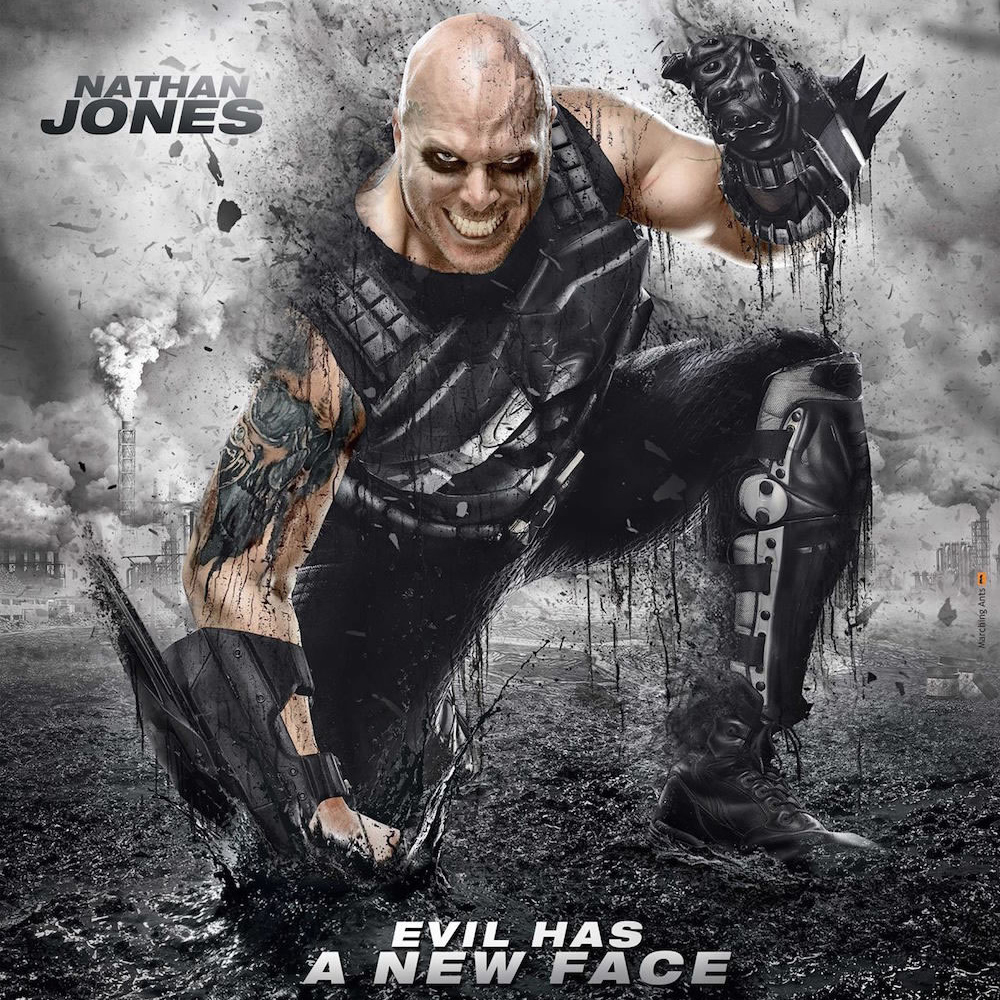
Menon fails to convince Amrita with money and tries the only other way he knows: by sending out his goons. While the average goons are dealt with by Amrita herself, the tougher ones are for Tiger to handle. To match the strength of Tiger, he sends out his ultimate weapon, the gigantic-looking Nathan Jones (an Australian actor, power-lifting champion and an ex-professional wrestler). Jones takes on Tiger who, in the process of their duel, gets blessed by the sacred tree with super powers and also gets the imprints of the religious symbol of Sikh faith on his back.
Tiger can now do things a normal human can’t like flying and also packing a powerful punch. Jones, who was buried in the mud, returns to the scene more powerful now as his blood has turned black and he survives by whiffing on polluted air and other waste strewn around by the society. Thanks to the people’s apathy towards environment, Jones is unbeatable, at least on Planet Earth.
Amrita wants Tiger to don the pagree his father wore, which he refuses because other kids made fun of him with Sikh jokes. While the film goes on to teach people the virtue of keeping the environs clean as well as planting more trees, Amrita, for her part, initiates Tiger into the virtues of Sikh way of life and tells him stories of their exploits.
Meanwhile, Menon has mended his ways after he almost lost his daughter to pollution-related ailment. But, by this time, Jones is out of control. He has a personal grudge against Tiger now.
A Flying Jatt does not have much of a story. It is about a simpleton who gains super powers and a lot of footage goes into showing his prowess as he saves people in distress, from calamities as well as goons.
The length at 151 minutes makes things repetitive while trying for a film aimed mainly at children. In the first half, some comic scenes entertain its target audience. The direction is good in general with impressive use of special effects; the effects in the song ,which also has a nice melodious feel to it, are good. Beat pe booty… is already popular and both songs are appealing. Cinematography is competent. Tiger Shroff excels in dances and action, both being his forte. Jacqueline is okay. Amrita Singh makes her presence felt, while KK Menon has little to do. Nathan Jones can’t act and his drawls are incomprehensible. The film needed to be edited extensively.
A Flying Jatt is a passable fare with appeal for kids besides audiences in Delhi and Punjab generally. Released on Thursday to cash in on the festive mood of Janmashtami, it gets three more days to rake in the moolah over the weekend at the box office. Sustenance thereafter will be tough.
Producers: Shobha Kapoor, Ekta Kapoor.
Director: Remo D’Souza.
Cast: Tiger Shroff, Jacqueline Fernandez, Amrita Singh, KK Menon, Nathan Jones and Shraddha Kapoor in a cameo.







Hindi
Dhurandhar 2 hit by YouTube leak amid record box office run
Cam-rip surfaces online but blockbuster streak continues at record pace
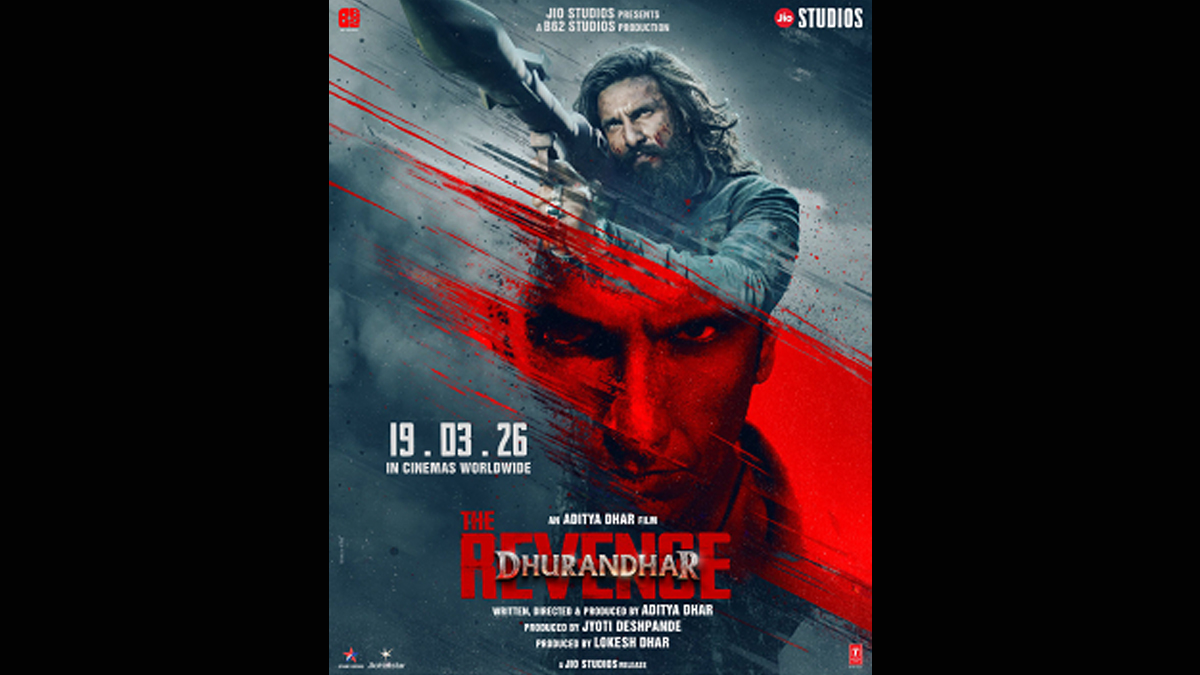
MUMBAI: It has been a dramatic week for Dhurandhar: The Revenge. Even as the espionage thriller smashes box office records, a piracy scare briefly threatened to steal its thunder after a full-length version surfaced on YouTube.
The leak emerged on March 30 via a channel titled “A2z movie”, which uploaded what appeared to be a cam-recorded print of the film. Clocking in at nearly three hours and 49 minutes, the footage was reportedly blurry but complete enough to spark spoilers and fan outrage online.
Soon after, users on X began flagging the issue, explicitly naming the “A2z movie” channel in their posts while tagging the film’s makers and urging swift legal action. Fans of director Aditya Dhar and lead star Ranveer Singh were particularly vocal, helping the issue gain rapid traction.
Within hours, the video was taken down, likely through a mix of platform detection systems and intervention by producers Jio Studios and B62 Studios.
Despite the leak, the film’s theatrical run remains virtually unshaken. As of March 31, the sequel has raked in an estimated Rs 872.17 crore net in India, with worldwide collections soaring to Rs 1,392.23 crore. Its Hindi opening day alone brought in Rs 102.55 crore, setting a new benchmark.
In a notable milestone, the film has matched Pushpa 2 as the fastest Indian release to cross the Rs 1,000 crore mark globally, achieving the feat in just seven days.
Interestingly, the version leaked online is believed to be an earlier cut. Midway through its theatrical run, the makers issued revised prints after eagle-eyed viewers spotted a fleeting editing error involving a cameraman’s reflection. The corrected version now plays across cinemas, adding an unusual twist to the film’s release journey.
Directed by Aditya Dhar, the high-stakes sequel stars Ranveer Singh alongside Sanjay Dutt, R. Madhavan, Arjun Rampal and Sara Arjun. The film has drawn praise for its scale and action sequences, though some critics have pointed to its intense violence and layered political themes.
For now, piracy may have made noise, but it has not slowed the juggernaut. If anything, the episode underlines the film’s cultural grip, proving that even a leak cannot derail a box office storm already in full force.