Hindi
5th Tri Continental to screen 28 documentary films

MUMBAI

The festival, which ends on 25 January, will see 11 Asia premieres, eight India premieres and one World premiere. The four sections in the festival this year are:
Body Public – The section will showcase six films from five countries. Four are from India and two co-productions from Spain/South Africa and Canada/Iran. The films explore the engagements of the human body with the public space.
Not All in Good Faith – Seven films from nine countries will probe and bring to the forefront the indignity and exploitation rendered by neo-liberal development ventures and businesses across the globe.
The Line That Defines – Dwelling on the post-modern subject of border crossing, this section comprises four films from five countries. In different ways, the films trace the role of the political border in the making of a refugee, an exile or an illegal immigrant.
Zones of War – Any area marked by extreme violence can be broadly termed as a war zone. Eleven films from nine countries explore these zones of violence and aggression in various historical and contemporary circumstances around the world.
Speaking on the selection of films, festival director Alika Khosla says, “This year’s selection of 28 films from more than 20 countries not just represent these protagonists but also gives them a voice that we are sure will resonate with our own circumstances close to home.”
The 5th Tri Continental Film Festival jury comprises Aruna Vasudev (India), Nick Deocampo (The Philippines), Madhusree Dutta (India), Amir Muhammad (Malaysia) and Anurag Kashyap (India).
“Watching these documentaries from all over the world is an eye opener. You see the sheer courage of the people in their ordeal to survive. Everyone should watch these films, it’s a rare chance to get a glimpse of the world that we some times don’t know about,” said Anurag Kashyap.

Hindi
Remembering Gyan Sahay, the lens behind film, television and advertising
From a puppet rabbit selling poppadums to Hindi cinema, he framed it all.
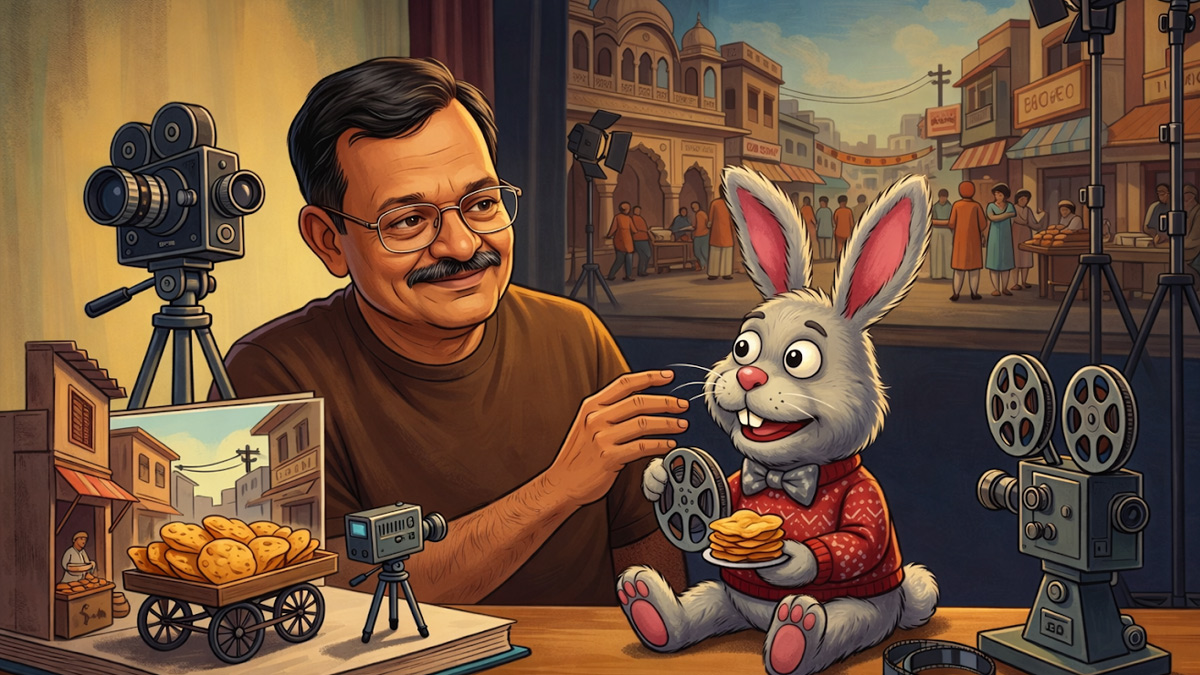
MUMBAI: There are careers, and then there are canvases. Gyan Sahay, the veteran cinematographer, director, and producer who passed away on 10 March 2026 in Mumbai, had one of the latter. Over several decades in the Indian film and television industry, he turned lenses, lights, and the occasional puppet rabbit into something approaching art.
A graduate of the Film and Television Institute of India (FTII) in Pune, Sahay built his reputation as a director of photography across a career that stretched from the early 1970s all the way to the digital age. He was the kind of craftsman who understood that a well-composed shot is not merely a technical achievement but a quiet act of storytelling.
For most Indians of a certain age, however, Sahay will forever be the man behind the rabbit. His direction of the iconic long-running television commercial for Lijjat Papad, featuring its now-legendary puppet bunny, gave the country one of its most cheerfully persistent advertising images. It was the sort of work that sneaks into the national subconscious and takes up permanent residence.

His big-screen credits as cinematographer include Anokhi Pehchan (1972), Pagli (1974), Pas de Deux (1981), and Hum Farishte Nahin (1988). In 1999, he stepped behind a different kind of camera altogether, making his directorial debut with Sar Ankhon Par, a drama that featured Vikas Bhalla and Shruti Ulfat, with a cameo by Shah Rukh Khan for good measure.
On television, Sahay was particularly prized for his command of multi-camera production setups, a skill that made him a go-to technician for large-scale shows and reality programmes. In an industry that has never been especially patient with complexity, he was the calm hand on the rig.
In later life, Sahay turned teacher. He participated regularly in masterclasses and Digi-Talks, often hosted by organisations such as Bharatiya Chitra Sadhna, sharing hard-won wisdom on cinematography, the comedy of timing in a shot, and the sweeping changes brought by the shift from celluloid to digital. He was also said to have been involved in a project concerning a biographical film on Infosys co-founder N.R. Narayana Murthy.
Tributes from the film industry poured in following the news of his passing, with colleagues remembering him as a senior cameraman who served as a rare bridge between two entirely different eras of Indian cinema. That is, perhaps, the finest thing one can say of any craftsman: he kept up, and he brought others along with him.