Brands
Zscaler, Airtel launch India AI Cyber Research Centre
New hub to boost cyber resilience and trusted AI use


NEW DELHI: As India’s digital engine roars ahead, so do the risks riding shotgun. In response, Zscaler, Inc. and Bharti Airtel have joined hands to launch the AI and Cyber Threat Research Center – India, a national initiative aimed at strengthening the country’s cyber defences and accelerating responsible AI adoption.
The centre is designed as a multi stakeholder platform that brings together industry, government and academia. Its mission is clear: protect critical sectors such as telecom, banking and energy, shield everyday digital users, and future proof India’s fast expanding online ecosystem.
India has long been a major innovation hub for Zscaler, with a substantial portion of its cyber research talent based here. With this new centre, that footprint evolves into a national collaboration engine. The idea is simple but ambitious, build in India, for India, and help power the country’s journey towards a secure and digitally self reliant future.

The timing is telling. India is building digital systems at population scale, not just enterprise scale. That scale has widened the attack surface dramatically. At the same time, cyber criminals and nation state actors are deploying AI to scan, probe and exploit vulnerabilities in minutes.
Zscaler’s research arm, ThreatLabz India, reports millions of infiltration attempts every month. These include espionage campaigns linked to regional geopolitical tensions, 1.2 million intrusion attempts from 20,000 sources targeting 58 Indian digital entities, and a rise in zero day exploit attempts across multiple industries.
In such an environment, perimeter based security models are struggling to keep pace. The new centre aims to push a shift towards secure by design systems and Zero Trust architecture.
Its strategy rests on four pillars: protect through real time intelligence, remediate by working directly with government agencies, facilitate adoption of AI driven security and Zero Trust frameworks, and build a stronger cybersecurity talent pipeline through specialised certifications.
As founding members, Zscaler and Airtel will combine global threat intelligence with local network visibility. Zscaler will deploy a dedicated India focused research team and draw insights from its Zero Trust Exchange platform, which processes over 500 billion daily transactions worldwide. Airtel, meanwhile, will contribute deep visibility into IoT and mobile traffic, helping detect suspicious activity faster and coordinate response across the ecosystem.
Bharti Airtel executive vice chairman Gopal Vittal, said the partnership extends Airtel’s commitment to safeguarding customers and the nation’s digital fabric. He added that the collaboration would address challenges unique to the Indian market and encourage secure and confident digital engagement.
Zscaler chief executive, chairman and founder Jay Chaudhry, said India’s digital ambition cannot be secured with legacy firewalls and VPNs. He noted that a modern Zero Trust architecture is essential for a hyper connected world and that the new centre would harness the scale of Zscaler’s global security cloud while empowering a new generation of Indian cyber defenders.
Additional members from critical public and private sectors are expected to join the initiative in the coming months, expanding its scope and deepening collaboration.
In a world where threats travel at machine speed, India’s answer is to think faster, collaborate wider and build smarter.






Brands
Thermocool rolls out Navratri campaign on trains and stations
Nine day digital push blends devotion and storytelling for travellers
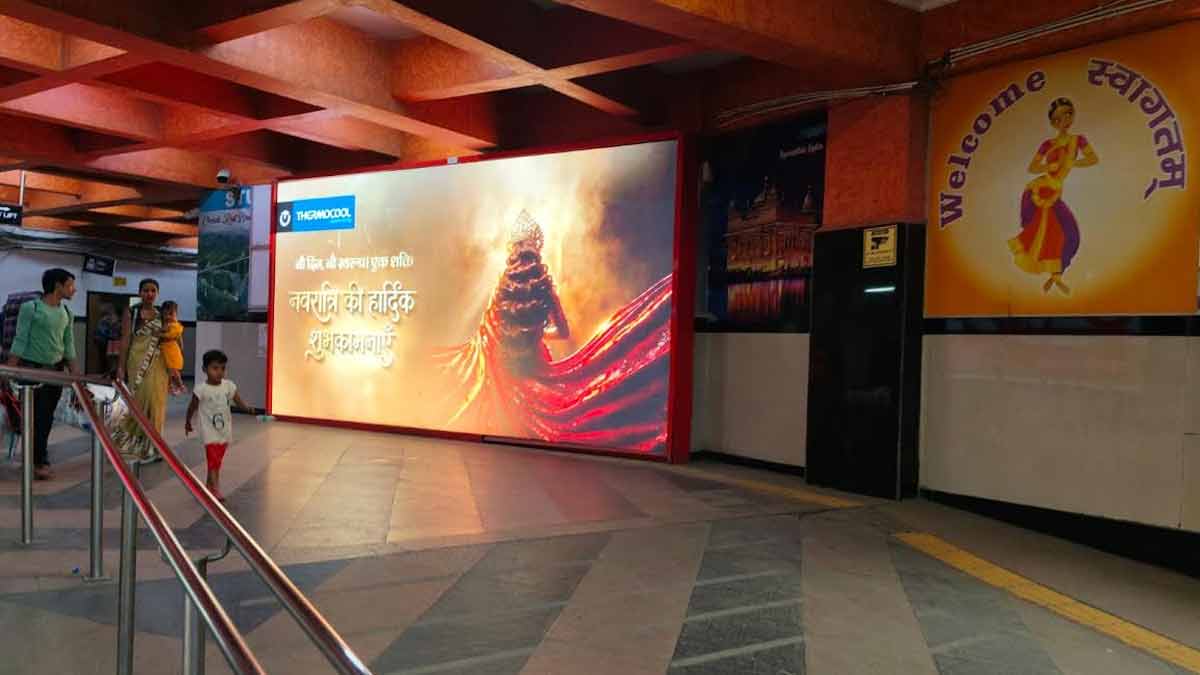
NEW DELHI: Thermocool Home Appliances has launched a high-visibility digital campaign during Navratri, turning railway stations and trains into storytelling spaces that blend culture with brand engagement.
The nine-day campaign spans key high-footfall locations including Katra, Anand Vihar, Gorakhpur, Prayagraj and Moradabad, along with the Vande Bharat Express on the Delhi-Katra route. Travellers encounter the campaign across station screens, concourses and onboard infotainment systems, making it hard to miss.
What sets the initiative apart is its narrative approach. Each day of Navratri is dedicated to one of the nine forms of Goddess Durga, with digital content explaining the significance and stories behind each day. The result is a campaign that does more than advertise, it informs and engages passengers in the middle of their journeys.
For director of sales and marketing Tanuj Gupta, the idea was to go beyond visibility. He noted that while Navratri is widely celebrated, awareness of its deeper meaning is often limited, and the campaign aims to bridge that gap in a simple and accessible way.
By tapping into high-traffic transit spaces, Thermocool is placing its message where audiences naturally gather, from busy platforms to train compartments. The repeated exposure across these touchpoints is designed to build familiarity while creating a more meaningful connection with consumers.
In a season marked by devotion and festivity, the campaign finds a clever middle ground. It turns everyday travel into a cultural moment, where storytelling travels alongside the passenger.